
171 killed in mob violence in 9 months: Where is the rule of law?
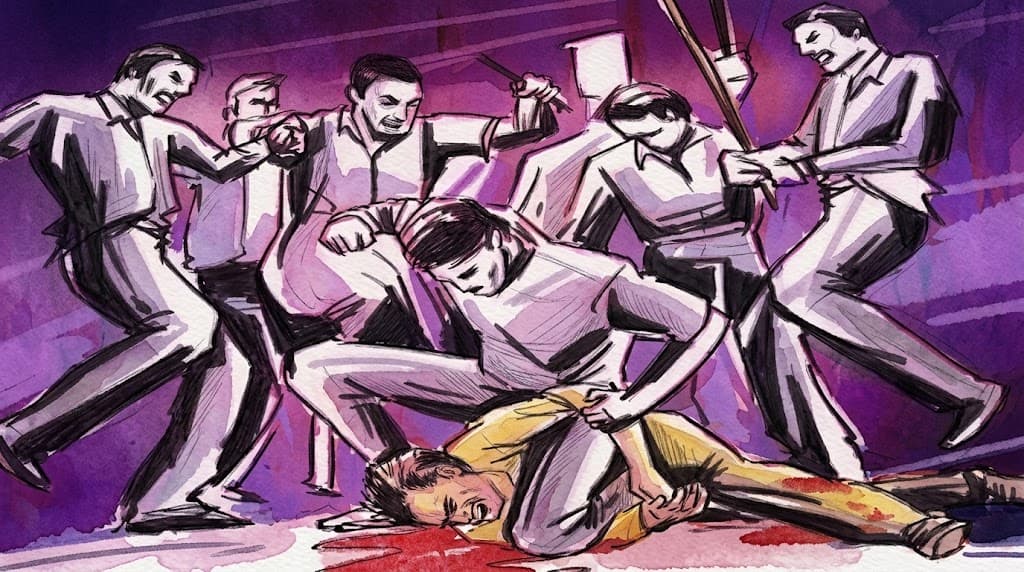

Allegations are supposed to be heard in a court of law, and punishment imposed by the state only after guilt has been established. Yet an increasingly troubling pattern is emerging in Bangladesh.
Accusations surface, tensions spread on social media, crowds gather, and violence follows in the name of justice—often ending in death. From the killing of Wahiduzzaman Shamim in Debhata, Satkhira, to allegations that a Jatiyatabadi Chhatra Dal leader was beaten by a group in Dhamrai, recent incidents have raised a pressing question: will Bangladesh continue to be ruled by mobs?
According to data from Ain o Salish Kendra (ASK), a human rights organisation, at least 171 people died in mob beatings across the country between January and September this year. Of them, 63 were killed in Dhaka division, 39 in Chattogram and 22 in Khulna.
Separately, the Human Rights Support Society (HRSS), in its monitoring report for July–September, recorded 137 incidents of mob violence and beatings during the three-month period, leaving 54 people dead and 145 injured. The incidents were triggered by a range of allegations, including theft, robbery, mugging, religious insult and personal disputes.
Each figure represents a human life and an irreparable loss for a family. Yet in many cases, there appears to be little patience for even the most basic safeguards: verifying allegations, allowing the accused to defend themselves or waiting for the legal process to take its course. Questions are also mounting over whether personal vendettas, political rivalries or organised crimes are being carried out under the cover of a mob.
The killing of Shamim in Debhata, Satkhira, offers a stark example of this disturbing trend. He was attacked on October 13 over allegations of insulting religion. According to a report by The Business Standard, his family said Shamim had been experiencing mental health problems. Tensions escalated after an audio recording of his remarks circulated. There were also allegations that people had been urged to gather through a Facebook Live broadcast.
Police rescued Shamim after the first attack and took him to hospital. But he was allegedly attacked again there. He was later taken to Satkhira Medical College Hospital, where he was declared dead.
A murder case filed over the incident named 10 accused and included another 200 to 250 unidentified people. Fazlul Haque was named as the prime accused. Initial reports said police had arrested two people. However, the allegations must be investigated, and the responsibility of each individual must be established through due legal process.
Meanwhile, allegations emerged on October 16 that Mahfuzur Rahman Imon, a Chhatra Dal leader, had been intercepted and beaten in Dhamrai. According to the account, people arriving on several motorcycles blocked his car near Balia bus stand. Imon blamed former union parishad chairman Rafiqul Islam Mokshed and his associates, although the accused side offered a different account. Police claimed that cannabis had been recovered from the car, a claim Imon denied.
Ahsanul Karim, a senior lawyer at the Supreme Court, told Views Bangladesh: “Organised crime must not be downplayed by describing it merely as mob violence. In cases of planned murder or serious injury, those involved must be brought to justice through investigations appropriate to the nature of the offence. However, when large numbers of people break the law simultaneously, controlling the situation becomes difficult. The police also need to strengthen their technological capacity to identify and prevent incitement on social media.”
Dr Touhidul Haque, a crime analyst and human rights activist, told Views Bangladesh: “Every incident requires an impartial investigation and effective action against those responsible. Filing a case after an attack is not enough. Investigators must establish how the crowd gathered, who incited it, who led the assault and whether there were links to organised criminal activity.”
Khandaker Farzana Rahman, an associate professor in the Department of Criminology at the University of Dhaka and a crime analyst, told Views Bangladesh: “When the law is weak, public anger takes the judge’s seat, and rumours become the basis for verdicts. Anyone who incites a crowd by accusing another person today could become the target of that same crowd tomorrow.
“The fight against mob beatings is therefore not just about preventing crime; it is about protecting human life, justice and the rule of law. If Bangladesh is to avert the risk of becoming a country ruled by mobs, what is needed is not merely tough rhetoric, but the impartial enforcement of the law and accountability regardless of who commits the offence.”
Leave A Comment