
39 percent of sundari trees in sundarbans affected by top-dying disease, concern rising
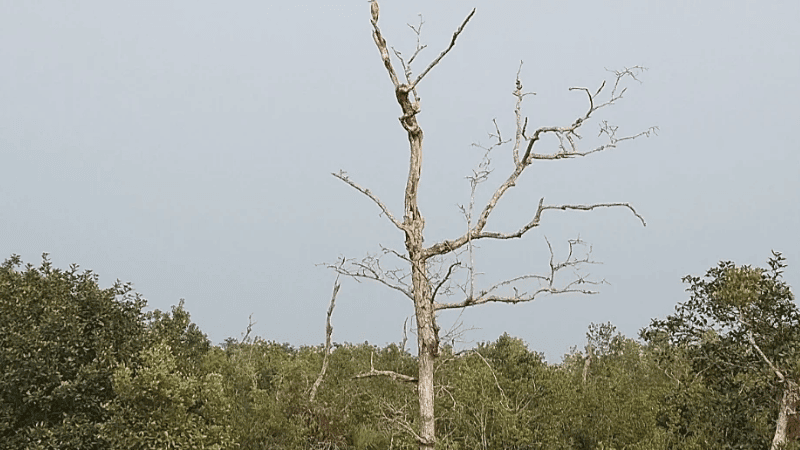

Centre for Environmental and Geographic Information Services (CEGIS) and Arannyak Foundation have found that 39 percent of sundari trees in the Sundarbans are affected by top-dying disease. In numerical terms, nearly 12 crore 95 lakh trees are affected. Of these, 2 crore 2 lakh 40 thousand trees are severely damaged. Increased salinity, reduced freshwater flow and climate change along with various environmental pressures have created fresh concern over the existence of sundari trees. The research has also revealed that the carbon absorption capacity of the Sundarbans has decreased by 15 percent. This has raised concern about the forest’s natural balance, biodiversity and its role in tackling climate change.
These findings emerged from the research titled ‘Ecological Monitoring of Sundarban’ conducted on the overall ecosystem of the Sundarbans in 2024-25.
CEGIS and Arannyak Foundation jointly conducted the research. The research findings were published at a workshop held at the Forest Building in Dhaka on September 14. The report published has also highlighted these facts on October 10.
Sundari is one of the important tree species of the Sundarbans. The tree plays a vital role in the forest’s tree composition, natural environment and biodiversity conservation. However, sundari trees have long been affected by top-dying or ‘top-dying’ disease. According to the research data, the current number of sundari trees in the Sundarbans is about 33 crore. Of these, nearly 12 crore 95 lakh trees are affected by this disease.
In this disease, the upper leaves and tender parts of the affected tree are first damaged. Gradually the branches and twigs begin to dry up. If the intensity of the disease increases, the main trunk may also be damaged. At one stage, the risk of the tree dying arises. Therefore, so many sundari trees being affected is not only a loss of tree resources but also a matter of concern for the long-term environmental stability of the Sundarbans.
The research has stated that although the overall prevalence of top-dying disease has decreased somewhat compared to earlier, the number of severely affected trees has increased.
According to experts, multiple environmental factors are behind the top-dying disease in sundari trees. Among these, increase in soil salinity, decrease in freshwater flow, disruption of photosynthesis, change in the pattern of silt deposition, change in the natural rhythm of tides and the impact of climate change are notable. The research has shown that the rate of sundari trees being affected is higher in areas with high and medium salinity.
If the flow of freshwater through the rivers and canals of the Sundarbans decreases, the balance of soil salinity may change. This creates the risk of the environment becoming unfavourable for the growth and survival of salinity-sensitive sundari trees. In addition, rise in sea level, change in rainfall patterns and change in the flow of rivers may also complicate the environmental situation of the Sundarbans.
Sundarban Academy Khulna chairman Professor Anwarul Kadir has said that the navigability of the Kapotaksha, Mathabhanga, Bhairab and other rivers in the western Sundarbans has decreased, disrupting the normal flow of water. Earlier, freshwater from upstream used to enter the Sundarbans through these rivers. The mixture of fresh and saline water created ‘brackish water’. Various nutrients used to come with this water from upstream, which was extremely important for the growth and survival of sundari trees.
He has said that due to the decrease in river navigability, the flow of upstream freshwater has been largely obstructed. As a result, the influence of saline water is increasing in the Sundarbans. At the same time, excess saline silt coming with the tidal water is accumulating at the base of sundari trees. Due to the lack of necessary nutrients in this silt, the trees are unable to collect adequate food. In addition, the accumulation of silt covering the pneumatophores is obstructing the normal process of oxygen intake and nutrient absorption through the roots.
As a result, the water and nutrients collected from the roots cannot spread properly throughout the tree. On the other hand, food production through the photosynthesis process in the leaves is also disrupted. At one stage, the colour of the leaves of the sundari tree fades, the branches begin to dry and the bark also starts drying. In this way the tree gradually becomes weak. The risk of infection by pathogens, fungi and bacteria increases in weak trees. This process of the upper part of the tree gradually drying and dying is known as ‘top-dying disease’.
Professor Anwarul Kadir has further said that the decrease in freshwater flow and the increase in the level of salinity are making the growth and survival of sundari trees difficult. In contrast, the spread of salt-tolerant species such as gewa, bain and kewra is increasing. In this way, changes are occurring in the plant diversity of the Sundarbans and sundari trees are gradually coming under threat.
The Sundarbans is not only a natural protective shield for the coastal region of Bangladesh but also plays an important role in tackling global climate change. Trees help in carbon sequestration by absorbing carbon dioxide from the atmosphere. The research finding that the carbon absorption capacity of the Sundarbans has decreased by 15 percent has created fresh concern.
It is necessary to analyse in more detail what impact the health deterioration of sundari trees, changes in tree growth and regeneration and the overall ecological condition of the forest are having on carbon sequestration. Because if the environmental capacity of the Sundarbans weakens, questions may also arise about its role in tackling the impacts of climate change.
If long-term changes occur in the number, health and spread of sundari trees, it may affect the overall tree composition of the Sundarbans. At the same time, there is a risk of changes in the habitat of wild animals, food chain and the development of other plant species. The research has stated that in some places a tendency of natural regeneration of other species instead of sundari is being observed.
According to experts, to tackle the top-dying disease of sundari trees, regular monitoring, assessment of the condition of affected trees and identification of risk-prone areas are first necessary. At the same time, continuous research on soil salinity, freshwater flow, navigability of rivers and canals, pattern of silt deposition and changes in natural regeneration needs to be strengthened.
In addition, maintaining the normal flow of water to preserve the ecological balance of the Sundarbans, using scientific data in forest management and increasing coordination among various research institutions are important. If the condition of affected trees and the development of new seedlings can be regularly evaluated, it will be easier to assess future risks and adopt conservation plans.
This crisis of sundari trees in the Sundarbans is not just a matter of disease of one tree species; it is related to the environmental health and future protection of one of the world’s most important mangrove forests. If effective initiatives are not taken in time, the decline of sundari trees and changes in the natural regeneration of the forest may make it more difficult to maintain the natural balance of the Sundarbans in the long term.
Leave A Comment