
40,000 light-years away: NASA uncovers a rare new world
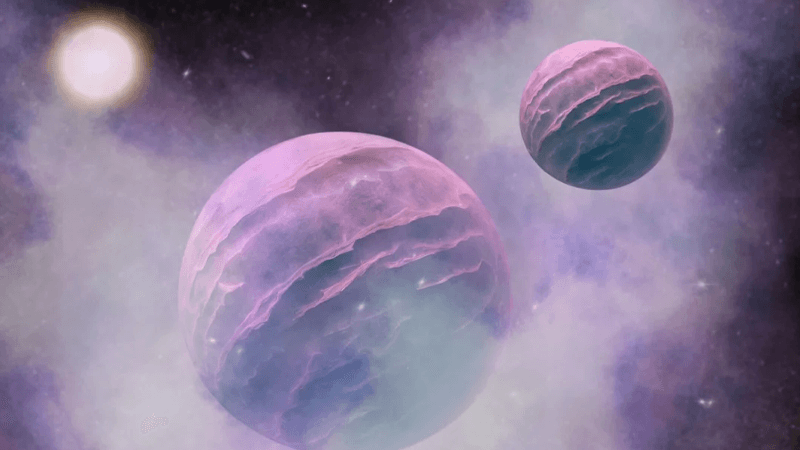

Astronomers have identified a rare type of exoplanet using a detection method NASA's TESS mission was never designed for, uncovering a distant super-Jupiter through the warping effect of gravity on space-time itself.
The planet, catalogued as Gaia23bra b, was found by combining archived data from NASA's Transiting Exoplanet Survey Satellite (TESS) with observations from the European Space Agency's Gaia space telescope, marking the first time TESS has confirmed a planet through gravitational microlensing rather than its standard transit-detection technique.
Unlike the closely orbiting worlds TESS typically tracks by watching for dips in starlight as planets pass in front of their stars, Gaia23bra b was detected orbiting its host star at a distance similar to Jupiter's distance from the Sun — far beyond the reach of TESS's usual method.
Researchers say the discovery suggests TESS's eight years of archived observations may hold further undiscovered planets awaiting similar analysis.
University of New Mexico professor Diana Dragomir, a co-author of the study, said no one anticipated TESS would ever be capable of finding a planet of this kind when the satellite launched.
She added that the find opens the door to locating more microlensing planets hidden within the mission's existing data.
According to the research team, Gaia23bra b carries roughly 1.6 times the mass of Jupiter and orbits an orange dwarf star with about 80 percent the Sun's mass, sitting some 40,000 light-years from Earth.
The first hint of the planet's existence emerged in 2023, when Gaia's alert system flagged an unusual brightening of a distant star — a telltale sign of gravitational microlensing, in which a foreground star's gravity temporarily magnifies the light of a background star.
Scientists later revisited archived TESS observations and found the spacecraft had independently captured the same event.
The findings, published in The Astrophysical Journal Letters, add to a small but growing catalogue of planets found via microlensing, a technique responsible for only about 5 percent of the roughly 6,000 exoplanets discovered to date.
Researchers believe the approach could prove critical for future missions such as NASA's upcoming Roman Space Telescope, which is expected to expand microlensing planet searches significantly.
Leave A Comment