
60 percent areas Dhaka at high risk of earthquakes
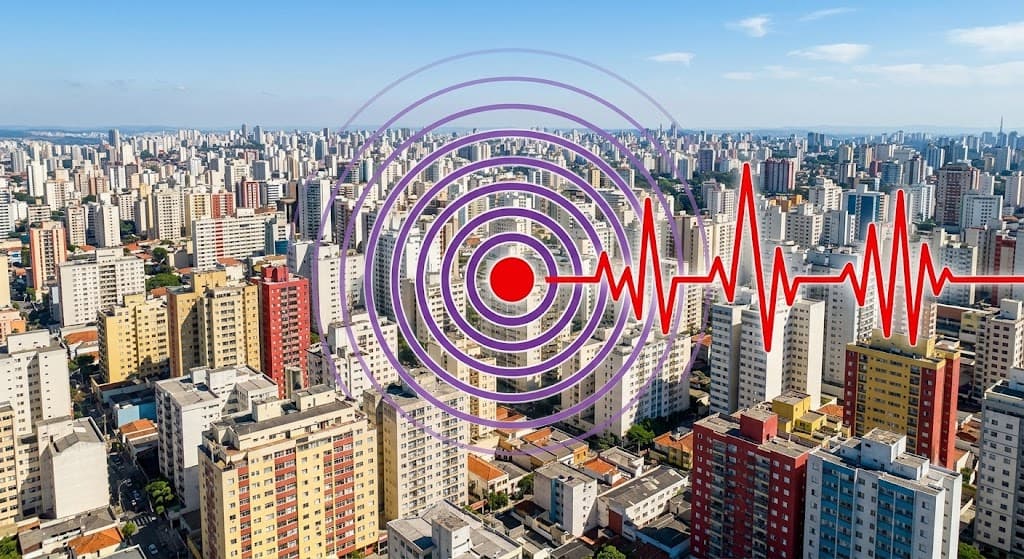

The rapid urbanization, filling of wetlands and unplanned construction in the capital Dhaka have created a risk of extensive damage in major earthquakes. Experts say that about 55 to 60 percent areas of the capital is at risk of soil liquefaction during an earthquake. As a result, many buildings may sink, tilt or suffer structural damage in a strong earthquake.
A joint survey by RAJUK and Bangladesh University of Engineering and Technology (BUET) said that the risk of earthquakes is alarmingly high due to soft and filled soil in large parts of the capital.
Professor Mehedi Ahmed Ansari, Civil Engineering Department, BUET, said that more than half of the approximately 1,528 square kilometer area under RAJUK is at high risk of major earthquakes. In his opinion, loose and filled soil makes earthquake tremors more intense. As a result, the foundations of buildings in these areas may become weak and the risk of buildings tilting or collapsing increases.
According to experts, a large part of Dhaka's soil is made up of soft clay and silt. Many of the housing projects and multi-storey buildings that have been built by filling wetlands, canals and low-lying areas in the past may be at greater risk during an earthquake.
The study divided the capital into four risk zones using the Liquefaction Potential Index (LPI). Of these, the red zone is the most risky, the magenta zone is medium to high risk, the blue zone is relatively low risk and the green zone is the safest.
Professor Ansari said that in the event of a 7.5 magnitude earthquake, the soil in the red zone can lose strength severely. Especially in areas adjacent to rivers, canals, ponds and wetlands, where the groundwater level is high, the risk of liquefaction is higher.
He cited the example of the 1985 Mexico City earthquake and said that even though the epicenter of the earthquake is far away, soft soil can increase the intensity of the tremors several times. Especially in sand-filled land, the risk of soil liquefaction increases along with the vibration.
Experts say that it is possible to build safe buildings even in risky areas. However, for this, it is not enough to just do deep piling; measures must also be taken to strengthen the soil around the building. It is especially important to stabilize the top 5 to 6 meters of soil. But due to the additional cost, these technologies are not used in many construction projects.
Professor Md. Zillur Rahman, former chairman of the Department of Disaster Science and Climate Resilience at Dhaka University, said that only 35 percent of Dhaka is located on hard red soil. The rest consists of wetlands, flood-prone areas, old canals and low-lying land. As a result, the impact of earthquakes in these areas may be relatively high.
According to him, a large part of Old Dhaka, Gulshan, Banani, Dhanmondi, Dhaka University area, Khilgaon, Motijheel, Farmgate and Mirpur are built on relatively hard soil. On the other hand, areas adjacent to rivers and filled in are at the highest risk.
According to the risk map of RAJUK and BUET, Hazratpur, Savar, Keraniganj, Narayanganj, Enayetnagar, Kashipur, Kalagachhia, Bandar, Mograpara, Narayanganj Sadar, Baktabol, Badda, Ashulia, some parts of Darus Salam, New Market, Lalbagh, Madanpur, Mohammadpur and some areas of Dhanmondi have been identified as the highest risk (red zone).
On the other hand, Gulshan, Pallabi, Cantonment, Khilgaon, Tejgaon, Rampura, Motijheel, Demra, Jatrabari, Kadamtali, Kafrul, Dakshinkhan, Rupganj, Bhulta, Fatullah, some parts of Hazaribagh, Paltan and Konabari have been identified as medium to high risk (magenta zone).
According to experts, if the design of buildings is made according to the soil type and the Bangladesh National Building Code (BNBC) is strictly followed, the potential damage can be reduced to a large extent. However, the earthquake hazard map of the capital has not yet been fully included in the urban plan. RAJUK said that the issue will be seriously considered during the future Detailed Area Plan (DAP) update.
Liaqat Ali Bhuiyan, Senior Vice President of the Real Estate and Housing Association of Bangladesh (REHAB), said that their member institutions construct buildings following the Bangladesh National Building Code. However, it is not possible to say in advance with certainty what the actual impact will be if an earthquake of magnitude 7 or more occurs.
Leave A Comment