

68,000-year-old hand stencil discovered in Indonesian cave
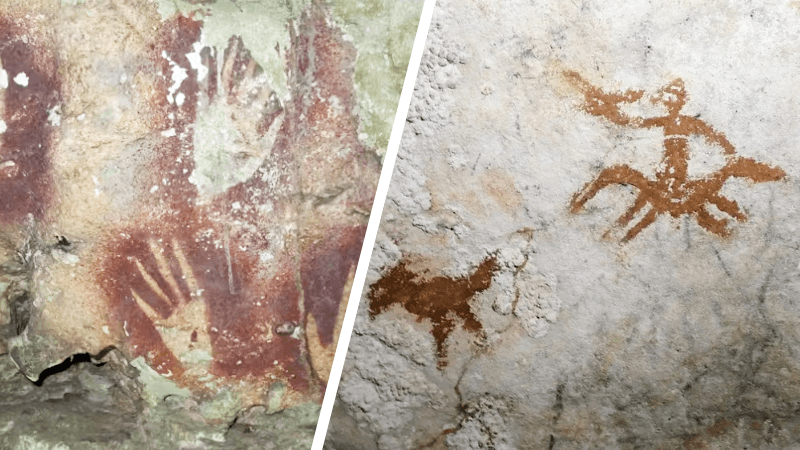

Researchers have discovered a human hand stencil dating back nearly 68,000 years in a limestone cave on Indonesia’s Sulawesi Island, a finding that could rewrite conventional ideas about the origins of symbolic thought and artistic culture.
Published in the journal Nature, the study describes the red-colored handprint created by placing a hand on the cave wall and blowing pigment around it—a technique considered among the earliest forms of figurative art.
Uranium analysis of mineral deposits beneath the stencil determined it to be at least 67,800 years old, making it the oldest known hand stencil in the world.
The discovery surpasses previous Sulawesi cave art—including a 48,000-year-old panel depicting birds, human-like figures, and animals—and is at least 15,000 years older than the island’s previously oldest recorded cave art. It also predates Europe’s most ancient known cave paintings by nearly 30,000 years, challenging the long-held belief that symbolic and abstract thinking first arose in Ice Age Europe around 40,000 years ago.
Professor Adam Brumm of Griffith University, who led the research, said the finding suggests that modern human behaviour, particularly symbolic expression through art, emerged much earlier and across regions beyond Europe.
He added that the hand stencil’s slightly elongated fingers, resembling animal claws, may reflect early symbolic thought and the relationship between humans and animals in prehistoric societies.
This discovery strengthens evidence that early humans in what is now eastern Indonesia were producing sophisticated symbolic art long before previously recognised, indicating that human creativity and cultural expression were globally widespread much earlier than previously assumed.
Leave A Comment
You need login first to leave a comment