
A glance into trade deal between Bangladesh and US signed by interim government
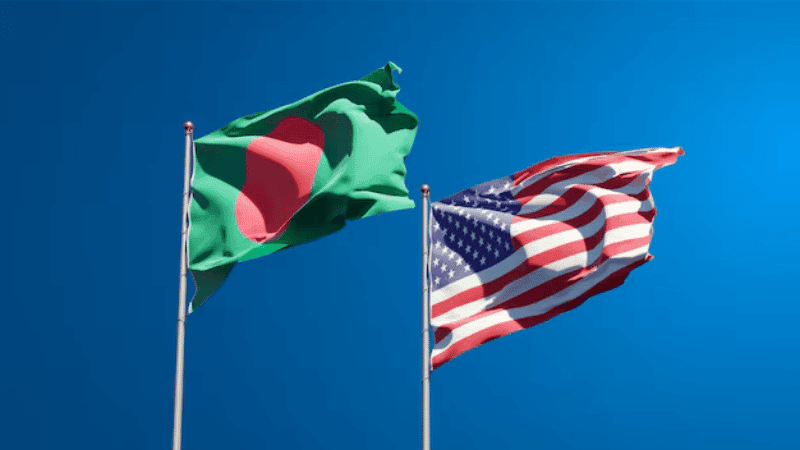

Recently, there has been intense discussion about the 'Reciprocal Trade Agreement' concluded by the former interim government of Bangladesh with the United States. According to many, the interests of Bangladesh have not been properly protected in the agreement. A review of the agreement has shown that it has ensured more benefits for the United States than the concessions provided for Bangladesh.
The announcement of the agreement came in a joint statement released by the White House on February 9, just three days before the 13th National Parliament elections. The agreement was then published on the website of the Office of the US Trade Representative. The agreement includes a wide range of issues, including tariff reductions, removal of non-tariff barriers, digital trade, labor rights, environmental protection, and national security cooperation.
The entire agreement is presented for readers:
Section 1. Tariffs and Quotas
Article 1.1: Tariffs and Quotas
1. Bangladesh shall apply a rate of customs duty1 on originating goods of the United States
as set out in Schedule 1 to Annex I.
2. Bangladesh shall not impose quotas on imports of originating goods of the United States
unless otherwise agreed by the Parties.
3. The United States shall apply a reciprocal tariff rate on originating goods of Bangladesh as
set out in Schedule 2 to Annex I.
Section 2. Non-Tariff Barriers and Related Matters
Article 2.1: Import Licensing
Bangladesh shall not apply import licensing2 to U.S. goods in a manner that restricts the
importation of such goods. Bangladesh shall ensure that any non-automatic import licensing that it applies, is applied only to administer an underlying measure, and in a manner that is transparent, nondiscriminatory, and not unduly burdensome, and that does not reduce the competitiveness of U.S. exports.
Article 2.2: Technical Regulations, Standards, and Conformity Assessment
1. Bangladesh shall allow U.S. originating goods that comply with applicable U.S. or international standards, U.S. technical regulations, or U.S. or international conformity assessment procedures to enter its territory without additional conformity assessment requirements where
certification is provided by governmental or internationally accredited laboratories.
In doing so:
(a) Bangladesh shall accord to the conformity assessment bodies of the United States
treatment no less favorable than that it accords to its own bodies; and
(b) Bangladesh shall facilitate the acceptance of U.S. compliance procedures for goods
which are not subject to third-party conformity assessment in the U.S. regulatory
framework.
2. Bangladesh shall ensure that technical regulations, standards, and conformity assessment procedures are applied in a non-discriminatory manner and do not operate as disguised restrictions on bilateral trade, if any, and shall remove existing technical barriers to trade in areas that undermine reciprocity, including requirements for duplicative or unnecessary testing or conformity assessment.
Article 2.3: Agriculture
1. Bangladesh shall provide non-discriminatory or preferential market access for U.S.
agricultural goods as set forth in Schedule 1 to Annex I.
2. Bangladesh shall ensure that its sanitary and phytosanitary (SPS) measures are science-
and risk-based and do not operate as disguised restrictions on bilateral trade, and shall remove
unjustified SPS barriers in areas that undermine reciprocity.
3. Bangladesh shall not enter into agreements or understandings with third countries that
include non-scientific, discriminatory, or preferential technical standards; include third-country SPS measures that are incompatible with U.S. or international standards; or otherwise
disadvantage U.S. exports to such third countries.
Article 2.4: Geographical Indications
Bangladesh shall ensure transparency and fairness with respect to the protection or
recognition of geographical indications, including pursuant to an international agreement. In cases where Bangladesh protects or recognizes a term that identifies a good as a geographical indication but where there is no given quality, reputation, or other characteristic of the good that is essentially attributable to its geographical origin, Bangladesh shall permit use of the term in connection with U.S. goods.
Article 2.5: Cheese and Meat Terms
Bangladesh shall not restrict U.S. market access due to the mere use of the individual
cheese and meat terms listed in Annex II.
Article 2.6: Intellectual Property
Bangladesh shall provide a robust standard of protection for intellectual property.3
Bangladesh shall provide effective systems for civil, criminal, and border enforcement of
intellectual property rights and shall ensure that such systems combat and deter the infringement or misappropriation of intellectual property, including in the online environment. Bangladesh shall prioritize and shall take effective criminal and border enforcement actions against copyright and trademark infringements.
Article 2.7: Services
Bangladesh shall not adopt or maintain measures that discriminate against U.S. services or service suppliers as compared to domestic services or services suppliers or those of any third country, jurisdiction, or economy. This Article does not apply to the extent that, in all of
Bangladesh’s trade agreements, a measure is covered by a relevant non-conforming measure or limitation or Bangladesh is not bound with respect to the measure.
Article 2.8: Good Regulatory Practices
Bangladesh shall adopt and implement good regulatory practices as set out in Article 1.17
of Annex III that ensure greater transparency, predictability, and participation throughout the
regulatory lifecycle.
Article 2.9: Labor
1. Bangladesh shall adopt and implement a prohibition on the importation of goods mined,
produced, or manufactured wholly or in part by convict labor or forced or compulsory labor,
including indentured labor and indentured child labor.
2. Bangladesh shall protect internationally recognized labor rights.5 This includes by
adopting or maintaining such rights in its law and practice, and effectively enforcing its labor laws, including by creating or maintaining necessary institutions to protect labor rights. Bangladesh shall establish and effectively apply appropriate legal sanctions for violations of those laws.
Bangladesh shall not weaken or reduce the protections in its labor laws and shall address any suchweakening or reduction that has been made to encourage trade or investment to date.6 In addition,Bangladesh shall address issues related to labor rights that contribute to non-reciprocal trade.
Article 2.10: Environment
Bangladesh shall adopt and maintain environmental protections, effectively enforce its
environmental laws, uphold or institute as necessary strong environmental governance structures, and address environment-related issues that contribute to non-reciprocal trade.
Article 2.11: Border Measures and Taxes
1. If the United States adopts a border measure to combat regulatory arbitrage that would
disadvantage U.S. workers and businesses, Bangladesh shall coordinate and endeavor to align its border measures to address the issue.
2. Recognizing that differences in tax regimes can contribute to nonreciprocal trade,
Bangladesh shall not contest, including through countervailing measures or at the WTO, any measure adopted by the United States to rebate or to refrain from imposing direct taxes in relation to exports from the United States.
3. Bangladesh shall not impose value-added taxes that discriminate against U.S. companies
in law or in fact.
4. Bangladesh, by 2030, shall implement and maintain technology solutions that allow for
full pre-arrival processing, paperless trade, and digitalized procedures for the movement of goods of the United States across its borders.
Section 3. Digital Trade and Technology
Article 3.1: Digital Services Tax
Bangladesh shall not impose digital services taxes, or similar taxes, that discriminate
against U.S. companies in law or in fact.
Article 3.2: Facilitation of Digital Trade
1. Bangladesh shall facilitate digital trade with the United States, including by:
(a) refraining from measures that discriminate against U.S. digital products;
(b) ensuring the free transfer of data across trusted borders for the conduct of business;
and
(c) collaborating with the United States to address cybersecurity challenges.
2. If Bangladesh enters into a new digital trade agreement with a country that jeopardizes
essential U.S. interests, the United States may, if consultations with Bangladesh fail to resolve its
concerns, terminate this Agreement and reimpose the applicable reciprocal tariff rate set forth in Executive Order 14257 of April 2, 2025.
Article 3.3: Customs Duties on Electronic Transmissions
Bangladesh shall not impose customs duties on electronic transmissions, including content
transmitted electronically, and shall support multilateral adoption of a permanent moratorium on customs duties on electronic transmissions at the WTO.
Article 3.4: Market Entry Conditions
1. Bangladesh shall not impose any condition or enforce any undertaking requiring U.S.
persons engaged in commercial activities to involuntarily transfer or provide access to a particular technology, production process, source code, or other proprietary knowledge, or to purchase, utilize, or accord a preference to a particular technology, as a condition for doing business in its territory.
2. Nothing in this Article shall:
(a) apply to government procurement;
(b) preclude the inclusion or implementation of terms and conditions related to the
provision of source code in commercially negotiated contracts; or
(c) preclude a regulatory body or judicial authority of a Party from requiring a person
of another Party to preserve and make available the source code of software, or an algorithm expressed in that source code, to the regulatory body for a specific investigation, inspection, examination, enforcement action, or judicial proceeding, subject to safeguards against unauthorized disclosure.
Section 4. Economic and National Security
Article 4.1: Complementary Measures
1. If the United States adopts a border measure or other trade action and considers that such
measure is relevant to protecting the economic or national security of the United States, the United States intends to notify Bangladesh of such measure. Upon receiving such a notification, and following consultations between the Parties, Bangladesh shall adopt or maintain a complementary restrictive measure, in accordance with its laws and regulations, in support of the U.S. measure.
2. Bangladesh shall adopt and implement measures to address practices of companies owned or controlled by third countries operating in Bangladesh’s jurisdiction that result in: (1) the export of below-market price goods to the United States; (2) increased exports of below market priced goods to the United States; (3) a reduction in U.S. exports to Bangladesh; or (4) a reduction in U.S. exports to third-country markets. The United States will share information with Bangladesh of such below-market price goods.
Article 4.2: Export Controls, Sanctions, Investment Security, and Related Matters
1. Bangladesh shall cooperate with the United States to regulate the trade in national security-
sensitive technologies and goods through existing multilateral export control regimes; harmonize Bangladesh’s export control regime with U.S. export controls on such technologies and goods; and ensure that its companies do not backfill or undermine these controls.
2. Bangladesh shall cooperate in a manner consistent with, and permitted by, applicable
requirements of domestic law, with the United States with a view to restricting transactions that would be violations of U.S. sanctions or export controls if they occurred in the United States or by a U.S. person.
3. Bangladesh shall cooperate in providing information about inbound investment with a view toward increasing transparency and experience sharing with the United States on economic and national security matters.
4. If the United States determines that Bangladesh is cooperating to address shared national and economic security issues, the United States may take such cooperation into account in administering its laws and regulations pertaining to export controls, investment reviews, and other measures.
Article 4.3: Other Measures
1. The United States shall work with Bangladesh to streamline and enhance defense trade.
2. Bangladesh shall adopt measures to encourage shipbuilding and shipping by market
economy countries. The Parties shall consult on such measures.
3. Bangladesh and the United States shall enter into a duty evasion cooperation agreement.
4. If Bangladesh enters into a new bilateral free trade agreement or preferential economic
agreement with a non-market country that undermines this Agreement, the United States may, if consultations with Bangladesh fail to resolve its concerns, terminate this Agreement and reimpose the applicable reciprocal tariff rate set forth in Executive Order 14257 of April 2, 2025.
5. Bangladesh shall not purchase any nuclear reactors, fuel rods, or enriched uranium from a
country that jeopardizes essential U.S. interests except for the procurement of proprietary materials for which there are no alternative suppliers or technologies or materials contracted prior to entry into force of this agreement required for existing reactors.
Section 5: Commercial Consideration and Opportunities
Article 5.1: Investment
1. Bangladesh will permit and facilitate direct investment by the United States in its territory to explore for, mine, extract, refine, process, transport, distribute, and export significant mineral and energy resources and to provide power generation, telecommunications, transportation, and infrastructure services—on terms no less favorable than those accorded to its own private investors in like circumstances. It will regulate such investments in a manner consistent with minimum standards of international law.
2. The United States will consider supporting investment financing in key sectors in Bangladesh through its own institutions—such as the Export-Import Bank of the United States (Exim Bank) and the U.S. International Development Finance Corporation (DFC)—in collaboration with U.S. private sector partners, consistent with applicable law.
3. Bangladesh will facilitate, to the extent possible, greenfield investment in the United States that creates jobs.
Article 5.2: Commercial Considerations
1. Bangladesh will ensure that its state-owned or controlled enterprises (SOEs) and third-country SOEs operating in its market, when engaged in commercial activities, (a) act on commercial considerations in the procurement of goods or services; (b) refrain from discriminating against U.S. goods or services; and (c) refrain from providing subsidies to domestic producers. The exception to this is for non-commercial public benefit organizations. Bangladesh will refrain from providing non-commercial assistance or subsidies to SOEs that produce its goods.
2. Upon written request by the United States, Bangladesh shall provide information on all non-commercial support or subsidies provided to any manufacturing enterprise in its territory—except for enterprises providing non-commercial public goods—and shall take measures to address the negative effects of such subsidies and support measures on trade and investment with the United States.
Article 5.3: Textiles
The United States undertakes to establish a mechanism that will enable certain textile and apparel products from Bangladesh to benefit from zero reciprocal duty rates. This mechanism will provide that a certain amount of Bangladeshi apparel and apparel imports will be able to enter the United States at this reduced duty rate in the future, but the amount will be determined based on the content and quantity of cotton and man-made fiber-based textiles produced in the United States.
Article 5.4: Purchases
As set out in Section 6 of Annex III, Bangladesh shall purchase originating goods of the United States.
Section 6. Implementation, Enforcement, and Final Provisions
Article 6.1: Annexes, Appendices, and Footnotes
The annexes, appendices, and footnotes to this Agreement constitute an integral part of this
Agreement.
Article 6.2: Modifications and Amendments
Each Party may request reasonable modifications to this Agreement, which the other Party shall consider in good faith. The Parties may agree, in writing, to amend this Agreement if such amendment does not undermine the benefits of this Agreement or other agreements between the Parties.
Article 6.3: Rules of Origin
The Parties intend for the benefits of this Agreement to accrue substantially to them and
their nationals. If benefits of this Agreement are accruing substantially to third countries or third-
country nationals, a Party may, after consultation with the other Party when practicable, establish rules of origin necessary to achieve the Parties’ intention for this Agreement.
Article 6.4: Enforcement
1. Nothing in this Agreement shall constrain, or otherwise prevent, a Party from imposing
additional tariffs to remedy unfair trade practices, to address import surges, to protect its economic or national security, or for other similar reasons consistent with its law.
2. If the United States considers that Bangladesh has not complied with a provision of this Agreement, the United States shall, when practicable, seek consultations with Bangladesh. If these consultations do not result in a satisfactory outcome, the United States may reimpose the applicable reciprocal tariff rate set forth in Executive Order 14257 of April 2, 2025 on certain or all imports from Bangladesh to address the noncompliance.
Article 6.5: Termination
Either Party may terminate this Agreement by providing written notice of termination to
the other Party. The termination shall take effect 60 days after a Party provides written notice to
the other Party or on such other date as the Parties decide.
Article 6.6: Entry Into Force
This Agreement shall enter into force 60 days after the date on which the Parties have
exchanged written notifications certifying completion of their applicable legal procedures or on such other date as the Parties may decide.
Appendix 1
Part One: Bangladesh Customs
General Notes
1. The provisions of this Part are generally expressed in terms of the First Schedule to the Customs Act 2023, as amended (Bangladesh Customs Tariff) and the interpretation of the provisions of this Part, including the product coverage of the sub-headings, shall be governed by the General Notes, Section Notes and Chapter Notes to the Bangladesh Customs Tariff. To the extent that the provisions of this Part are identical with the relevant provisions of the Bangladesh Customs Tariff, the provisions of this Schedule shall have the same meaning as the relevant provisions of the Bangladesh Customs Tariff.
2. The base rates of duty specified in this Schedule shall be based on the most favoured nation (MFN) duty of Bangladesh effective on 1 July 2025, including supplementary duties and regulatory duties.
3. Bangladesh shall apply tariffs on goods originating in the United States in accordance with the terms set out in this Section. In the case of Bangladesh, tariffs include customs duties (CD), supplementary duties (SD) as defined in the Value Added and Supplemental Duty Act, 2012 (as amended), and regulatory duties (RD) as defined in the Customs Act, 2023.
4. In this Section, the following staging categories shall apply to the elimination or reduction of tariffs by Bangladesh:
(a) Tariffs on originating goods provided for in the items included in Staging Category EIF shall be completely eliminated and such goods shall be duty-free on the date of entry into force of this Agreement;
(b) Customs duties on originating goods provided for in items included in staging category B5 shall be reduced by 50 percent upon entry into force of this Agreement, and the remaining 50 percent shall be eliminated in four equal annual stages, and such goods shall be duty-free as of January 1 of the fifth year;
(c) Customs duties on originating goods provided for in items included in staging category B10 shall be reduced by 50 percent upon entry into force of this Agreement, and the remaining 50 percent shall be eliminated in nine equal annual stages, and such goods shall be duty-free as of January 1 of the tenth year;
(d) Customs duties on originating goods provided for in items included in staging category A shall be zero;
(e) Customs duties on originating goods provided for in items included in staging category X shall be subject to Bangladesh’s applicable MFN tariff.
5. The intermediate step rates for tariff items in this Part shall be determined to the nearest one-tenth of a percent, or if the tariff rate is expressed in monetary units, to the nearest whole Bangladeshi taka.
6. For the purposes of this Part, the term "first year" means the year in which this Agreement enters into force in accordance with Article VI and shall remain in effect until December 31 of that year.
7. For the purposes of this Part, beginning in the second year, each annual step of tariff reduction shall be effective on January 1 of the corresponding year.
Part Two: United States Tariffs
General Notes
1. The provisions of this Part are generally expressed in terms of the "Harmonized Tariff Schedule of the United States (HTSUS)" and the interpretation of the provisions of this Part shall be governed by the General Notes, Section Notes, and Chapter Notes to the HTSUS. To the extent that the provisions of this section are identical to the corresponding provisions of the HTSUS, the provisions of this Schedule shall have the same meaning as the corresponding provisions of the HTSUS.
2. The United States shall apply the provisions of Executive Order 14257 (as amended) dated April 2, 2025, to products manufactured in Bangladesh specified in this section.
Appendix 2: List of Products Entering the Market
A. Cheeses: American, Asiago, Blue, Blue Vein, Brie, Burrata, Camembert, Cheddar, Chevre, Colby, Cottage Cheese, Coulmier's, Cream Cheese, Danbo, Edam, Emmental, Feta, Fontina, Gorgonzola, Gouda, Grana, Gruyere, Haverty, Limburger, Mascarpone, Monterey/Monterey Jack, Mozzarella, Muenster/Muenster, Neufchatel, Parmesan, Pecorino, Pepper Jack, Provolone, Ricotta, Romano, Saint-Paulin, Samso, Swish, Tilsiter and Tommy.
B. Meat: Black Forest Ham, Bologna/Bologna, Bratwurst, Capicola/Capocola, Chorizo, Kielbasa, Mortadella, Pancetta, Prosciutto and Salami/Salami.
Specific Commitments
Section 1. Non-Tariff Barriers and Related Matters
Industrial Goods
Article 1.1: Medical Devices and Pharmaceuticals
1. Bangladesh shall accept a prior marketing authorization approval or clearance that is issued
by the U.S. Food and Drug Administration (FDA) as sufficient evidence that a medical device
manufactured in the United States meets Bangladesh’s requirements for marketing authorization,
and shall not require marketing authorization for low-risk medical devices where approval or
clearance is not required by the FDA.
2. Bangladesh shall accept U.S. FDA electronic certificates to foreign governments (eCFGs)
as sufficient evidence that a medical device meets its approval requirements, and shall not require
a hardcopy, original copy, authenticated copy, wet signature, or apostille of the FDA certificates.
3. Bangladesh shall apply to become an affiliate member of the International Medical Device
Regulators Forum (IMDRF), and, when developing or implementing regulations for marketing
authorization of medical devices, Bangladesh shall adopt relevant scientific or technical guidance
documents developed through IMDRF.
4. Bangladesh shall recognize audits and certificates of device manufacturers’ quality
management systems that are in accordance with the requirements established by the Medical
Device Single Audit Program (MDSAP) and conducted by auditing organizations authorized by
the regulatory authorities participating in MDSAP to audit under the MDSAP requirements.
Bangladesh shall not impose additional regulatory requirements beyond those required for
MDSAP.
5. Bangladesh shall accept a prior marketing authorization that is issued by the U.S. FDA as
sufficient evidence that a pharmaceutical product manufactured in the United States meets its
requirements for marketing authorization in its country.
6. Bangladesh shall accept U.S. FDA’s electronic certificates of pharmaceutical products
(eCPPs) as sufficient evidence that a pharmaceutical product meets its approval requirements and
shall not require a hardcopy, original copy, authenticated copy, wet signature, or apostille of the
FDA certificates.
7. Bangladesh shall not require periodic re-authorization for a pharmaceutical product that
has previously received marketing authorization from the United States, unless Bangladesh
identifies a significant safety, effectiveness, or quality concern.
III - 1
8. Bangladesh shall accept the results of a good manufacturing practice surveillance
inspection conducted by the U.S. FDA of a manufacturing facility for pharmaceutical products
without further need for an inspection or reinspection performed by Bangladesh’s relevant
regulatory authorities when the following conditions apply:
(a) the manufacturing facility is within the territory of the United States; and
(b) the most recent U.S. FDA inspection report as provided by the facility is classified
as no action indicated, demonstrating no objectionable conditions or practices.
Article 1.2: Motor Vehicles and Parts
1. Bangladesh shall accept vehicles and vehicle parts that comply with U.S. Federal Motor
Vehicle Safety Standards (FMVSS) and U.S. emissions standards and sold in the United States,
and accept U.S. compliance procedures for automotive products without requirements for U.S.
vehicles to undergo additional processes to enter Bangladesh’s market.8
2. Bangladesh shall address any other standards or requirements that discriminate against U.S.
vehicles and vehicle parts.
Article 1.3: Remanufactured Goods
Bangladesh shall remove import restrictions and any licensing requirements on U.S.
remanufactured goods or their parts.9
Agriculture
Article 1.4: Recognition of the U.S. Food and Agricultural Control System and Acceptance
of Certificates Issued by U.S. Regulatory Authorities
1. Bangladesh shall recognize that the U.S. sanitary and phytosanitary (SPS) measures and
other measures for food and agricultural products, including technical regulations and standards,
adopted or maintained by the U.S. government,10 satisfy the requirements of Bangladesh’s
measures applied to food and agricultural products imported into Bangladesh.
2. Further to paragraph 1, Bangladesh shall accept official U.S. government certification of
compliance with U.S. requirements for imports of food and agricultural products into Bangladesh.
Bangladesh shall ensure that any future changes made to any bilateral export certification
documents or electronic data elements are made with the concurrence of the United States.
3. Bangladesh shall limit attestations and information required in certificates required for
imports of U.S. food and agricultural products to what is necessary to comply with applicable U.S.
requirements.
4. Bangladesh affirms its commitments under Annex B of the World Trade Organization
(WTO) Agreement on Sanitary and Phytosanitary Measures and Article 2 and Article 5 of the
Agreement on Technical Barriers to Trade (TBT) to notify proposed measures to the WTO SPS
or TBT Committees, as appropriate, and to take into account comments received from WTO
Members before the measure is final.
Article 1.5: Facility Registration / Establishment Listing
Dairy Products
1. Bangladesh shall:
(a) (b) recognize the U.S. dairy-safety system as providing at least the same level of
protection as Bangladesh’s dairy-safety system;
allow imports of U.S. dairy products of bovine, ovine, and caprine origins when
accompanied by a U.S. Department of Agriculture (USDA) Agricultural Marketing
Service (AMS) dairy sanitary certificate; and
(c) not adopt or maintain a facility registration requirement for imports of U.S. dairy
products into Bangladesh.
Meat and Poultry (Including Offal), Meat and Poultry Products, Processed Meat and Poultry,
Siluriformes, and Egg Products
2. Bangladesh shall recognize USDA Food Safety and Inspection Service (FSIS) oversight of
U.S. meat and poultry (including offal), meat and poultry products, processed meat and poultry,
Siluriformes, and egg product facilities, including cold storage warehouse facilities, for purposes
of allowing imports of U.S. meat and poultry (including offal), meat and poultry products,
processed meat and poultry, Siluriformes, and egg products.
3. Bangladesh shall accept the FSIS Meat, Poultry, and Egg Product Inspection Directory,
which lists all Federally inspected establishments producing meat, poultry, Siluriformes, and eggproducts regulated by FSIS, as the official list of U.S. establishments eligible to export meat and
poultry (including offal), meat and poultry products, processed meat and poultry, Siluriformes,
and egg products to Bangladesh.
4. Bangladesh shall accept U.S. meat and poultry (including offal), meat and poultry products,
processed meat and poultry, Siluriformes, and egg products inspected by FSIS and accompanied
by a FSIS Export Certificate of Wholesomeness (FSIS 9060-5 series certificate) or electronic data
elements, or any successor thereto.
5. Bangladesh shall impose no additional product registration or facility registration
requirements on U.S. meat and poultry (including offal), meat and poultry products, processed
meat and poultry, Siluriformes, and egg products.
Article 1.6: Agricultural Biotechnology
1. Noting the ability of agricultural biotechnology to improve lives by helping to feed growing
populations and by promoting improved agricultural productivity while optimizing inputs,
Bangladesh shall maintain, for products of agricultural biotechnology, science- and risk-based
regulatory frameworks and efficient authorization processes, in order to facilitate increased trade
in such products.
2. Recognizing the efficacy of the U.S. regulatory system to assess the safety of products of
agricultural biotechnology, within 24 months of entry into force of this Agreement, Bangladesh
shall develop and implement a policy whereby a product of agricultural biotechnology11 that can
be legally sold in the United States and has completed all relevant U.S. premarket processes,
whether voluntary or mandatory, shall be allowed to be imported and marketed in Bangladesh for
the same purposes without requiring a pre-market review, deregulation, additional labeling
requirements, or approval by Bangladesh.
3. Bangladesh shall, within 24 months of entry into force of this Agreement, develop and
implement a policy to ensure that Bangladesh addresses any low-level presence (LLP) occurrence
affecting a U.S. agricultural export:
(a) without unnecessary delay; and
(b) does so by taking into account any relevant risk or safety assessment provided, and
authorization granted, by the United States or any third country.
Article 1.7: Non-Living Modified Organisms
Bangladesh recognizes that processed food and agricultural products derived from products
of agricultural biotechnology, do not contain living modified organisms and therefore are not
subject to approval by Bangladesh’s authorities. For the purposes of this Article, the definition of
“processed” includes heat treatment, grinding, or other processing that removes the ability of the
product of agricultural biotechnology to germinate.
Article 1.8: Highly Pathogenic Avian Influenza (HPAI) - Live Poultry and Poultry Product
Commodities
1. Bangladesh shall not adopt or maintain any measure related to importation of live poultry,
poultry genetics, poultry products, and eggs and egg products, that is inconsistent with the World
Organization for Animal Health (WOAH) Terrestrial Animal Health Code Chapter (TAHC) 10.4
(Infection with High Pathogenicity Avian Influenza Viruses) or any successor thereto.
Specifically, Bangladesh shall align the import regulation definition for poultry with the WOAH
TAHC definition for poultry.
2. Within 180 days of the date of entry into force of this Agreement, Bangladesh shall
decrease the scope of HPAI regionalization of the United States from State level to a 10km zone
for live poultry, poultry genetics, poultry products, and eggs and egg products. Bangladesh shall
ensure that any import restrictions imposed on U.S. live poultry, poultry genetics, poultry products
and eggs and egg products in response to outbreaks of HPAI are limited to the 10km zone in which
the outbreak was confirmed.
3. Bangladesh shall recognize the USDA Animal and Plant Health Inspection Service
(APHIS) as the competent animal health authority to determine if a 10km zone is considered free
of HPAI, as defined by the WOAH TAHC Chapter 10.4, or any successor thereto, and therefore
is eligible to export live poultry and poultry product commodities to Bangladesh and shall not
impose import restrictions on live poultry, poultry genetics, poultry products, and eggs and egg
products beyond what is implemented within the United States for domestic purposes.
Article 1.9: Halal Certification
If Bangladesh requires a Halal certification, Bangladesh shall allow any U.S. Halal certifier
that meets Bangladesh’s Halal requirements to certify products as Halal for importation into
Bangladesh without additional requirements.
Article 1.10: Maximum Residue Levels (MRLs)13
1. Recognizing the importance of establishing science- and risk-based MRLs, in cases where
Bangladesh has not established an MRL, Bangladesh shall recognize and accept the corresponding
U.S. tolerances. If the United States does not maintain a corresponding tolerance, Bangladesh
shall recognize and accept the corresponding Codex Alimentarius (Codex) MRL.
2. In the event of an instance of non-compliance with the relevant MRL, Bangladesh shall
apply enhanced, risk-based surveillance, if warranted, only to the entity responsible for the non-
compliance. Bangladesh shall also provide the entity responsible for the non-compliance an
opportunity to dispute or resolve the alleged violation.
3. Bangladesh shall limit suspension of U.S. entities based on MRL non-compliance to the
responsible entity and only after multiple instances of non-compliance.
4. Bangladesh shall ensure that testing methodologies and marker residues used to determine
compliance with MRLs are consistent with the underlying risk assessment used to establish the
corresponding Bangladesh MRL, U.S. tolerance, or Codex MRL being applied and ensure that
testing methodologies and marker residues are communicated in a transparent manner.
Article 1.11: Plant and Plant Products Market Access
1. For U.S. market access requests submitted to Bangladesh after entry into force of this
Agreement, Bangladesh shall complete the market access process and reach agreement with the
United States on a protocol to allow imports within 24 months of submission.
2. Recognizing the International Standard for Phytosanitary Measures 14 (ISPM 14) as the
relevant international standard regarding the use of integrated measures in a systems approach for
pest risk management, Bangladesh shall accept the use of systems approach protocols for the
importation of U.S. plant products into Bangladesh. For U.S. plant product requests for systems
approaches submitted to Bangladesh’s Ministry of Agriculture after entry into force of this
Agreement, the Ministry of Agriculture shall agree to a systems approach protocol within 24
months of submission.
Article 1.12: Import Licensing
1. Bangladesh shall immediately submit its annual questionnaire on import licensing
procedures to the WTO, per Article 7.3 of the Agreement on Import Licensing Procedures.
2. Bangladesh shall not require an import permit or letter of credit prior to shipment of food
products or agricultural goods from the United States.
Intellectual Property
Article 1.13: Geographical Indications
With respect to the protection or recognition of a geographical indication, including
pursuant to an international agreement, Bangladesh shall:
(a) (b) (c) (d) (e) (f) ensure transparent and fair procedures for examination, opposition, and
cancellation, including with respect to a translation or transliteration;
ensure that the grounds for refusal, opposition, and cancellation include the
likelihood of confusion with a prior trademark and whether the term is the term
customary in common language as the common name for the relevant good in its
territory;
publicly identify which component or components it is protecting and which it is
not protecting;
not protect an individual component of a multi-component term that is protected or
is recognized as a geographical indication if that individual component is the term
customary in common language as the common name for the relevant good in its
territory;
not prevent third parties from commercial use of a term, sign, or image based on
the evocation of a geographical indication protected or recognized in its territory;
and
in determining whether a term is the term customary in common language as the
common name for the relevant good in its territory, have the authority to take into
account how consumers understand the term in its territory and recognize that
factors relevant to that consumer understanding may include:
(i) whether the term is used to refer to the type of good in question, as indicated
by competent sources such as dictionaries, newspapers, and relevant
websites;
(ii) (iii) (iv) (v) (vi) how the good referenced by the term is marketed and used in trade in its
territory;
whether the term is used in relevant international standards to refer to a type
or class of good in its territory, such as pursuant to a standard promulgated
by Codex;
whether persons other than the person who claims rights in the term use the
term as the name for the type of product in question;
whether the good in question is imported into its territory, in significant
quantities, from a place other than the territory identified in the application
or petition, and whether those imported goods are named by the term; and
whether the product associated with the term is manufactured or traded in
significant quantities from a place other than the territory identified in the
application or petition.
Article 1.14: International Agreements
Bangladesh shall ratify or accede to each of the following agreements, if it is not already a
party to that agreement, and shall fully implement each agreement as per the timeframe below:
(a) Berne Convention for the Protection of Literary and Artistic Works, done at Berne
on September 9, 1886, as revised at Paris on July 24, 1971;
(b) Budapest Treaty on the International Recognition of the Deposit of
Microorganisms for the Purposes of Patent Procedure, done at Budapest on April
28, 1977, as amended on September 26, 1980, within 5 years;
(c) Geneva Act of the Hague Agreement Concerning the International Registration of
Industrial Designs, done at Geneva on July 2, 1999 within 5 years;
(d) Protocol Relating to the Madrid Agreement Concerning the International
Registration of Marks, done at Madrid on June 27, 1989, within 3 years;
(e) Marrakesh Treaty to Facilitate Access to Published Works for Persons Who Are
Blind, Visually Impaired or Otherwise Print Disabled, done at Marrakesh on June
27, 2013;
(f) Paris Convention for the Protection of Industrial Property, done at Paris on March
20, 1883, as revised at Stockholm on July 14, 1967;
(g) (h) (i) (j) (k) (l) Patent Cooperation Treaty, done at Washington on June 19, 1970, as amended on
September 28, 1979, and modified on February 3, 1984, within 5 years;
Patent Law Treaty, done at Geneva on June 1, 2000, within 5 years;
Singapore Treaty on the Law of Trademarks, done at Singapore on March 27, 2006,
within 5 years;
International Convention for the Protection of New Varieties of Plants, done at
Paris on December 2, 1961, as revised at Geneva on March 19, 1991, within 5 years;
World Intellectual Property Organization (WIPO) Copyright Treaty, done at
Geneva on December 20, 1996, within 5 years; and
WIPO Performances and Phonograms Treaty, done at Geneva on December 20,
1996, within 5 years.
Services and Investment
Article 1.15: Services
1. Within three years of entry into force of this Agreement, Bangladesh shall join and take
effective actions to implement the Joint Initiative on Services Domestic Regulation, including
submitting its revised Specific Commitments for certification by the WTO.
2. Bangladesh shall remove mandatory reinsurance cession requirements, including
obligations for U.S. insurers to reinsure at least 50% of their business with Sadharan Bima
Corporation (SBC).
Article 1.16: Investment
1. Bangladesh shall liberalize its foreign equity caps for U.S. investment in oil and gas,
insurance, and telecommunications.
2. Bangladesh shall facilitate U.S. investors receiving No Objection Certificates where they
are required.
3. Bangladesh shall enhance the transparency and efficiency of approval processes for U.S.
investors to transfer investment-related capital into and out of its territory in freely usable currency
at the prevailing market rate of exchange, including by establishing and effectively implementing
clear regulatory guidelines regarding the timelines for approvals.
4. Bangladesh shall address outstanding arrears to U.S. firms without delay and in line with
its International Monetary Fund financing program commitments.
Article 1.17: Good Regulatory Practices
With respect to the adoption and implementation of good regulatory practices at the central
level of government, Bangladesh shall:
(a) (b) (c) (d) (e) (f) (g) (h) ensure that laws, regulations, procedures, and administrative rulings are promptly
published and made easily accessible online;
publish and make easily accessible online the text of proposed regulatory actions,
as well as any regulatory impact analysis, an explanation of the regulation, and its
objective;
conduct public consultations for proposed regulatory actions in a transparent
manner; allow adequate time for interested persons, domestic and foreign, to submit
comments, taking into account the complexity or possible impact of the proposed
regulation; and give consideration to comments received;
give reasonable notice of planned regulatory actions and publish regulatory policy
priorities that will be developed, modified, or eliminated in the near term;
use publicly accessible high-quality data, evidence, technical information, and risk
assessments, where appropriate, during the planning and development of
regulation;
support international regulatory cooperation through the use of, as appropriate,
relevant international standards, guides, and recommendations to avoid
unnecessary obstacles to trade;
conduct reviews of regulation in effect to determine whether new information or
other changes justify modification or repeal of regulation; and
use tools, such as regulatory impact analysis, to assess the need for and possible
impacts of regulations, which could also include alternative approaches to
regulation, where appropriate.
Article 1.18: Anticorruption
To combat corruption, Bangladesh commits to strengthening, implementing, and enforcing
comprehensive anti-corruption laws and regulations; to establishing clear penalties and
consequences for individuals and entities engaged in corrupt practices; and to adopting and
maintaining standards of conduct for the proper performance of public functions and the avoidance
of conflicts of interest by public officials. In this regard, Bangladesh intends to implement and enforce transparent procurement processes, strengthen independent anti-corruption institutions,
and uphold accountability through regular public reporting.
Labor
Article 1.19: Labor Laws and other Measures
1. Bangladesh shall amend the Bangladesh Labour Act (BLA), and issue implementing rules
to protect freedom of association and collective bargaining, including by:
(a) (b) (c) (d) (e) (f) (g) lowering the 20 percent registration threshold for union registration to a level that
does not hinder union formation;
requiring that the Director General of the Department of Labour (DOL) seek the
approval of the Labor Court in order to cancel the registration of a union;
limiting registration requirements for personal information on union members
to a factory identification card with a number, a national identity card, or a
birth registration certificate;
requiring that in order for a union to be registered, it need hold only one general
meeting to adopt a constitution, where a majority of members are present and
submit meeting minutes;
increasing fines for anti-union discrimination and unfair labor practices (ULPs) to
a level sufficient to help deter employers from committing such acts;
clarifying that the blacklisting of workers is prohibited as a ULP and that workers
and unions can directly file ULP cases with Bangladesh labor courts; and
removing unreasonable restrictions on the right to strike, including prohibitions on
exercising the right to strike for any period after the opening of an establishment,
and severe penalties, including imprisonment, for illegal strikes.
2. Bangladesh shall ensure workers in the export processing zones (EPZs) may fully exercise
their rights to freedom of association and collective bargaining, including by:
(a) within two years of entry into force of this Agreement, making the EPZs subject to
the BLA to allow for workers to form and join trade unions or extensively
reforming the EPZ Labor Act to allow for the formation of independent unions; and (b) making necessary amendments in the EPZ Labour Act, in alignment with BLA and
international standards, so that there are no unreasonable restrictions on the right to
strike, including prohibitions on exercising the right to strike for any period after
the opening of an establishment, and severe penalties, including imprisonment, for
illegal strikes.
3. Bangladesh shall resolve or withdraw, as appropriate, pending criminal cases filed against
garment workers and labor leaders for engaging in legitimate union and protest activities, including
pending criminal cases stemming from the 2023 minimum wage labor unrest.
4. Bangladesh shall adopt a transparent and regularized minimum wage review mechanism
and shall conduct reviews through such mechanism within three years after entry into force of this
Agreement and annually thereafter. In addition, Bangladesh shall provide interested parties the
opportunity to provide their views during the development of the mechanism and in the conduct
of its review.
5. Bangladesh shall:
(a) 6. To ensure that workers can effectively exercise their rights to freedom of association,
process union applications that meet administrative requirements within the legal
requirement of 55 days;
(b) publish the status of all pending applications on the DOL’s existing online
registration portal; and
(c) revise the standard operating procedures for registration to provide DOL officials
with clear guidelines and ensure that the standard operating procedures are
consistent with an amended BLA.
To facilitate the effective enforcement of its labor laws, Bangladesh shall:
(a) allot greater funding in its annual budget to increase the number of labor inspectors,
approve an additional number of labor inspector posts, recruit and hire labor
inspectors, and ensure there are promotion pathways for labor inspectors;
(b) ensure labor inspectors have the authority and resources to conduct unannounced
inspections and can issue legal sanctions on all workplaces in Bangladesh,
including in the EPZs, to address labor law violations, including those related to
forced labor and child labor violations;
(c) increase fines and other sanctions to sufficient levels to help deter violations for
failure to comply with domestic labor, fire, or building standards and codes; and
(d) expeditiously investigate and resolve violations of the BLA, including anti-union
discrimination, retaliation, and other ULPs.
Article 1.20: Environmental Laws and Policies
Bangladesh shall ensure that its environmental laws and policies provide for, and
encourage, high levels of environmental protection.
Article 1.21: Illegal Logging and Associated Trade
1. Bangladesh shall take measures to combat, and cooperate with the United States to prevent,
trade in illegally harvested forest products. Such measures include those necessary to ensure full
implementation of existing laws and regulations for forest sector governance and to strengthen,
implement, and enforce comprehensive anti-corruption laws and regulations applicable to officials
responsible for the administration and control of forest resources.
2. Bangladesh shall take actions to improve transparency in the forest sector by requiring a
participatory process and public disclosure of forest management plans and logging permits
through an accessible online platform.
Article 1.22: Resource Efficient Economy
Bangladesh shall take measures to promote a more resource efficient economy. Such
measures may include addressing trade barriers that inhibit more resource efficient economies;
encouraging innovation that promotes circularity, for example through improving resource
efficiency in product design; and promoting trade facilitative approaches to enable reverse supply
chains.
Article 1.23: Fisheries Subsidies
1. Bangladesh shall accept, as soon as possible, the WTO Agreement on Fisheries Subsidies
(AFS) and the provisions contained therein, including the disciplines on certain forms of harmful
fisheries subsidies, such as its provisions to prohibit subsidies to Illegal, Unreported, and
Unregulated (IUU) fishing and to overfished stocks, and to enhance transparency and subsidy
notifications.
2. After accepting the AFS, Bangladesh shall fully implement the obligations of the AFS,
notwithstanding Article 12 of the AFS.
3. In addition, Bangladesh shall ensure its fisheries subsidies do not contribute to overcapacity
and overfishing, including through the use of robust fisheries management regimes and reform of
such subsidies.
Article 1.24: Sustainable Fisheries Management and IUU Fishing
1. Bangladesh shall operate a sustainable fisheries management system that regulates marine
wild capture fishing and promotes the long-term conservation of marine species, including sharks,
sea turtles, seabirds, and marine mammals.
2. Bangladesh shall strengthen enforcement of fisheries-related laws, regulations, and other
measures to effectively combat IUU fishing and deter trade in products from IUU fishing,
including through:
(a) implementing port state measures, including through actions consistent with the
Port State Measures Agreement;
(b) adopting or strengthening measures to deter vessels flying its flag and its nationals
from engaging in IUU fishing; and
(c) preventing the transshipment at sea of fish caught through IUU fishing or fish
products derived from IUU fishing.
Article 1.25: Combating Illegal Wildlife Trade
Bangladesh shall take measures to combat, and cooperate to prevent, the trade of wild fauna
and flora that were taken or traded in violation of that country’s law or another applicable law,
including through the following actions:
(a) take measures to enhance the effectiveness of inspections of shipments containing
wild fauna and flora, including parts and products thereof, at ports of entry;
(b) take measures to combat the trade of wild fauna and flora transshipped through its
territory that, based on credible evidence, were illegally taken or traded; and
(c) treating intentional transnational trafficking of wild fauna and flora as a serious
crime as defined in the United Nations Convention on Transnational Organized
Crime.
Article 1.26: Convention on International Trade in Endangered Species of Wild Fauna and
Flora (CITES)
Bangladesh shall strengthen implementation of CITES to ensure legal and sustainable trade
of CITES-listed species, including through finalization and submission to the CITES Secretariat,
of draft national legislation to implement CITES.
Article 1.27: Customs and Trade Facilitation
1. Bangladesh shall not deny the legal effect of a bill of lading issued by a private party to another private party for the carriage of goods solely on the basis that the bill of lading is in electronic format.
2. Bangladesh shall protect proprietary data submitted to Bangladesh Customs (National
Board of Revenue) by U.S. traders from unauthorized disclosure.
3. For express shipments from the United States, Bangladesh shall implement the World
Customs Organization Immediate Release Guidelines such that low-risk packages are released
immediately upon arrival without transfer to a customs warehouse.
4. Bangladesh shall facilitate U.S. carriers or their agents in requesting amendments to their
own Import General Manifest (IGM) data after the IGM is registered and facilitate evaluation of
those requests by Bangladesh Customs.
5. Bangladesh shall fully implement Article 1.4 of the WTO Agreement on Trade Facilitation
(TFA) on publication and availability of information.
6. Bangladesh shall submit its national customs valuation legislation and responses to the
check-list of issues to the WTO consistent with Agreement on the Implementation of Article VII of
the General Agreement on Tariffs and Trade 1994.
7. Bangladesh shall establish or maintain a system that receives system-to-system electronic
certification (eCert) data from USDA FSIS for exports of meat, poultry, Siluriformes, and egg
products of the United States within a timeframe agreed by both parties.
Section 2. Digital Trade and Technology
1. Bangladesh shall recognize the Global Cross-Border Privacy Rules (CBPR) System
and Global Privacy Recognition for Processors (PRP) System certifications as valid mechanisms
under its legal framework to transfer data across borders while protecting personal information
and reducing compliance costs.
2. Bangladesh shall increase stakeholder consultations and shall ensure that feedback from
both the U.S. government and U.S. private sector actors is duly considered during the formulation
and revision of the Personal Data Protection Ordinance (PDPO).
3. Bangladesh shall incorporate adequate safeguards for the protection of freedom of
expression under the Cyber Safety Ordinance 2025, and shall amend relevant legislation to impose
stricter penalties for cybercrimes.
4. Bangladesh will amend or repeal the 2021 Regulation for Digital, Social Media, and Over
the Top (OTT) Platforms to remove requirements for traceability within end-to-end encrypted
services and for service suppliers to disclose encryption keys to government authorities and
incorporate freedom of expression protections.
5. Bangladesh shall:
(a) open the upper 600 - 700-megahertz (MHz) of the 6 gigahertz (GHz) spectrum band
(6.425 – 7.125 GHz) to license-exempt wireless/radio local area network
(WLAN/RLAN) technologies for low power indoor (LPI) and very low power
(VLP) device classes, consistent with International Telecommunication Union
(ITU) Regulations; and
(b) within 30 days of official notification, consistent with International
Telecommunication Union (ITU) Regulations, of the upper 6 GHz band being
opened to low power WLAN/RLAN devices, open homologation process for
certifying WLAN/RLAN devices operating in the 1100 – 1200 MHz of the 6 GHz
spectrum band (5.925 – 7.125 GHz).
Section 3. Economic and National Security
1. Bangladesh shall ensure that its ports, port terminals, and logistics tracking networks, and
its commercial fleet, use digital logistics platforms that provide appropriate cybersecurity
protection, protection against the unauthorized disclosure of data, protection against national
security risks, and protection against data-access by other foreign governments.
2. Bangladesh shall establish measures to restrict the unauthorized export, reexport, and in-
country transfer of U.S.-origin or U.S.-controlled items subject to the Export Administration
Regulations (EAR) unless the exporter presents U.S. Department of Commerce’s Bureau of
Industry and Security (BIS) reexport authorization or demonstrates no BIS authorization is
required. The parties shall cooperate and share information regarding items subject to the EAR.
3. Bangladesh shall screen and share its customs and transaction data related to U.S.-origin
or U.S.-controlled items to identify transactions of concern to U.S. authorities, including BIS or
its surrogate, and shall adopt and implement measures to prevent and address violations of U.S.
export controls.
4. Bangladesh shall develop domestic export control systems and enforcement mechanisms,
including by establishing and implementing civil and criminal penalties, and strengthening its
auditing and investigative capabilities, and shall partner with the United States on such
enforcement actions where appropriate, including by sharing information when violations may
have occurred and cooperating on end-use checks and investigations.
5. Bangladesh shall seek to limit the involvement in the design, development, and supply of
software in the supply chains for sensitive technologies of countries of national security concern,
as identified by the Parties, and should implement efforts to increase transparency in these supply
chains where possible.
Section 6. Commercial Considerations
1. Bangladesh shall endeavor to facilitate the increase of purchases by its national flag carrier
(Biman Bangladesh Airline) of U.S. civilian aircraft, parts, and services. Biman Bangladesh
Airline intends to purchase 14 Boeing aircraft, plus a purchase option of additional aircraft.
2. Bangladesh shall endeavor to purchase, or to facilitate the purchase by Bangladeshi
companies, of U.S. energy, including long-term offtake agreements for U.S. liquefied natural gas,
with an estimated value of $15 billion over 15 years.
3. Bangladesh shall endeavor to purchase, or to facilitate the purchase by Bangladeshi
companies, of U.S. agricultural products for ensuring its food security, including wheat (at least
700,000 metric tons per year for five years), soy and soy products (at least $1.25 billion or 2.6
million metric tons, whichever is lesser, over one year), and cotton, with an estimated total value
of $3.5 billion.
4. Bangladesh shall endeavor to increase purchases of U.S. military equipment and limit
military equipment purchases from certain countries.
5. Bangladesh shall submit a full and complete notification to the WTO of all subsidies that
it provides, as required under Article 25.1 of the WTO Agreement on Subsidies and Countervailing
Measures within six months of entry into force of this Agreement.
Leave A Comment