
A turbulent world, a dreamer and a thrilling game: How the FIFA World Cup began
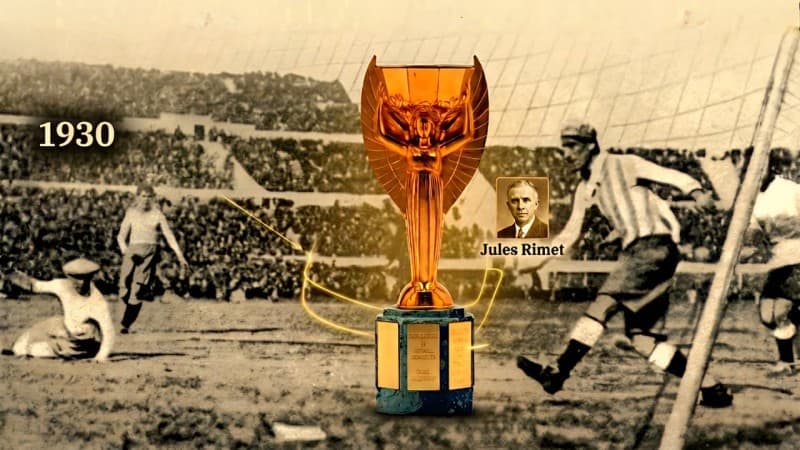

The FIFA World Cup, the world's biggest sporting event, did not exist nearly a century ago. In those days, the Olympic Games were the only stage for determining the world's best football team. Seeing the massive global response to the sport, FIFA's first president, Jules Rimet, wondered: if football is so popular, why should it not have its own global stage? That thought led to action. In 1928, FIFA decided to organise a new tournament every four years — solely for football, for football fans, and for national teams. No one knew then that football would one day become the world's biggest sports festival.
The year was 1930. The world was reeling from the Great Depression. Europe's economy was in ruins, and many countries were politically unstable. Most nations were not interested in travelling across the ocean for a football tournament. Many believed the tournament would collapse before it even began.
But Uruguay, the two-time Olympic football champion, stood against the tide. The tiny South American nation declared the tournament would go ahead. Uruguay wanted to host the World Cup as part of its centenary celebrations of independence. Not only would they host, but they also offered to cover the travel and accommodation costs of participating teams.
After overcoming many obstacles, the first World Cup was held in Uruguay that year. FIFA managed to convince only a handful of European teams to participate. Ultimately, only four countries — France, Belgium, Romania and Yugoslavia — made the courageous journey. They spent nearly two weeks crossing the Atlantic by ship to reach Montevideo. The remaining nine teams came from the Americas. With 13 teams, the first football World Cup began.
Popularity beyond imagination
The first edition was a resounding success. The massive turnout of spectators brought the World Cup to life. As the tournament progressed, so did the excitement. The 13 teams were divided into four groups, with the group winners advancing directly to the semi-finals.
Argentina topped Group 1, beating France 1-0, Mexico 6-3 and Chile 3-1. Hosts Uruguay topped Group 3, beating Peru 1-0 and Romania 4-0 to reach the semi-finals, where they crushed Yugoslavia 6-1. The other semi-final had an identical scoreline, with the United States beating Argentina 6-1 to reach the final.
The final was between two arch-rivals: Uruguay and Argentina. On July 30, 1930, over 90,000 people gathered at Montevideo's Estadio Centenario to watch the match. Crowds had been queuing since dawn for the chance to witness history.
The ball dispute
A curious incident occurred in the final that remains memorable in football history. In those days, FIFA had no official ball, nor any strict regulations on ball size or weight. Participating teams brought their own balls, and the match would be played with whichever ball both sides agreed upon.
Argentina wanted to play the final with their ball, while Uruguay wanted to play with theirs. The deadlock was resolved with a bizarre compromise: the first half would be played with Argentina's ball, the second half with Uruguay's. Belgian referee John Langenus entered the pitch with a ball tucked under each arm.
Writing in his memoirs, Langenus recalled: "The rivalry became clear when it came to choosing the ball. Both teams had brought their own balls and insisted on playing with them."
Argentina's ball was called 'Tiento', Spanish for 'touch'. It was made of 12 rectangular leather panels, tied with laces, and was smaller and lighter. Uruguay's ball was the 'T-Model', also called the 'Wembley', named for its distinctive construction — stitched together from 11 T-shaped leather panels. It was heavier and larger than the Argentine ball.
The referee tossed a coin, and it was decided: the first half would be played with Argentina's ball, the second half with Uruguay's. It was later revealed that Uruguay agreed to Argentina's request to play the first half with the Tiento.
A tale of two halves
On July 30, 1930, the Estadio Centenario gates opened at 8:00 am — six hours before kick-off — due to the massive crowd. By noon, the stands were overflowing. Historians estimate the crowd at nearly 93,000. Armed guards with rifles and bayonets surrounded the pitch. The tension was palpable.
The first half was played with Argentina's lighter Tiento ball. Pablo Dorado put Uruguay ahead in the 12th minute. Carlos Peucelle equalised for Argentina in the 20th minute. Tournament top scorer Guillermo Stabile made it 2-1 for Argentina in the 37th minute. Argentina led at half-time, and it seemed the first World Cup might be theirs.
But the second half brought Uruguay's heavier T-Model ball onto the pitch, and the match turned dramatically. Uruguay stormed back, equalising through Pedro Cea in the 57th minute. Santos Iriarte put Uruguay ahead in the 68th minute, and Hector Castro sealed the victory with a fourth goal in the 89th minute. Uruguay became the first world champions.
Argentine supporters blamed the heavier Uruguayan ball for their defeat. Did the weight of the ball decide the match? The question remains unanswered. But the result was written forever. The following day was declared a national holiday in Uruguay. Jules Rimet himself presented the trophy to the winning team, and the trophy was later named the Jules Rimet Trophy in his honour.
Some historians question whether two balls were actually used. Referee Langenus never mentioned a ball change in his memoirs, and no contemporary newspaper accounts describe a change at half-time. Yet, a T-Model ball is preserved at the National Football Museum in Manchester. Another version was sold at auction in Germany in 2004 for 50,000 euros and now resides in Spain's football museum.
From that match came one of football's most famous phrases: 'A tale of two halves' — two balls, two halves, two fates.
No one realised that day that this small tournament would one day become the world's greatest sporting festival. The journey that began with 13 teams has now become a spectacle of 48 nations. A tournament once shrouded in uncertainty now captivates the entire world.
The scenes from 1930 now seem like legend: debates over balls, armed guards on the field, crowds queuing from dawn. The World Cup has since become a global festival — a fusion of commerce, technology and passion. The magic of football has not diminished over a century; rather, it has only grown.
In just a few days, nearly a century after the first edition, the World Cup returns. Three North American nations — the United States, Canada and Mexico — will host this year's tournament. Who knows? Another fairy tale may be written in the pages of history, a story that began back in 1930.
Leave A Comment