
Abdul El-Sayed, America’s first Muslim senator
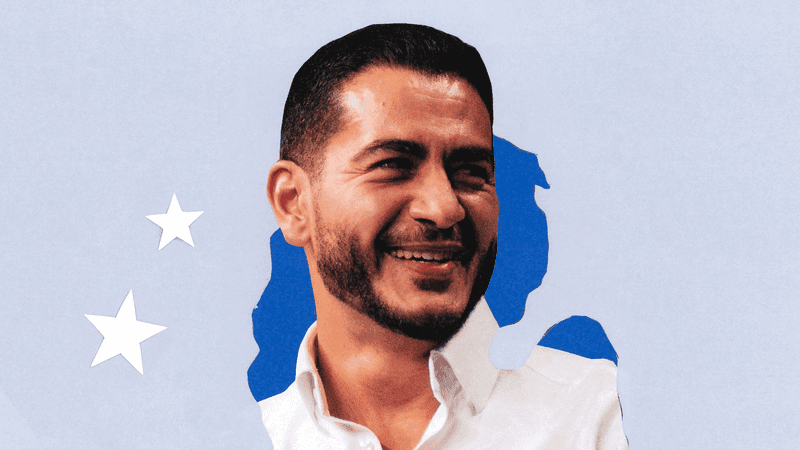

Abdul El-Sayed’s victory in the US Senate election in Michigan is more than a political seat changing hands; it marks a significant moment in the country’s political history. With this win, the Democratic candidate is set to become the first Muslim senator in US history. Yet throughout the campaign, he had to contend not only with political rivals but also with controversies surrounding his religious identity, Arab heritage and position on Israel and Palestine.
El-Sayed defeated Republican candidate Mike Rogers in Tuesday’s midterm elections. He is due to be formally sworn in on 3 January. He had previously won the Democratic Party primary in August. Reports said the pro-Israel lobbying group American Israel Public Affairs Committee (AIPAC) spent heavily in an effort to stop him from securing the nomination.
Identity under attack: A campaign marked by hostility
One of the defining features of El-Sayed’s campaign was the attempt to turn his Muslim and Arab identity into a political weapon. Leaders of the Republican camp, including President Donald Trump, made a series of remarks about him during the campaign. Trump even mocked the pronunciation of his name. El-Sayed was also portrayed as a “jihadist” and accused of having links to the Muslim Brotherhood. No evidence was presented to substantiate those allegations.
Maya Berry, executive director of the Arab American Institute, told Al Jazeera that Republicans had made anti-Arab and anti-Muslim rhetoric a central campaign strategy against El-Sayed. In the end, she said, it failed.
Berry described voters’ rejection of such prejudice as a significant moment. The victory, she said, mattered not only to El-Sayed but also to children growing up with Arab and Muslim identities in the United States. It sent a message of public support for a more inclusive democracy.
Michigan is home to a large Arab American population, particularly in Dearborn, where a substantial Arab community has taken root. For many residents, El-Sayed’s victory became closely tied to questions of citizenship, rights and political participation.
Ali Balid Almaklani, a leader in the Yemeni-American community, told Al Jazeera that Islamophobic campaigning had encouraged Muslims and Arabs to become more politically engaged. El-Sayed, he said, had focused on healthcare, the economy and the cost of living, while his opponents had resorted to baseless claims about terrorism and the Muslim Brotherhood.
Israel and Palestine at the centre of the debate
One of the most consequential aspects of El-Sayed’s political position is his stance on Israel and Palestine. He has been an outspoken critic of Israeli policies and the war in Gaza, and has called for an end to US military assistance to Israel. He argues that American taxpayers’ money should not be spent on foreign wars or on wars involving racism and genocide, but should instead be used to meet the needs of people at home.
That position drew criticism from various pro-Israel groups during the campaign. AIPAC spent money campaigning against him in both the Democratic primary and the general election. Media reports said the organisation had spent more than $30m in an effort to defeat him in the primary.
His victory has therefore attracted attention beyond domestic US politics, including from Israeli media outlets, which have focused on his position on Israel in their coverage of the result.
The Jerusalem Post highlighted a remark from El-Sayed’s victory speech. Addressing supporters after the result was confirmed, he said that until then he had used the phrase “Inshallah” when talking about the election outcome. Now, he said, it was time to replace it with “Alhamdulillah”.
The newspaper’s headline read: “Replace ‘Inshallah’ with ‘Alhamdulillah’: El-Sayed elected senator in Michigan.” Its report described him as a Democratic leader known for his opposition to Israel.
The Times of Israel also framed his victory in the context of his position on Israel. Its headline referred to El-Sayed’s win and his pledge to stop funding what he described as apartheid and genocide. The report identified him as one of the Democratic Party’s prominent anti-Israel voices. It also noted that support for Israel among Democratic voters had declined since the war in Gaza began, while questions about America’s longstanding backing for Israel had increasingly surfaced even among moderate lawmakers.
Victory speech takes aim at Trump and Vance
After his victory was confirmed, El-Sayed criticised the campaign waged against him in a speech to supporters. He said he had faced one of the most vile and distasteful election campaigns he had witnessed in his lifetime.
He also responded to Trump’s remarks about his name and religious identity. Addressing parents struggling to explain to their children why a president would mock someone’s name or the way they pray, El-Sayed said they could tell their children that “the bad guys lost”.
He added that his name and religious identity would not make it harder for people to afford gas or buy essential goods. The cost of living, access to healthcare and the everyday struggles of ordinary people, he said, should be at the centre of political debate.
Trump had frequently mispronounced his name during the campaign. Referring to that in his victory speech, El-Sayed said Vice-President JD Vance would administer his oath of office in January. He described the prospect as a form of irony. In another remark, he said Trump could simply call him “Senator” if he preferred.
Republicans also sought to portray El-Sayed as a symbol of the political left. But he faced pressure from within his own party before the election as well. Haley Stevens, a pro-Israel Democratic congresswoman who had lost to him in the primary, publicly endorsed Republican candidate Mike Rogers.
Despite those pressures, El-Sayed kept his campaign focused on healthcare, lowering the cost of living, reducing the influence of money in politics and prioritising the needs of Americans over spending on foreign wars.
Voters look for a message of change
During the election, the cost of living, immigration policy and foreign wars emerged as important issues for voters in Detroit and surrounding areas. Some Black voters in Detroit also backed El-Sayed. Responding to Trump’s remarks, one voter told Al Jazeera: “Everyone knows who the real crazy person is. He says whatever he wants.”
For immigrant voters in south-west Detroit, ending the Trump administration’s crackdown was a major concern. Frank Espinosa, a teacher overseeing a local polling station, said their main demand was to get Immigration and Customs Enforcement (ICE) officers off the streets. He also cited an end to foreign wars and keeping fuel and essential goods affordable as key priorities.
Sally Howell, a professor at the University of Michigan, said El-Sayed’s victory reflected a desire for change in American politics. That change, she said, meant rejecting anti-Muslim prejudice and recognising the value of Palestinian lives alongside those of Americans.
El-Sayed’s victory thus opens a new chapter in the history of the US Senate while raising broader questions about political representation in the country’s multiracial and multifaith society. Despite facing attacks centred on his identity during the campaign, he secured voters’ support, bringing renewed attention to his political positions. The question now is how much influence he will wield in the Senate on issues ranging from Israel and Palestine to the wider domestic agenda.
Leave A Comment