

Afghan families forced to sell children just to survive
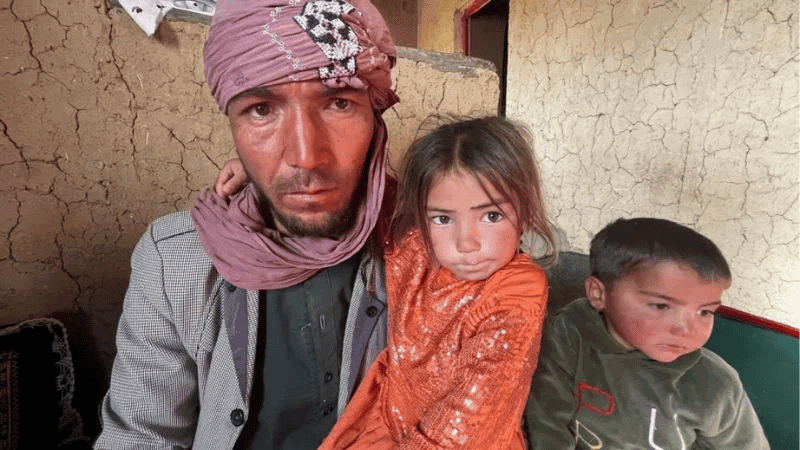

Years of war, poverty and hunger have pushed countless families in Afghanistan to the brink, with some now being forced to make the heartbreaking decision to sell their children for a handful of food.
With international aid drastically reduced and an economy in shambles after the Taliban takeover, the United Nations says nearly three-quarters of Afghans are struggling to meet their most basic needs. Joblessness, food shortages and a lack of healthcare have left many with a stark choice: let their children starve, or sell them in the hope they might live.
In the provincial capital of Chaghcharan in Ghor province, hundreds of labourers gather at a dusty square each morning, desperate for a day's work. Their wages for a single day will determine whether their family eats that evening.
Juma Khan, 45, has found work on only three days in the past six weeks. He told the BBC that his children had gone three nights without food. "My wife was crying, the children were crying. I had to borrow money from a neighbour to buy flour," he said, adding that he lives in constant fear that his children will die of starvation.
Another man named Rabani broke down when he received a call that his children had not eaten for two days. "I thought about suicide. But then I thought, who will look after them?" he said.
'My heart breaks, but what can I give them?'
Abdul Rashid Azimi, a father living in a dilapidated home, held his seven-year-old twin daughters Rokeya and Rohila as he explained his decision to sell them.
"I am poor, I am in debt, I am helpless. When I return home, my children come to me and say, 'Father, give us some bread.' But what do I have to give them?" he said, weeping.
Saeed Ahmad had to sell his five-year-old daughter Shaika to a relative for 200,000 Afghanis (approx. $3,200) to pay for her life-saving operation for appendicitis and a liver cyst.
"If I had the money, I would never have made this decision. But I thought, what if she dies without the surgery? At least this way she will live," he said.
Under the agreement, he received just enough for the surgery now, but will have to hand over his daughter forever once he pays the rest of the amount over the next five years.
International aid dries up
Just a few years ago, families like Saeed's received food aid including flour, oil, lentils and nutritional supplements. But funding has been cut drastically.
The United States, once Afghanistan's largest donor, has halted nearly all aid. Other major donors like the United Kingdom have also slashed contributions. According to the UN, international assistance for the country this year is down by 70 per cent compared to 2025.
A crippling drought and soaring food prices have only made the crisis worse.
The Taliban's restrictive policies, particularly those targeting women and girls, have been cited by donors as a key reason for the withdrawal of funds. However, the group blames the economic collapse on the previous Western-backed administration.
The humanitarian crisis has overwhelmed local hospitals. In Chaghcharan's main hospital, the neonatal ward is overflowing, with two children sometimes forced to share a single bed. Most are suffering from severe malnutrition and respiratory illnesses.
Yet every morning, the men of Chaghcharan return to the labour market, hoping that the new day will bring a job and a little food to keep their families alive just one more day.
Leave A Comment
You need login first to leave a comment