
Algeria–Austria Group Stage clash: The match that shamed the beautiful game
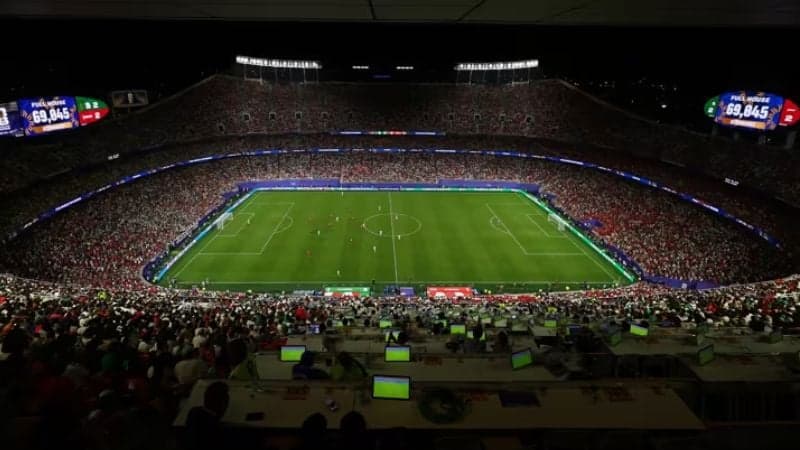

Football, at its finest, is a theatre of uncertainty — where every second holds the promise of drama, every pass the threat of danger, and every match the possibility of something unforgettable. Fans buy tickets and fill stadiums for goals, for tension, for the electric unpredictability of genuine competition.
What they witnessed in the Algeria–Austria Group Stage clash at the 2026 FIFA World Cup was something else entirely.
The scoreline read 3-3. Six goals, plenty of action — on paper, a thriller. But the final minutes of this match told a different story, one that has since sparked fierce debate about the integrity of the sport itself.
For the opening exchanges, both sides attacked with intent. Goals flew in at both ends, and the contest crackled with energy. But the moment the score settled at 3-3, something changed. The urgency drained from the game as if someone had pulled a plug. No more forward runs. No more pressing. No more risk. Instead, the ball began circulating in patient, purposeful loops — midfield to defence, defence to midfield, back again — as both teams appeared to silently agree that the result suited them just fine.
The statistics are damning. The two sides combined for 1,152 passes by full time. Algeria alone played 755, completing 706 of them — a 94 per cent success rate achieved primarily by recycling possession in their own half. Austria contributed a further 397 passes, completing 346. Efficiency, on the surface. Theatre of the absurd, in reality.
The biggest losers were not even on the pitch. Iran and South Korea, both harbouring hopes of advancing to the knockout rounds, needed one of these two sides to win. A draw condemned both to elimination. As Algeria and Austria exchanged safe, comfortable passes in the dying minutes, two nations watched their World Cup dreams dissolve.
The backlash was swift and severe. Former players, analysts, and supporters took to social media to condemn what they saw as a calculated mockery of competition. The question being asked was uncomfortable but unavoidable: is this the football the World Cup deserves?
Football history is not without its dark precedents. The infamous "Disgrace of Gijón" at the 1982 World Cup — when West Germany and Austria played out a mutually convenient result to eliminate Algeria — haunts the sport to this day. Four decades on, one of those very nations finds itself on the other side of an eerily similar controversy.
No rules were broken here. No referee erred. Both teams played within the laws of the game. And yet the spirit of the game — that unspoken compact between players and the public who support them — was quietly, methodically dismantled over the final minutes of a Group Stage fixture that will not be remembered for its goals.
The 2026 World Cup has been a stage for brilliance, for breakthrough moments, for football at its most captivating. The Algeria–Austria draw stands apart — not as a highlight, but as a cautionary tale. A reminder that fair play is not merely about following the rulebook; it is about honouring the game itself.
And on this occasion, the game was not honoured. It was managed.
Leave A Comment