
“An artist can win hearts of listeners only by becoming one with the emotion and philosophy of that song” — Urvi Som
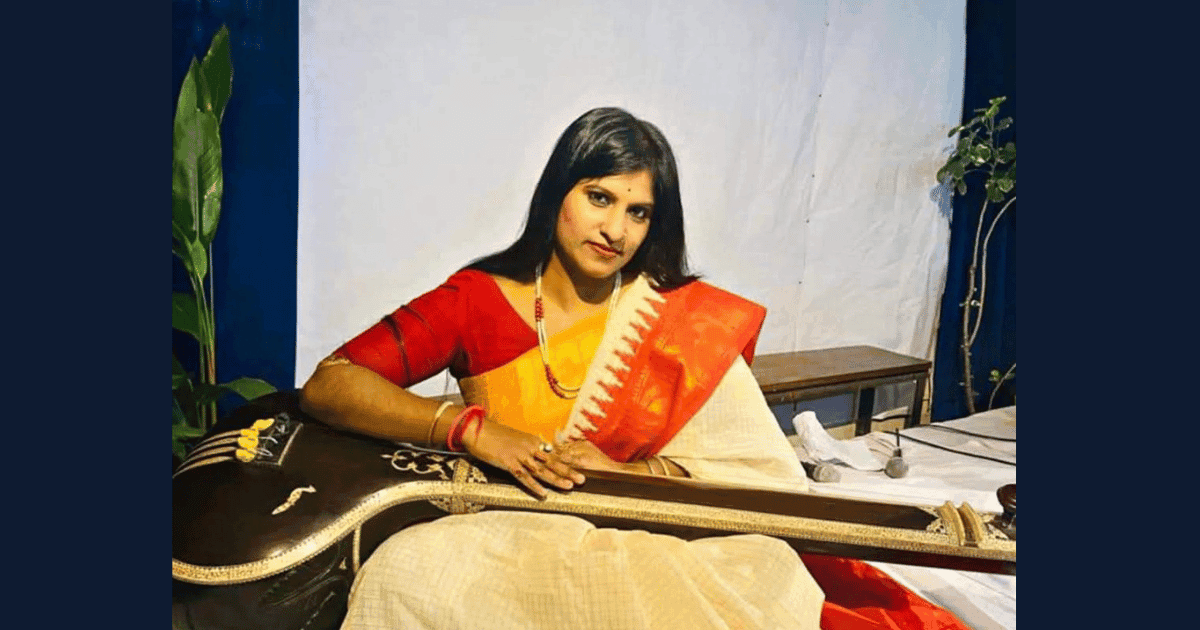
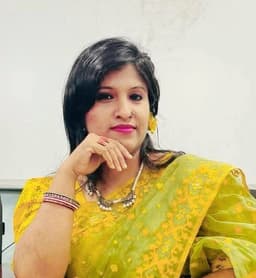
Oorbee Shom is a renowned Nazrul Sangeet and classical music artist and teacher. As a former student of Government Music College, she completed her B. Music and M. Music in Nazrul Sangeet from the same institution, securing first class in M. Music. She is currently teaching at Government Music College.
This artist, who is enlisted with Bangladesh Television, Bangladesh Betar, Bangladesh Shilpakala Academy and the Central Nazrul Sangeet Artists’ Council, has won numerous first prizes and gold medals at the national level in Nazrul Sangeet. Her notable achievements include securing first place at Padmakuri (2003), JASAS National Cultural Competition, Inter-College National Cultural Competition (2015) and National Education Week (2016).
In an exclusive conversation with Views Bangladesh about music practice, teaching, her experience as a judge, advice for the new generation of artists, and the present and future of Nazrul Sangeet, Oorbee Shom shared her experiences, philosophy and thoughts. The interview was conducted by Sumaiya Jesmin.
You grew up in a musical environment from an early age. You began your journey in music at just three and a half years old, holding your mother’s hand. Which memory from your childhood still inspires you the most?
The memories that still inspire me the most are the moments when I received awards at the national level in the National Cultural Competitions ‘JASAS’ and ‘Padmakuri’ in 2003 and 2006. At that time, I performed Kazi Nazrul Islam’s song ‘Jonam Jonam Gelo, Asha Path Chahi’. At that competition, respected Ferdous Ara Madam called me and blessed me. Seeing her from so close and receiving her affection and encouragement remain priceless memories for me even today.
During my time in Khulna, my most respected music gurus were Sheikh Ali Ahmed, Kalipada Das and Purna Chandra Mondal. However, the foundation of my musical life was built by my parents. I was introduced to music through my mother, while without my father’s tireless efforts, sacrifices and strict discipline, perhaps it would not have been possible for me to choose music as a profession today. I did not always like their strictness during my childhood, and it can be said that at one point my father and uncle almost forced me to enrol in music college. But today I understand that there is no substitute for the selfless labour of parents behind a child’s success.
How did moving from Khulna to Dhaka to pursue higher education at Government Music College and receiving training from renowned gurus in the country change your life as an artist?
Coming to Dhaka from Khulna and studying at Government Music College changed the course of my life as an artist. In practical education, I had the opportunity to enrich myself through the company of respected teachers such as Shamima Parvin, Ferdous Ara, Syed Sajid Hossain, Dr Fakir Shahidul Islam Sumon, Mofizur Rahman, Rashedul Hasan Jibon, Mainul Ahsan Sir, and in theoretical music, Tilottoma Sen, Dr Eka Sahla and Dr Shiuli Bhattacharya. Their affection, discipline, encouragement, inspiration and blessings have given completeness to my artistic self. To be honest, after my parents, their blessings have helped me move forward on my journey.
I continue to try to sharpen myself regularly, believing that there is no end to learning music. At present, I have received training in thumri, dadra and raga-based Bengali songs from the renowned artist and music guru of West Bengal, Dr Rageshree Das. Alongside this, I also plan to pursue a higher degree in music in the future. As an artist, I want to remain a lifelong student of music. I will always remain respectful and grateful to all my teachers.
You have won numerous first prizes and gold medals at the national level in Nazrul Sangeet. What do you think was the most important factor behind your success on the competition stage?
The most important factors behind success in competitions were selecting the right song, completely internalising the song and performing it on stage with confidence. When an artist can become one with the emotion and philosophy of a song while singing, only then is it possible to reach the hearts of listeners. It is important for a true artist to have a desire to learn and humility. I believe, “False modesty is incompatible with music.”
Many artists remain media-oriented for popularity, but you have given greater importance to teaching and quality music practice. What is the philosophy behind this decision?
Teaching has been my profession since completing my M. Music. I believe that whatever work I do should be done with the utmost dedication and honesty. For this, I am eternally grateful to Professor Shamima Parvin Madam. Because she gave me the opportunity to teach.
Teaching has given me that opportunity. Through teaching, I have developed a deep respect for this profession. Therefore, I have given greater importance to quality music practice and nurturing students than to media-centred popularity. Or it can also be said that I could not devote the amount of time and effort required for media-centred popularity. However, the love, appreciation and encouragement I currently receive from audiences at various events are inspiring me anew to perform regularly and become more active in the media.
What do you see as the biggest challenge in music practice at present?
At present, quality stages for classical music performances are limited. As a result, opportunities for new artists to establish themselves are also reduced. I believe that if the number of quality programmes and performance platforms increases, young artists will have opportunities to develop their talents.
You have been teaching at Government Music College for nearly nine years. What do you think is the greatest responsibility of a teacher in developing a good musician?
At present, we see many talented and promising students who work tirelessly to learn music despite various adversities. The greatest responsibility of a teacher is not only to teach singing, but also to develop a good human being and a confident artist. It is our moral responsibility to ensure that students have an environment where they can learn without fear or hesitation.
You are an enlisted artist of Bangladesh Television, Bangladesh Betar, Bangladesh Shilpakala Academy and the Central Nazrul Sangeet Artists’ Council. Based on your experience, how can the practice of Nazrul Sangeet be made more popular among the present generation?
Kazi Nazrul Islam’s creations are so unique and timeless that very few comparisons can be found in world literature and world music. Therefore, if Nazrul Sangeet can be appropriately presented on all kinds of modern and popular platforms, his creations will become more acceptable to the new generation through their own glory.
In the age of digital and social media, how is it possible to maintain quality music practice?
Technology or social media can never be a substitute for regular riyaz. An artist has to work on themselves every day. At the same time, they have to listen to the performances of great artists from around the world. Because the first lesson in learning music is to listen attentively, and then sing.
The fundamental basis of quality music practice is regular riyaz. No matter how far technology, artificial intelligence (AI) or social media advances, an artist ultimately has to earn a place in the hearts of listeners through their own skills. Therefore, technology or social media can never be a substitute for regular riyaz. An artist has to work on themselves every day. At the same time, they have to listen to the performances of great artists from around the world. Because the first lesson in learning music is to listen attentively, and then sing.
You have served as a judge in various national competitions, including ‘Notun Kuri 2025’ and National Education Week. Which qualities among the new generation of artists impress you the most, and in which areas do you think they need to improve?
The confidence of the artists of the present generation and their courage to express themselves impress me the most. However, they need to be more attentive to regular practice. Talent is important, but long-term dedication also makes an artist complete.
What kind of initiatives do you think are most necessary to sustain the practice of Nazrul Sangeet and classical music at present?
To strengthen the practice of classical music and Nazrul Sangeet, the state, corporate organisations and private initiatives—all need to jointly increase patronage. The government has already taken various commendable initiatives to preserve and promote Nazrul Sangeet and Nazrul’s creations. Alongside these initiatives, it is essential to create more opportunities for regular quality programmes, research, training and new artists.
What is your most important advice for young men and women who want to take music as a profession, especially those who want to pursue Nazrul Sangeet and classical music?
I would tell those who want to take music as a profession that this path is not easy, but it is immensely beautiful. With regular dedication, purity, patience, discipline and the mindset to face adversity, success will certainly come. In today’s digital age, a good performance can reach across the world in an instant. Therefore, before popularity, give importance to your quality, honesty and love for music.
Leave A Comment