
Appeal hearing on 15th Amendment underway
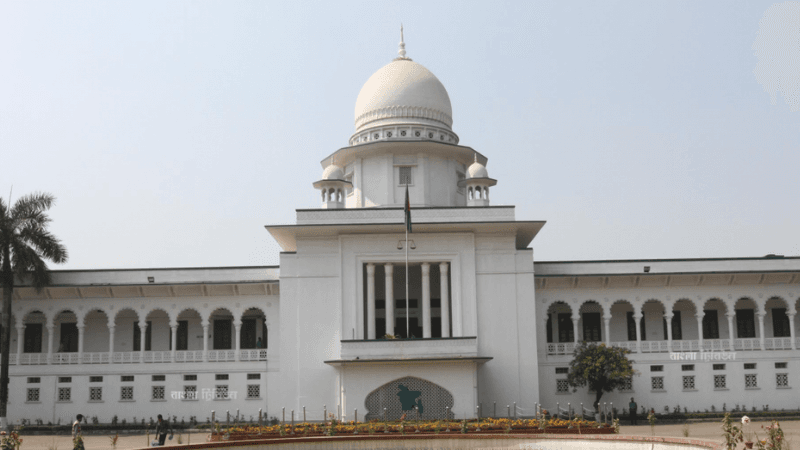

The appeal hearing against the High Court verdict on the 15th Amendment to the Constitution, which addressed 54 issues including the abolition of the caretaker government system, is underway.
A six-member Appellate Division bench, led by Chief Justice Syed Refaat Ahmed, began hearing the appeal on Sunday morning. Senior advocate Dr Sharif Bhuiyan is representing the petitioner.
Earlier on November 13, the Appellate Division granted leave to appeal against the High Court verdict. On December 2, BNP Secretary General Mirza Fakhrul Islam Alamgir became a party to the appeal.
On December 17, 2024, the High Court declared several provisions introduced through the 15th Amendment—most notably the abolition of the caretaker government system—illegal and restored the constitutional provision for a referendum.
In its judgment, the High Court observed that democracy is part of the Constitution’s basic structure and that democracy can only flourish through free, fair and impartial elections. The court noted that the last three parliamentary elections held under party governments failed to reflect the will of the people, leading to public distrust and, ultimately, the July uprising.
The bench of Justice Farah Mahbub and Justice Debashish Roy Chowdhury ruled that the caretaker government system was incorporated into the Constitution in line with the people’s will and had become part of its basic structure.
The court declared Articles 20 and 21 of the Fifteenth Amendment Act, which abolished the caretaker government system, to be unconstitutional and void, stating that they destroyed the basic structure of democracy. It also annulled Articles 7A, 7B and 44(2), added through the amendment, declaring them unconstitutional.
The 15th Amendment brought additions, modifications and replacements in 54 constitutional provisions.
However, the High Court did not repeal the amendment in its entirety, leaving the remaining provisions for consideration by a future National Parliament. The court said Parliament could amend or modify those provisions in accordance with the law and public opinion, including matters related to recognition of the Father of the Nation and the March 26 speech.
Regarding the referendum, the court ruled that Section 47 of the Fifteenth Amendment Act—which abolished the referendum provision under Article 142—was unconstitutional. As a result, the referendum provision introduced through the Twelfth Amendment in 1991 was reinstated.
Article 7A, which criminalised the suspension or abrogation of the Constitution, Article 7B, which made certain constitutional provisions unamendable, and Article 44(2), relating to enforcement of fundamental rights, were all declared null and void.
The full 139-page judgment was published on July 8 after being signed by both judges.
On November 3, a leave to appeal was filed by lawyer Dr Sharif Bhuiyan on behalf of writ petitioner Badiul Alam Majumder, seeking annulment of the entire Fifteenth Amendment. Following this, the Appellate Division granted permission to appeal, paving the way for the ongoing hearing.
Leave A Comment
You need login first to leave a comment