
Argentina risks FIFA sanctions over Falklands banner following semi-final victory against England
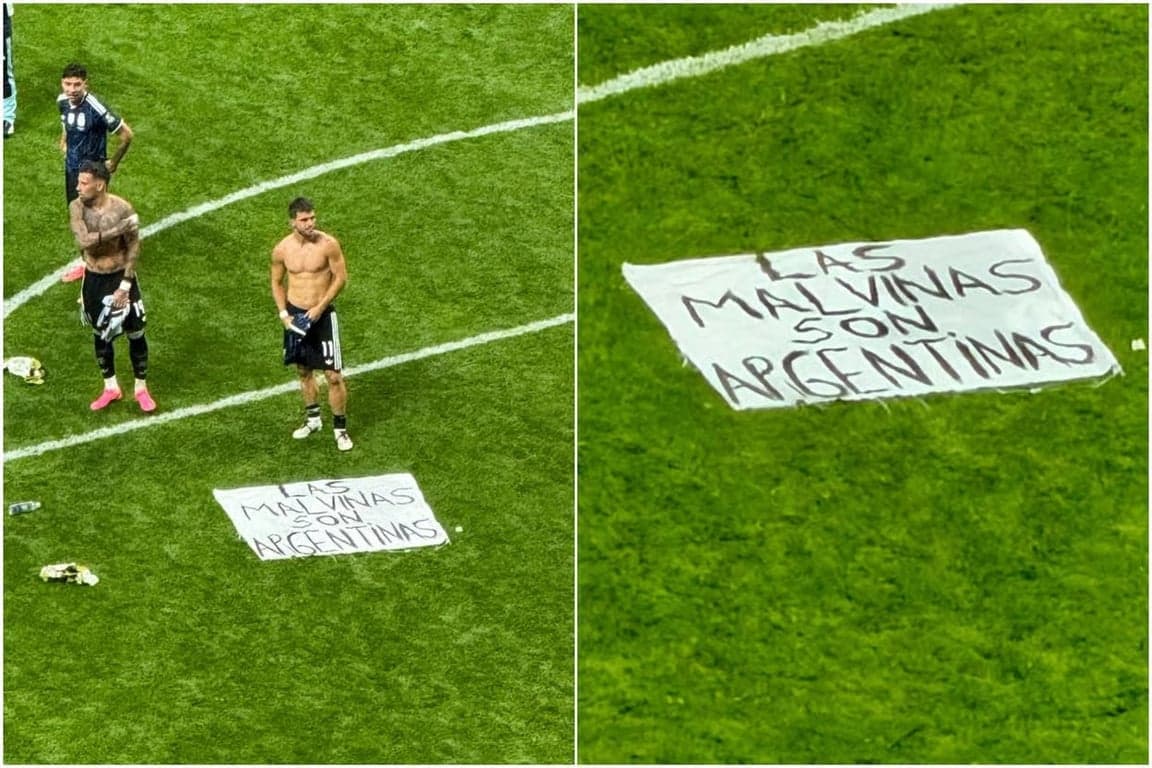

Argentina is facing the prospect of disciplinary action from FIFA after players celebrated their dramatic World Cup semi-final victory over England by displaying a controversial banner concerning the Falkland Islands.
Following a thrilling comeback win at the Mercedes-Benz Stadium in Atlanta, Argentine midfielder Giovani Lo Celso was seen on the pitch holding a banner that read, "Las Malvinas son Argentinas" (translated as "The Malvinas are Argentine"). Lo Celso initially held the sign—which appeared to have been passed down from supporters in the stands—alongside defender Nicolas Otamendi, briefly put it away, and then laid it out on the playing surface. Defender Cristian Romero was also photographed holding the banner during the post-match celebrations.
The display has put the reigning world champions in direct conflict with football's strict governing regulations. Both FIFA and the International Football Association Board (IFAB), the sport's lawmakers, maintain a firm prohibition against political, religious, or personal messaging.
According to the IFAB rulebook, player equipment must be entirely free of political, religious, or personal slogans, statements, or images. The regulations explicitly state that for any such offense, the player, the team, or both will face sanctions from the competition organizer, the national football association, or FIFA. FIFA has been approached for comment regarding the incident.
The term "Las Malvinas" is used in Argentina to refer to the Falkland Islands, a British dependency located approximately 300 miles (480 km) off the Argentine mainland. In 1982, Argentina’s military government invaded the territory, triggering a conflict with the United Kingdom that lasted from April 2 to June 14. The war ended with an Argentine surrender and resulted in the deaths of 649 Argentine military personnel, 255 British troops, and three civilians.
If FIFA rules that the banner is political in nature, the display would also violate the governing body's stadium code of conduct. Under these guidelines, any materials—including flags, banners, and apparel—that are deemed political, offensive, or discriminatory against a country, individual, or group are strictly prohibited.
FIFA has previously taken a hard line on political symbols. Just last month, a court hearing in Los Angeles upheld FIFA's ban on pre-revolutionary Iran flags during the World Cup following a last-minute lawsuit.
Despite the looming disciplinary cloud, Argentina is preparing to face Spain in the final at MetLife Stadium this Sunday. A victory would secure their status as only the third team in football history to win back-to-back World Cups.
Leave A Comment