
Asia no longer just making up numbers at World Cup
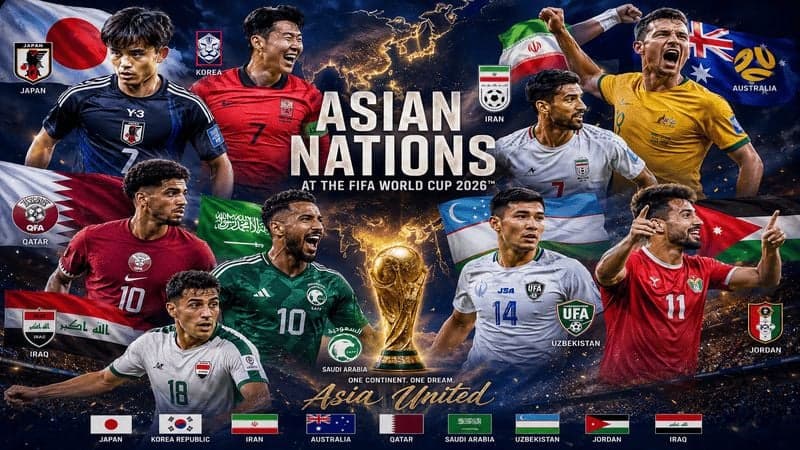

For years, the FIFA World Cup has been an unforgiving stage for Asian teams. While occasional giant-killing acts captured global attention, they were often dismissed as one-off surprises rather than evidence of a broader shift in football's balance of power. Asian nations arrived at World Cups hoping to compete; few were expected to genuinely challenge.
The 2026 World Cup is beginning to change that perception.
With nine representatives at the tournament, Asia has delivered one of its strongest opening-round performances in World Cup history. Six teams have already collected points, keeping their knockout-stage ambitions alive and demonstrating that the continent's growing football investment is finally translating into results on the sport's biggest stage.
South Korea showcased resilience by recovering from a deficit to defeat Czechia 2-1, while Japan earned widespread praise after twice coming from behind to secure a dramatic draw against Netherlands. Australia strengthened its hopes of progression with a composed 2-0 victory over Turkey.
Saudi Arabia, continuing the momentum that began with its famous victory over Argentina in 2022, held two-time world champions Uruguay to a 1-1 draw. Qatar matched that feat against Switzerland, while Iran battled to a hard-fought 2-2 draw with New Zealand.
Not every result went Asia's way. Iraq suffered a heavy defeat to Norway, Uzbekistan fell to Colombia and Jordan lost to Austria. Yet even those setbacks have done little to overshadow the continent's overall progress.
Historically, Asian success at the World Cup has arrived in isolated bursts. North Korea stunned Italy en route to the quarter-finals in 1966. Saudi Arabia reached the knockout stage on debut in 1994. South Korea's remarkable run to the semi-finals in 2002 remains one of football's most memorable underdog stories.
What distinguishes 2026 is that success is no longer concentrated in a single team. Multiple Asian nations are competing, collecting points and challenging established powers simultaneously.
The message from this World Cup is becoming increasingly clear: Asian football is no longer content with merely participating. It is beginning to compete on equal terms—and perhaps, for the first time, it is emerging as a collective force capable of reshaping the global game.
Leave A Comment