
Asim Munir takes direct control of Pakistan's nuclear arsenal
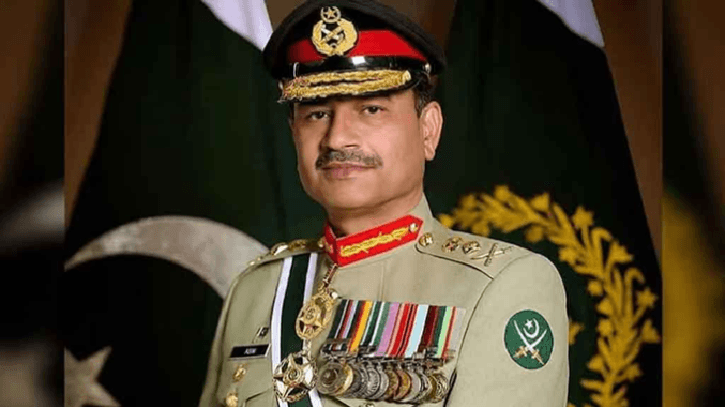

A major structural overhaul has taken place in Pakistan's military. The country's Chief of Defence Forces, Field Marshal Asim Munir, has now taken direct control of the nuclear arsenal, handing over the responsibility of overseeing the weapons to a highly trusted officer. Through a constitutional amendment, the newly formed National Strategic Command (NSC) has been entrusted with this responsibility, which was previously under the civilian National Command Authority (NCA).
The formation of this command was made possible through the 27th Constitutional Amendment Bill, which was passed in the Pakistani Parliament in November last year. Later, President Asif Ali Zardari gave his assent. Almost eight months later, Islamabad has begun implementing the plan.
According to multiple media reports, the new command will oversee Pakistan's entire strategic assets, including nuclear weapons. The new law has reduced the powers of Prime Minister Shahbaz Sharif, who will no longer have any role in nuclear-related decisions. In the future, he will only perform informational duties, while Munir's control over the military and administrative structure has been further consolidated.
Lieutenant General Syed Amir Raja has been appointed as the head of the newly formed National Strategic Command. He recently retired from the position of the 41st Chief of General Staff of the Pakistan Army and was also the commander of the IV Corps. He also served as chairman of the Taxila Heavy Industries.
According to military analysts, Pakistan has modelled this command after China's People's Liberation Army Rocket Force, integrating missile systems, supply chains and strategic weapons development alongside nuclear arsenal management. The primary objective is to create a unified operational structure by combining land, sea, air, rocket forces and nuclear weapons commands. According to former military officials, Field Marshal Munir aims to strengthen the deterrence system against India.
It may be noted that after the militant attack in Pahalgam, Jammu and Kashmir, which killed 26 people including tourists last year, Munir quickly rose to the centre of power following India's 'Operation Sindoor'. Pakistan agreed to a ceasefire after just four days of confrontation, and he was subsequently promoted to the rank of Field Marshal. Later, he eased relations with the United States and increased defence and technological cooperation with China. Munir also played a key role in the 'Strategic Mutual Defence Agreement' signed with Saudi Arabia in September last year.
Source: Anandabazar
Leave A Comment