
August 21: From a bloody afternoon to two decades of legal battles
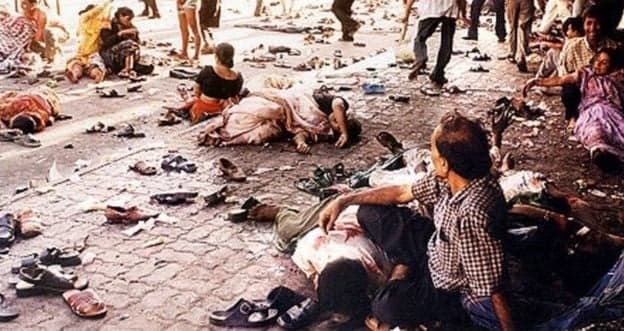

It was the afternoon of August 21, 2004. An Awami League rally on Bangabandhu Avenue was nearing its end. Then opposition leader Sheikh Hasina had just finished her speech from a makeshift truck stage and was stepping down when a series of explosions shook the area.
The attack lasted only a few minutes but left behind death, bloodshed and a two-decade-long legal battle that became one of the most closely watched cases in Bangladesh’s political history.
The grenade attack killed 24 Awami League leaders and activists and injured hundreds, including Sheikh Hasina. Ivy Rahman, then the party's women's affairs secretary and wife of former president Zillur Rahman, was among those killed.
Twenty-two years later, the legal proceedings have reached their final stage, with the acquittal of all the accused upheld by the Appellate Division of the Supreme Court.
On September 4, 2025, a six-member Appellate Division bench led by Chief Justice Syed Refaat Ahmed dismissed the state's appeal and upheld the High Court's decision to acquit all the accused. However, those responsible for planning and carrying out the attack have not been conclusively identified through the case.
The investigation came under scrutiny soon after the attack. Allegations later surfaced that investigators had fabricated a confession by falsely implicating a man known as "Joj Mia."
The case was reinvestigated in 2007 during the caretaker government, and a fresh charge sheet was submitted in 2008.
Following a lengthy trial, the Dhaka Speedy Trial Tribunal-1 delivered its verdict on October 10, 2018. Former state minister for home affairs Lutfozzaman Babar and former deputy minister Abdus Salam Pintu were among 19 people sentenced to death. Another 19, including BNP Acting Chairman Tarique Rahman, were sentenced to life imprisonment, while 11 others received varying prison terms.
The 2018 verdict was later overturned by the High Court. On December 1, 2024, the court acquitted all the accused, raising serious questions about the investigation, the trial process and the reliability of the evidence.
The High Court also questioned the legal validity of the reinvestigation and the supplementary charge sheet that followed it. It found that key evidence relied heavily on weak and hearsay testimony and that no eyewitness had specifically identified the person who threw the grenades.
The state subsequently appealed against the acquittal.
During hearings in the Appellate Division, the state argued that the trial court's convictions should be restored, while the defence maintained that the High Court had correctly overturned the earlier verdict.
The Appellate Division ultimately dismissed the state's appeal on September 4, 2025, leaving the acquittal of all the accused intact.
The issue of confessions also featured prominently in the Appellate Division's judgment. The court observed that some statements did not appear to have been made voluntarily and questioned the circumstances in which statements from three people were recorded on the same day.
However, the Appellate Division removed the High Court's observation calling for a fresh investigation. It said any decision on whether to conduct a new investigation was a matter for the government.
Thus, more than two decades after the bloodshed of August 21, the legal proceedings have ended with all the accused cleared.
The attack, the controversial investigation, the Joj Mia episode, multiple charge sheets, a lengthy trial and successive court rulings have left behind a complex legal history.
But August 21 is more than the story of a court case. The deaths of 24 people, injuries suffered by hundreds and the memory of that violent afternoon have made the attack one of the darkest chapters in Bangladesh’s political history.
Although the judicial process has come to an end, questions surrounding the attack and its perpetrators continue to remain part of the country's political and legal discourse.
Leave A Comment