
Autumn arrives but with dry spell
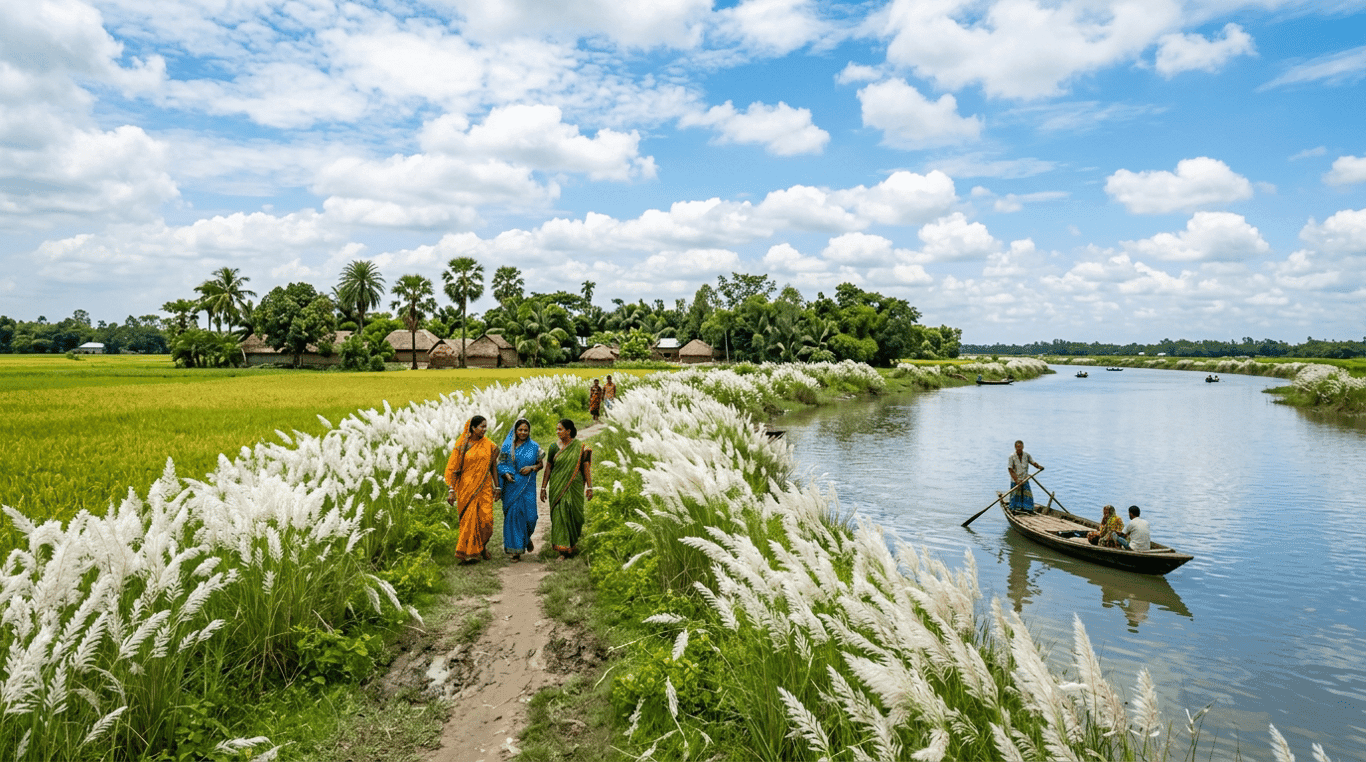

"Autumn has come, a touch of frost lingers in the air" — Rabindranath's autumn is a familiar portrait of Bengali nature. Blue skies with white clouds, swaying kash flowers, dew drops on morning grass and the soft glow of sunlight — autumn is a season awaited by both nature and people.
But this year's autumn feels somewhat different. Though clouds have appeared in the sky after the monsoon's departure, rain has been scarce. August 15 marked the end of the monsoon, and Sunday ushered in the Bengali month of Bhadra, the start of autumn. Yet the northern region remains hot, with mild heatwaves, rainless soil and frequent power cuts — the reality contrasts sharply with autumn's arrival.
Northern districts typically receive over 300 millimetres of rain in August. But halfway through the month, Rangpur has recorded only about 90 millimetres. Instead of the earthy scent of rain, the air carries the heat of summer.
August once meant incessant rain, full rivers, flooded canals, muddy paths and lush green landscapes. That picture is now cracking. Weather data shows August temperatures in the north have been rising for years. Maximum temperatures have climbed from 30-32 degrees Celsius in previous years to 35-36 degrees in recent times.
The impact is felt beyond human discomfort. Farmland, water bodies, fish and wildlife are all affected. Soil moisture is declining, irrigation dependence is rising, and aquatic habitats are shrinking.
Experts say reduced river flow, shifting cloud patterns, climate change and pollution are all contributing to the warming trend. Waste mismanagement in towns and cities is further polluting the air and soil.
Adding to the crisis is the power shortage. Frequent load shedding in Rangpur division leaves homes and hospitals without electricity, compounding the misery of heat and humidity.
Rangpur Met Office meteorologist Mostafizar Rahman said rainfall is likely to be below normal this August, with rising temperatures driven by reduced rainfall, climate change and pollution.
Autumn has arrived. The sky may once again fill with cotton-like clouds, and kash flowers may bloom along riverbanks. But behind that beauty, nature is sending a warning that cannot be ignored. Autumn is not just a season of blue skies and white clouds; it is also a mirror of ecological balance. If that mirror shows rising heat, drying rivers and vanishing biodiversity, then perhaps autumn's beauty will remain — but its gentle touch will be gone.
Leave A Comment