
Bangladesh loses a protector in realm of intellectual endeavors
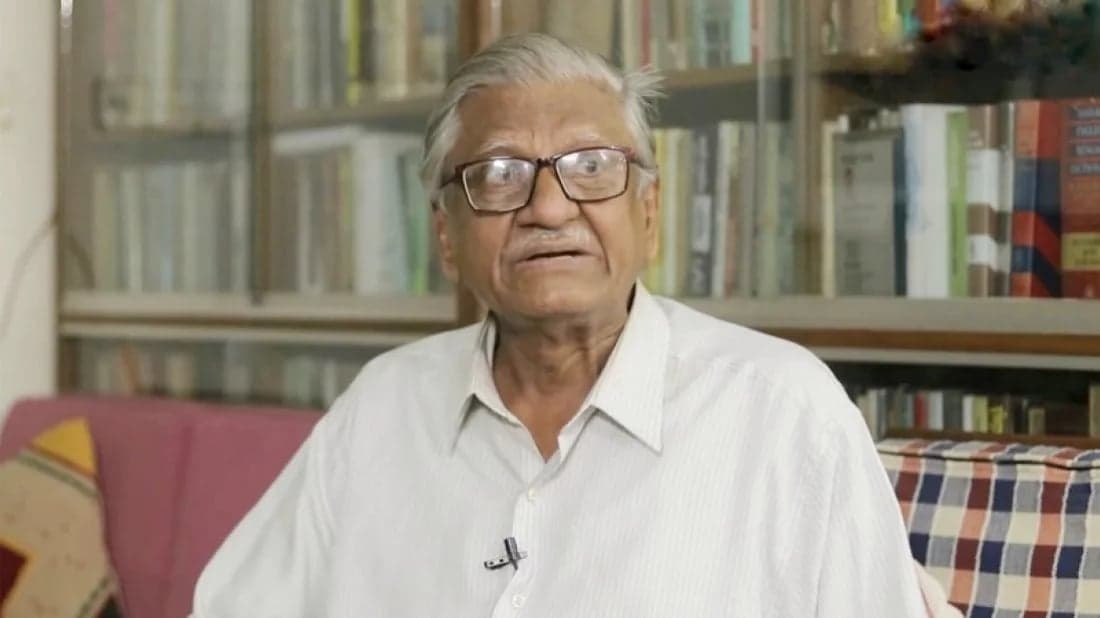

Professor Abul Kashem Fazlul Haq has passed away. Views Bangladesh has lost a revered guardian. He served as an endless source of inspiration since the inception of Views Bangladesh. He regularly contributed columns to Views Bangladesh and we also published an exclusive interview with him, in which he candidly discussed the state, society, and culture. He was the chief guest at the first anniversary celebration of Views Bangladesh. The family of Views Bangladesh is profoundly saddened by his demise.
His passing represents an irreparable loss for both the country and the nation. Bangladesh has lost a protector of its intellectual endeavors. He initiated the revival of the intellectual liberation movement in Bangladesh, which commenced in 1982 with the newspaper 'Lokayat'. It is noteworthy that the first intellectual liberation movement in Bangladesh began in January 1926, with the formation of a progressive organization known as the Muslim Sahitya Samaj in Dhaka. The movement was primarily led by Professor Abul Hussain and Kazi Abdul Wadud, with the magazine 'Shikha' serving as its voice. The motto of this movement was inscribed on the cover of that magazine: "Where knowledge is limited, intelligence is constrained, freedom is impossible there."
The modified version of the 'Shikha' magazine was 'Lokayat', which was edited by Professor Abul Kashem Fazlul Haq. Until its regular publication ended in 2015, Lokayat was regarded as a "renaissance publication" of thought and philosophy in Bangladesh. It profoundly articulated progressive ideas concerning the state, society, and culture. Lokayat played a pivotal role in promoting free intellect and thought in the quest for knowledge, particularly in independent Bangladesh.
Professor Abul Kashem Fazlul Haq has authored a comprehensive book titled "Buddhir Mukti Andolon o Uttarkal," which delves into the historical context of the intellectual liberation movement.
Throughout his life, Professor Abul Kashem Fazlul Haq was deeply engaged in the pursuit of knowledge. Each of his published works has contributed significantly to the intellectual advancement of the Bengali people. His piece "Mukti Sangram" has effectively illuminated the extensive historical background of the Bengali quest for independence and the fight for rights. Additionally, his writings such as "Kaler Jatrar Dhwani" and "Nationalism, Internationalism, Globalization and the Future" have emerged from thorough analyses of the challenges surrounding human rights, humanity, world politics, and nationalism within the intricate capitalist framework of the globalization era.
The books 'Sanskrit's Simple Words' and 'Nationalism, Internationalism, Globalization and the Future' further explore these themes, providing critical insights into the crisis aspects of contemporary society.
The book that has garnered the most attention is 'Political Ideals (Bertrand Russell)'. This work is essentially an excellent Bengali translation of the renowned philosopher Bertrand Russell's original text, 'Political Ideals'. It transcends mere translation; through a comprehensive elucidation of each chapter, it emphasizes the significant ways in which the state becomes authoritarian within a capitalist social framework and how capitalist leaders foster a society of subjugation by obstructing all pathways for the advancement of human creativity, as articulated by Bertrand Russell.
Professor Abul Kashem Fazlul Haq's writings can be regarded as a guiding light for addressing the profound crisis that has emerged in intellectual endeavors in Bangladesh. 'Lokayat' has the potential to once again spearhead the movement for 'freedom of intellect'. If 'Lokayat' can progress in its own unique direction, it will be feasible to eliminate ignorance and narrow-mindedness, thereby unveiling new vistas of free thought and knowledge.
Professor Abul Kashem Fazlul Haq approached the quest for knowledge with complete disinterest and impartiality. He refrained from engaging in any contentious activities, such as formulating opinions for any political party or establishing an ideology. Following the establishment of the interim government, he was appointed as the president of the Bangla Academy. Nevertheless, he consistently critiqued the government in his articles and speeches, cautioning against the creation of new divisions or polarization among the populace under the guise of reform or change. Concurrently, he vehemently condemned the policy of 'surrendering' to the United States during the interim government. He has distinctly illustrated what the genuine pursuit of knowledge ought to entail.
The ascetic Professor Abul Kashem Fazlul Haq will endure through the ages, immortalized in the richness of his profound works. We pay our respects to his departed soul.
Rased Mehedi, Editor, Views Bangladesh
Leave A Comment