

EU–India free trade deal
Bangladesh’s garment industry at risk?
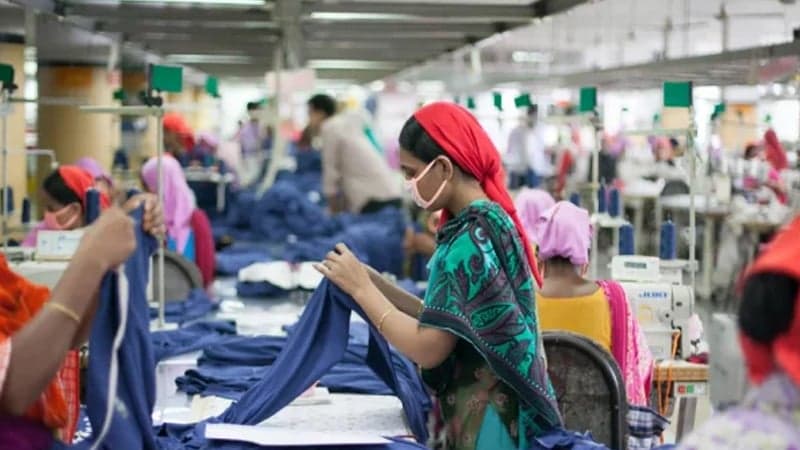

Bangladesh’s ready-made garment industry has long been a key driving force of the country’s economy. Duty-free access to the European Union market has particularly helped the sector build a strong position in the global market. However, the recently announced free trade agreement between the EU and India has created major concerns for Bangladesh. Analysts and industry insiders believe that once the deal comes into effect, Bangladesh’s competitive position in the European market may face serious challenges.
Structure of the EU-India deal and potential impact
The newly signed free trade agreement between the European Union and India is being viewed as a significant turning point in global trade. Under the deal, most Indian products, including garments, will receive special trade benefits in the European market. The agreement was announced after nearly two decades of negotiations. Subject to approval from the European Council, European Parliament and the Indian Parliament, the deal is expected to take effect in 2027. Stakeholders believe it will strengthen trade relations between Europe and India and significantly increase the flow of goods between the two regions.
Under the agreement, Europe will gradually withdraw or reduce tariffs on nearly 99.5 percent of imported goods from India within seven years. As a result, the existing tariff of around 12 percent on Indian garment products will be completely removed. European companies will also receive major benefits, with tariff reductions on nearly 96.6 percent of tradable goods, which is expected to save around €4 billion annually. This is likely to reduce trade costs and enhance price competitiveness.
Experts say that tariff reductions will provide direct price advantages to India’s garment industry, making it more attractive to European buyers. India’s self-sufficiency in cotton production, large industrial base, skilled workforce and government policy support will further strengthen this advantage. As a result, Indian garments may become comparatively cheaper in the European market, while supply capacity is also expected to increase.
European buyers typically prioritise price and fast delivery. If India can supply products at lower prices and faster delivery times due to tariff advantages, European importers may shift towards Indian suppliers. Analysts believe this could create new challenges for Bangladesh, which has enjoyed competitive advantages in the European market for years.
Bangladesh’s position in the European market
Since 1975, Bangladesh has built a strong presence in the European market by receiving preferential trade benefits as a least developed country. Bangladesh is currently the second-largest garment supplier to the EU after China. In products such as denim, trousers and T-shirts, Bangladesh has even surpassed China.
Industry insiders claim that one out of every three denim trousers used in Europe is made in Bangladesh. During the 2024-25 fiscal year, more than 50 percent of Bangladesh’s total garment exports went to EU countries, amounting to approximately $19.71 billion.
However, Bangladesh will not be able to retain duty-free benefits for long after graduating from LDC status. After graduating from the LDC list in November this year, Bangladesh will receive a three-year transition facility. After 2029, if Bangladesh fails to secure GSP Plus status or any bilateral free trade agreement, it will have to pay nearly 12.5 percent tariff on garment exports to Europe.
India’s target and new competitive reality
India views the free trade agreement with the EU as a major opportunity to boost exports. Indian Commerce Minister Piyush Goyal said the country aims to increase textile exports to Europe from $7 billion to between $30 billion and $40 billion.
Indian media reports suggest that New Delhi expects to capture a significant share of Bangladesh’s garment business in the European market through the agreement. Experts say India’s easy access to raw cotton, skilled human resources and strong government policy support have further strengthened its competitive capacity.
Former BGMEA director Mohiuddin Rubel believes that although the impact of the EU-India deal may not be immediately visible, it could create significant long-term challenges for Bangladesh’s garment sector. He said Bangladesh has maintained a strong position in the European market through price competitiveness, efficient production systems and large-scale manufacturing capacity. However, tariff-free access for India will make its products more competitive for European buyers, creating risks of order shifts, especially in products where Bangladesh and India directly compete, including denim, T-shirts and trousers. He added that financial incentives, infrastructure development and supply chain modernisation by the Indian government are further strengthening India’s industry, which could increase pressure on Bangladesh in the future.
Analysts believe that to survive in this new competitive environment, Bangladesh cannot rely solely on increasing production. Instead, it must focus on product diversification, production of higher-value products, technology-based manufacturing systems and workforce skill development. Without ensuring alternative trade benefits with Europe and expanding new markets, Bangladesh’s position in global garment trade may face challenges.
Growing pressure in global markets
According to a recent report by Bangladesh Bank, garment exports to the United States have declined over the past two years. During the same period, export earnings also declined by nearly 8.79 percent in Canada, the Americas and nine major European markets. Garment exports to the US fluctuated across different quarters of the 2023-24 fiscal year. During the final quarter of the recently concluded fiscal year, exports stood at around $1.81 billion. However, the central bank believes Bangladesh still has potential in the US market, as competing countries face equal or higher tariff barriers.
Meanwhile, global economic slowdown, changes in trade policies and oversupply have increased bargaining power among European buyers. This has led to increased price pressure and strict delivery requirements for suppliers, affecting Bangladesh’s profit margins.
Bangladesh is also facing multiple challenges, including rising production costs, volatility in fuel and raw material prices and increasing global price competition. At the same time, many international buyers are prioritising environmentally friendly production, sustainable supply chains and labour rights compliance, failure of which could increase the risk of losing orders.
Industry measures and policy challenges
Industry stakeholders believe policy support is essential to remain competitive. Bangladesh Textile Mills Association president Shawkat Aziz Russell said tax benefits and incentives are needed to enhance the competitiveness of domestic industries.
BKMEA president Mohammad Hatem said Bangladesh’s failure to secure free trade agreements and GSP Plus benefits, while competitor countries have already secured them, represents a major policy weakness. He added that entrepreneurs must focus on product diversification, improving production efficiency and reducing costs.
However, expanding new markets has created some hope for Bangladesh. Garment exports are gradually increasing in Japan, Australia, China, the Middle East and several African countries. Stakeholders believe strategic expansion into these markets could reduce dependence on Europe and the United States.
There is consensus among stakeholders that Bangladesh’s garment industry will face new competition if the EU-India free trade agreement becomes effective. The potential loss of duty-free benefits after LDC graduation and the emergence of a strong competitor like India could create major challenges.
However, Bangladesh can overcome these challenges through proper policy support, securing trade benefits, expanding new markets and increasing product diversification. Coordinated initiatives between the government and the industry will determine the future of the country’s main export sector.
Leave A Comment
You need login first to leave a comment