

Bangladesh’s visa crisis: Diplomatic failure or national reckoning?
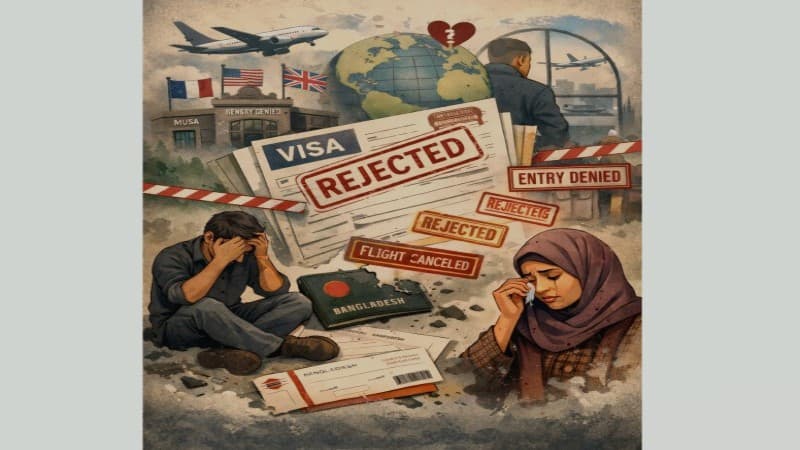

Getting an e-visa for Uzbekistan, a country rich in Muslim heritage, was once remarkably simple for Bangladeshi citizens. A single-entry visa could be obtained online for just $30 from the comfort of home. Since August 6, 2024, however, Uzbekistan has suspended e-visa services for Bangladeshi citizens. As a result, Bangladesh no longer appears on the list of countries eligible for e-visa applications. Even now, in January 2026, the Uzbek government has yet to lift this restriction.
Paradoxically, Bangladesh maintains an embassy in Tashkent, and diplomatic correspondents regularly receive press releases about meetings, discussions and joint events between Bangladeshi mission officials and various Uzbek authorities. It is increasingly apparent that while Bangladesh’s diplomats remain active in various initiatives, they are failing to make progress on visa-related issues.
Uzbekistan is not alone. Since October 2024, Vietnam has effectively halted visa issuance to Bangladeshi citizens. Vietnamese visas are now granted only for critical government-level engagements or major business forums. Yet just days ago, the Vietnamese ambassador in Dhaka told journalists that direct Dhaka–Hanoi flights are in the works. The Bangladesh embassy in Hanoi regularly announces improvements in bilateral relations, but no initiative has been taken to restore the previous ease of obtaining tourist visas for Bangladeshi citizens.
Sri Lanka previously offered on-arrival visas to Bangladeshi travellers. Now visitors must secure an Electronic Travel Authorisation in advance for $20 before purchasing flight tickets. Thailand, which once issued tourist visas within three to four business days through registered travel agencies, has introduced an e-visa system requiring applications at least 45 days before travel. Applicants must now submit confirmed flight tickets or itineraries with their applications, meaning travellers must purchase plane tickets before visa approval, risking financial loss if the application is rejected.
For years, Schengen visas for European Union countries and visas for nations such as New Zealand and Australia have required confirmed flight tickets with applications. Thailand now views Bangladesh through the same lens as Europe and Australia. While Malaysian visas remain somewhat accessible, serious doubts persist over whether travellers will clear immigration upon arrival at Kuala Lumpur airport.
Until 2021, Bangladeshi citizens could enter Indonesia without a visa under the No Visa Required policy, travelling with just a passport. This facility ended in 2022. Indonesian visas have since become exceedingly difficult to obtain. Applications cost 26,000 taka, with a rejection rate of around 50 per cent even after payment.
United States, Canadian and British visas have never been easily accessible to Bangladeshi citizens. Most recently, the Trump administration added Bangladesh to its list of countries facing suspended visa processing, a list that also includes Uzbekistan. As mentioned earlier, Uzbekistan has similarly closed e-visa access for Bangladeshi citizens.
Among neighbouring countries, Bangladeshis can still obtain on-arrival visas for Nepal, Maldives and Bhutan. However, Bangladeshi travellers now face significantly tougher questioning at Tribhuvan International Airport in Kathmandu. First-time Bangladeshi visitors are being thoroughly interrogated about their entire backgrounds. Given the deteriorating relationship with India, increasingly resembling frozen ice, it is perhaps best to avoid discussing visa diplomacy with the country altogether.
On a positive note, during the current interim government’s tenure, Pakistan has waived visa fees for Bangladeshi citizens, who now receive visas within 24 hours of online application. However, Pakistan has not introduced No Visa Required status. China is issuing visas more quickly and easily than before, but has not introduced on-arrival visas or No Visa Required facilities. While many other countries enjoy on-arrival visas and electronic visas for China, Bangladeshi citizens still require traditional sticker visas in their passports.
In summary, over the past eighteen months, Bangladesh has either failed dramatically or fallen significantly behind in visa diplomacy.
Visa processes between nations become streamlined when mutual trust and respect underpin their relationship. For instance, citizens of Spain’s former Latin American colonies can travel to Spain without visas and even purchase property there, because trust and respect between Spain and countries such as Argentina and Brazil remain strong. Currently, due to the ongoing war, the Putin administration has imposed strict restrictions on Ukrainian citizens entering Russia. Conversely, citizens of former Soviet Confederation states can enter Russia without visas.
What about British visa policy toward citizens of Bangladesh, India and Pakistan, all former British colonies? While relatively easier for Indians, even influential Pakistanis and Bangladeshis often struggle to obtain UK visas. This is because, despite official documents and press releases suggesting otherwise, genuine trust and respect in the UK’s relationship with Bangladesh or Pakistan is largely absent. The UK’s ultra-conservative visa policies provide clear evidence. Similarly, the visa policies of European Union countries, the United States, Canada, Australia and New Zealand demonstrate how marginal trust and respect are in Bangladesh’s relationships with these nations.
Trust and respect in diplomatic relations are not built on altruism alone. Bilateral, trilateral or multilateral relationships inherently involve corresponding interests. The closer nations’ interests align, the stronger trust in diplomatic relations becomes. Conversely, diverging interests erode trust.
While Pakistan appears to be China’s closest ally in South Asia, even Pakistani citizens do not receive on-arrival visa privileges in China. Despite India and China having powerful economies, severe tension in their relationship has prevented either from granting the other on-arrival or visa-free entry. Notably, among South Asian nations, only Maldivian citizens enjoy visa-free entry to China for 30-day visits. This indicates that the depth of shared interests between Maldives and China far exceeds other relationships, making their trust the strongest among SAARC countries.
This raises the question of whether Bangladesh has truly failed in visa diplomacy. Foreign ministry officials consistently cite human trafficking concerns when explaining the difficulties Bangladeshi citizens face in obtaining visas abroad. This is a legitimate and compelling concern. Sri Lanka once faced similar challenges. Yet Sri Lanka has transformed from exporting unskilled labour to exporting skilled managers, and its passport’s global ranking has improved significantly.
Meanwhile, Bangladesh continues to struggle to find markets for unskilled workers. While Sri Lanka’s foreign ministry negotiates how many managers from the country will be hired by companies such as Google or Microsoft, Bangladeshi officials anxiously monitor Mediterranean weather reports, anticipating the next tragedy.
In today’s world, individual social media content creators act as brand ambassadors for their nations on the global stage. While Sri Lankan creators produce sophisticated content showcasing their country’s history, heritage, tourism and technology, Bangladeshi creators often compete in using language so vulgar that even automated translation tools hesitate to process it.
In the age of artificial intelligence, no language remains unknown or unfamiliar online. Content in one language is instantly translated into hundreds of others. When tasteless and abusive content gains enormous popularity in Bangladesh, the message conveyed to the world about the country’s education system and values becomes clear.
The failure to build an educated nation and the degradation of an entire generation’s language into crude abuse represent a failure of national leadership and a collective national failure. Responsibility for visa diplomacy cannot be placed solely on foreign ministry officials. Bangladesh cannot escape its own accountability.
Rased Mehedi, Editor, Views Bangladesh
Leave A Comment
You need login first to leave a comment