
Best camera phones of 2026: 7 flagships in discussion
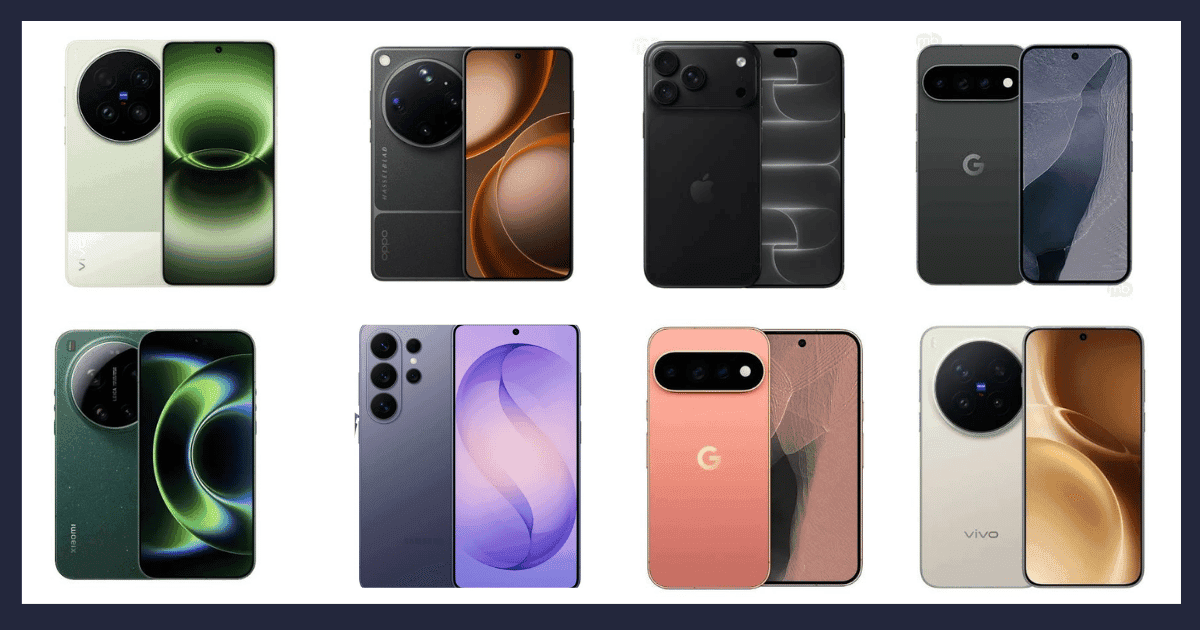

Smartphone camera technology has advanced so much in the last few years that the gap between ordinary cameras and premium smartphones has narrowed considerably. Manufacturers are now giving importance not only to megapixels but also to large-size sensors, advanced optical zoom, variable aperture, image stabilisation technology and artificial intelligence-based image processing.
Several high-capacity smartphones have grabbed attention in the September 2026 market for users who prioritise photography. Considering camera hardware, zoom capability, video recording and artificial intelligence-based image processing, the seven phones in discussion are Vivo X300 Ultra, Oppo Find X9 Ultra, iPhone 18 Pro and Pro Max, Samsung Galaxy S26 Ultra, Xiaomi 17 Ultra, Google Pixel 11 Pro and Pro XL and Vivo X300 Pro.
Vivo X300 Ultra has been built keeping the concept of a pocket camera in front. The phone’s camera system has a 200-megapixel main camera with Sony LYTIA 901 sensor. Along with it there is a 200-megapixel periscope telephoto camera with gimbal stabilisation facility and a 50-megapixel ultrawide camera. One of the special features of the phone is its interchangeable imaging system. Using a professional imaging kit, external grip as well as 200-millimetre or 8.7 times optical zoom and 400-millimetre Zeiss teleconverter can be added to the camera. There is a separate 5-megapixel spectral sensor to increase colour accuracy.
Oppo Find X9 Ultra, built in partnership with Hasselblad, has multiple cameras and advanced zoom technology. The phone has a 200-megapixel main camera along with a 200-megapixel telephoto camera. One of the main attractions of its zoom system is Lumo technology. The aim of this technology is to increase the number of pixels in the image at 2 times and 6 times zoom and retain fine details. There is also the facility of using external lenses and grip through the Hasselblad Earth Explorer kit.
In Apple’s new generation iPhone 18 Pro and Pro Max, importance is said to be given to image processing and verification technology along with the camera. There is information of a 48-megapixel fusion main camera and mechanical variable aperture technology in it. If the aperture of six laser-cut blades has the facility to open up to f/1.48, more light can enter the sensor in low light. As a result there is a possibility of getting improved results in night photography. New technology is also said to be added in the case of verifying the authenticity of images. However the official information of the manufacturer will be considered final regarding the final implementation and effectiveness of these facilities.
Giving importance to night photography technology, a large-aperture camera has been used in the Galaxy S26 Ultra. There is information of f/1.4 aperture in the phone’s 200-megapixel main camera and f/1.9 aperture in the 50-megapixel ultrawide camera. Large aperture helps collect more light in low light. As a result brightness and fine details can be retained in night photos and videos. Interest has also been created regarding advanced professional video technology in video recording. Efficiently handling large-size data during professional video recording and editing is one of its main aims.
Xiaomi has given special importance to camera colour and image processing through partnership with Leica. Xiaomi 17 Ultra has a 1-inch type main sensor and variable aperture. In the camera system there are facilities of ultrawide, telephoto and periscope zoom along with multiple 50-megapixel sensors. A separate photography kit can be used to bring the photography experience closer to conventional cameras. Two-step shutter button and zoom control facilities are added in it. Xiaomi’s own Surge chip also plays a role in fast image processing.
Google is known for artificial intelligence-based image processing along with hardware. Importance has been given to image processing using artificial intelligence inside the phone through the Tensor G6 processor in Pixel 11 Pro and Pro XL. There is information of a 50-megapixel main sensor and a 48-megapixel 5 times telephoto camera in the camera system of the two phones. Improvement has also been mentioned in night photography and video processing. Google’s Gemini-based on-device artificial intelligence technology may be used in various smart facilities including image processing. However the real effectiveness of these facilities will depend on software updates and the final version.
Vivo X300 Pro has been built with the aim of bringing some camera technologies of Vivo X300 Ultra into a relatively lower-priced model. There is information of a 50-megapixel Sony LYT828 main sensor and a 200-megapixel periscope telephoto camera in it. Vivo’s V3 Plus imaging chip plays an important role in video processing. Especially 4K HDR cinematic portrait video is one of its main attractions. Alongside there is also the facility of using Zeiss 2.35 times telephoto extender kit.
Looking at the flagship camera phones of 2026 one thing is clear that manufacturers are no longer in the competition of only giving higher megapixel sensors. Emphasis is being given on utilising large sensors, advanced optical zoom, image stabilization technology, aperture control and artificial intelligence-based image processing together.
Especially in the case of travel, portrait, wildlife photography, night photography or video content creation the capability of each phone is different. Therefore while choosing a camera phone it is important to consider not only megapixels but also the size of the sensor, telephoto capability, optical stabilisation, video recording facilities and software-based image processing.
Leave A Comment