
BMDA's irrigation, canal digging change Chapainawabganj's agriculture
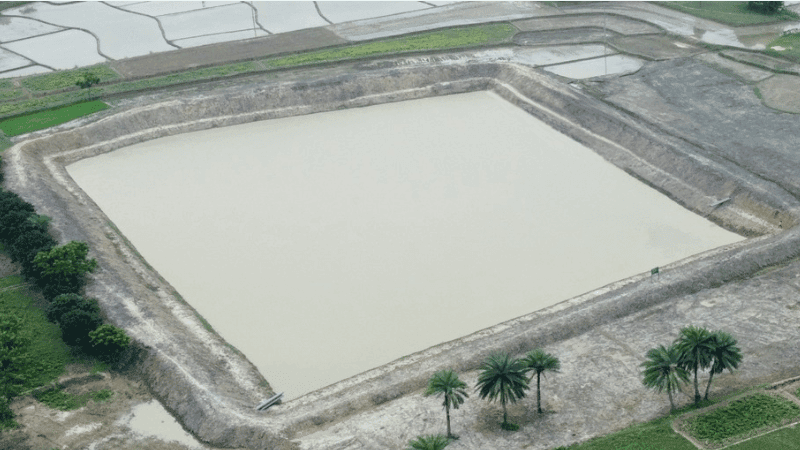

The once dry and desert-like Barendra township is now one of the country's grain stores. The modern irrigation system of the Barendra Multipurpose Development Authority (BMDA), especially canal digging and optimal use of surface water, has brought about revolutionary changes in Chapainawabganj's agriculture and economy.
Some of the farmers who have benefited from the project spoke to Views Bangladesh. They said that due to the BMDA's irrigation system, canal digging, pond renovation and tree planting work, there has been a big change in the agriculture of the region. Previously uncultivated or unsuitable land has now come under cultivation, resulting in improved production and living standards of farmers. They believe that giving BMDA a bigger responsibility will speed up the overall development of the area.
Jubaier Hossain, 65, farmer of Sadar Upazila said, "Our agriculture is undergoing a revolution because BMDA is providing water through modern technology." Cultivation has become easier by digging canals to bring water from the river and improving the use of surface water by renovating ponds. The expertise of BMDA in planting trees and digging canals will change the face of this region if they are given greater responsibility.
Abdul Matin, 50, a resident of the same area, said, "The ecological evolution of this region began after the establishment of BMDA in 1991-92. The once unsuitable land is now full of crops." He further said, "Prime Minister Tarique Rahman's visionary steps of digging canals and planting saplings are being implemented through BMDA and improving the fate of farmers."
According to the information of the Chapainawabganj Region Office, the activities of BMDA have had a huge positive impact in this district. Three crops are being cultivated on 62,000 hectares of land annually through 1,639 force mode pumps, which was only one earlier; 132,000 farmer families are benefiting from this. Irrigation is being provided to 4,000 hectares of land through 100 LLP pumps from the Mahananda and Punarbhaba rivers. About 650,000 metric tons of crops are produced every year, with a market value of about Tk 1,625 crore. A smart card-based prepaid meter system has been in operation since 2003 to prevent water wastage.
Not only for irrigation, but also to maintain environmental balance, BMDA has so far planted 15 million fruit, forest and medicinal trees. In addition, 230 kilometers of canals and 1,091 ponds have been re-excavated to conserve rainwater, which has reduced the pressure on the groundwater level.
BMDA's role in rural infrastructure development is also significant. Drinking water has been ensured for about 200,000 people through 234 installations. In addition, 1,400 kilometers of buried pipes (irrigation) and 186 kilometers of connecting roads have been constructed, which has facilitated the marketing of agricultural products.
Executive Engineer of Chapainawabganj Region Office Md. Al Mamunur Rashid said that two major project proposals have been sent to the Ministry of Agriculture to provide irrigation facilities to about 18,000 hectares of severely drought-prone areas using the water of the Mahananda River. Of these, the estimated cost of the double lifting system project is Tk 839 crore and the estimated cost of the climate change mitigation project is Tk 587 crore. Under these projects, there are plans to re-excavate 210 kilometers of canals and 150 ponds, plant 550,000 trees and install solar irrigation systems. Currently, another 6 kilometers of canals and two large beels (Churil and Kalon) are under the process of re-excavation.
Professor of the Department of Political Science, Rajshahi University, Dr. Farhat Tasneem told Views Bangladesh, “Since BMDA is very skilled in agriculture and irrigation management, if they are more involved in this work, the socio-economic condition of the Barendra region will improve rapidly.”
The way BMDA is working with a combination of modern technology and natural resources, it has become a model for food security not only in Chapainawabganj but also in the entire country. If the government supports this institution, it is capable of completely changing the face of the Barendra region.
Leave A Comment