
Brazil vs Japan: Samba creativity meets Samurai discipline
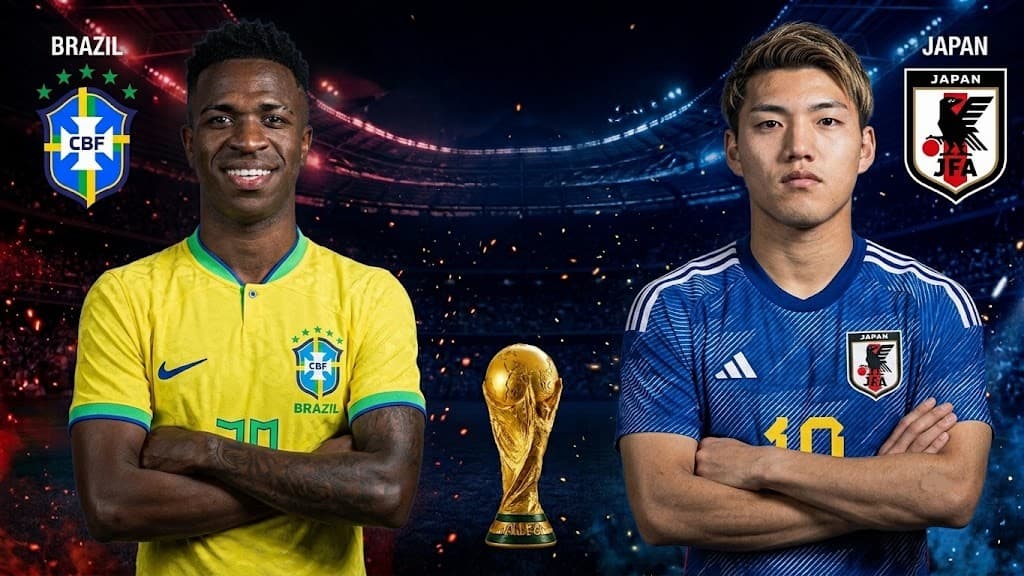

Five-time world champions Brazil face one of Asia's most disciplined and strategic teams in Japan in the 2026 World Cup Round of 32. On one side, individual flair, fast transitions and explosive attacking talent; on the other, high pressing, rapid one-touch combinations and flawless team coordination. This is not just a South America vs Asia battle, but a fascinating chess match of creativity vs strategy, transition vs pressing, and experience vs organisation.
Tactical battle
Brazil (4-3-3): Ancelotti's side will look to maintain possession but avoid unnecessary short passes, instead using quick vertical football and wing play. Their main plan will be to break Japan's high press with the pace of Vinicius Junior, Matheus Cunha and Raphinha. Defensively, maintaining a mid-block and closing the central corridor will be key.
Japan (4-2-3-1): Japan's greatest strength is their organised high pressing. As soon as the opponent loses the ball, they swarm forward to break down short-pass build-ups and launch quick attacks. When in possession, they use rapid one-touch combinations and wing play to stretch the opposition defence.
Key battles that could decide the match
Danilo vs Keito Nakamura: The most crucial tactical duel could be on Brazil's right flank. Left wingers typically go outside to cross, but Japan's Keito Nakamura, being right-footed, constantly cuts inside to shoot or play through balls. Danilo will face a difficult decision: follow Nakamura inside, leaving the wide space, or stay wide and rely on central defenders for support. If Raphinha regularly drops deep to provide defensive support, Nakamura's impact can be reduced.
Alisson's long balls vs Japan's press: If Japan presses high as they did in previous matches, Alisson's role will be crucial — not just as a goalkeeper but as an extra playmaker. His accurate long balls directly to Vinicius, Cunha or Raphinha could break Japan's first pressing line instantly and create big spaces for Brazil to attack.
Midfield tactical battle: Japan becomes most dangerous when opponents press them and they break that press with one-touch combinations. Brazil's most effective strategy may be to sit in a mid-block, close central channels and force Japan to play wide. This would limit Japan's attacks to crosses, which Marquinhos, Gabriel and Casemiro can handle more easily.
How Brazil can break Japan's press
If Brazil build up with short passes in their own half, they risk falling into Japan's pressing trap. Using quick long balls may be the most effective solution. If they can control those balls in the final third, at least six Japanese players will be out of the game in an instant. Vinicius, Cunha and Raphinha's pace in open spaces will then put Japan's defence to a severe test.
What Brazil should do in defence
Instead of pressing Japan high, sitting in a mid-block could be the most effective plan. Closing the central corridor and forcing them to play wide will eventually make them rely on crosses. Marquinhos, Gabriel and Casemiro's clearances in the box can then keep Brazil safe.
Additionally, to stop Japan's transitional attacks, Brazil's defence may need to organise differently. Ueda often drifts wide to create space, while Maeda drops inside to play as a striker. Kamada and Doan's quick vertical passes make those movements even more dangerous. If the full-backs can form a compact 'rainbow' shape with Casemiro, Marquinhos and Gabriel, Japan's central channels could be largely closed. This is not traditional catenaccio but a modern mid-block defence aimed at slowing down transitions and forcing opponents wide.
Strengths and weaknesses
Brazil: Individual flair, ball possession, quick passing and transition attacks are Brazil's main strengths. Vinicius Junior's pace, Bruno Guimarães' passing, Casemiro's experience and Alisson's long balls give them extra advantage. The Gabriel-Marquinhos defensive partnership has also been solid. However, their weakness lies in defending crosses and occasional errors in build-up from the back under pressing pressure. Raphinha's absence may also reduce the effectiveness of the right flank attack.
Japan: Organised high pressing, rapid transitions, one-touch combinations and relentless teamwork are Japan's greatest strengths. The pace of Doan, Nakamura, Kamada and Ito, along with Suzuki's reliable goalkeeping, boosts their confidence. However, their physical disadvantage, defensive struggles against long balls and Kubo's uncertainty are concerns. Their three-man backline will also face a tough test against experienced and powerful attacks.
Who has the edge?
On paper, Brazil are the favourites. Individual skill, attacking quality, big-match experience and defensive solidity put them ahead. But Japan are a team that can trouble any giant with organised pressing, exceptional work rate and quick transitions.
If the match plays at Brazil's pace and they successfully break Japan's press, the Samba Boys are likely to win. But if Japan can force Brazil into errors through their pressing from the start and play their one-touch football in rhythm, a major upset is not out of the question.
Leave A Comment