
BBC Report
Can new Delhi reset ties with a BNP government?
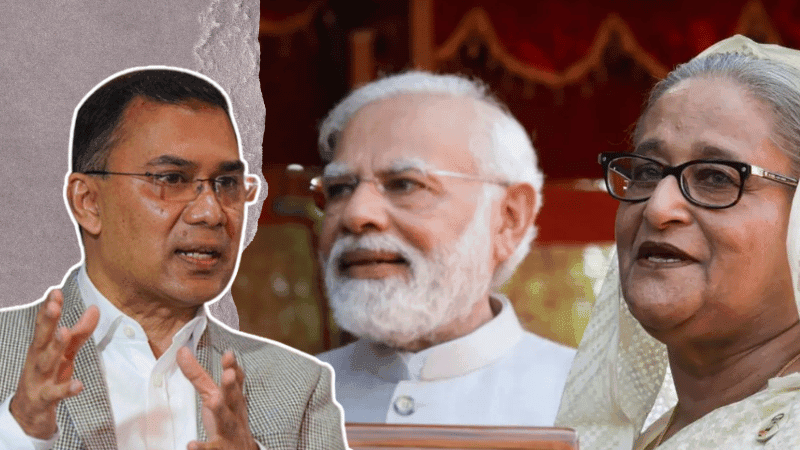

Following the Bangladesh Nationalist Party’s (BNP) sweeping victory in the 13th parliamentary election, India’s response has been cautious yet forward-looking. Prime Minister Narendra Modi congratulated BNP leader Tarique Rahman in a message written in Bengali, reaffirming India’s commitment to supporting a democratic, progressive and inclusive neighbouring Bangladesh. He also expressed his willingness to work closely to strengthen bilateral ties.
Background of Distrust
Relations between the two neighbours deteriorated after former Prime Minister Sheikh Hasina fled to India following the July 2024 mass uprising. Many in Bangladesh believe New Delhi’s overt backing of Hasina during her increasingly authoritarian tenure strained public perception of India. Longstanding grievances — including border killings, water-sharing disputes, trade restrictions and provocative rhetoric — have further complicated ties.
Visa services remain largely suspended, cross-border bus and train services are halted, and Dhaka–Delhi flights have been significantly reduced. For New Delhi, the question now is not whether to engage with a BNP-led government, but how to do so while safeguarding its strategic interests.
Shadow of the Past
The BNP is not an unfamiliar actor for India. During the 2001–2006 tenure of former Prime Minister Khaleda Zia, when the BNP governed in alliance with Jamaat-e-Islami, bilateral relations declined sharply. New Delhi raised concerns over support for insurgent groups in India’s northeast, minority protection issues, and the 2004 Chittagong 10-truck arms haul — allegedly intended for Indian separatists.
Under Sheikh Hasina’s 15-year rule, India secured significant cooperation on counter-insurgency, connectivity and regional integration — making her government a key strategic partner. However, Hasina’s continued exile in India and New Delhi’s refusal to extradite her remain major obstacles to rebuilding trust with Dhaka.
The Pakistan Factor
Since Sheikh Hasina’s departure, Dhaka has moved swiftly to normalise relations with Pakistan — India’s long-time rival. Direct Dhaka–Karachi flights have resumed after 14 years, high-level diplomatic exchanges have taken place, and bilateral trade reportedly grew by 27 percent in 2024–25. While Indian analysts acknowledge Bangladesh’s sovereign right to diversify ties, they caution against any sharp strategic tilt.
Rhetoric and Public Sentiment
Provocative statements by certain Indian politicians and media outlets have fueled anti-India sentiment in Bangladesh. Analysts suggest that both sides must exercise restraint in the new political reality. Managing public perception and rebuilding mutual confidence will be crucial.
Security Cooperation: The Foundation
Despite political uncertainty, defence and security cooperation remains intact. The two countries continue annual military exercises, coordinated naval patrols and defence dialogues. India’s $500 million line of credit for defence procurement also remains in place. Observers believe a BNP government is unlikely to roll back such cooperation.
Scope for a Reset
Geography and economics bind the two nations: a 4,096-kilometre shared border, deep cultural links and robust trade ties. Bangladesh is one of India’s largest trading partners in South Asia, while India is a major export destination for Bangladesh in Asia.
Analysts argue that as the larger neighbour, India may need to take the initiative in rebuilding trust. At the same time, Dhaka must pursue a balanced and confident foreign policy.
Ultimately, the success of a reset under a BNP government will depend on mutual restraint, pragmatic diplomacy and recognition of evolving regional realities. The key question now is: who makes the first move?
Leave A Comment
You need login first to leave a comment