
Cape Verde: The fairytale of an island kingdom across seven seas
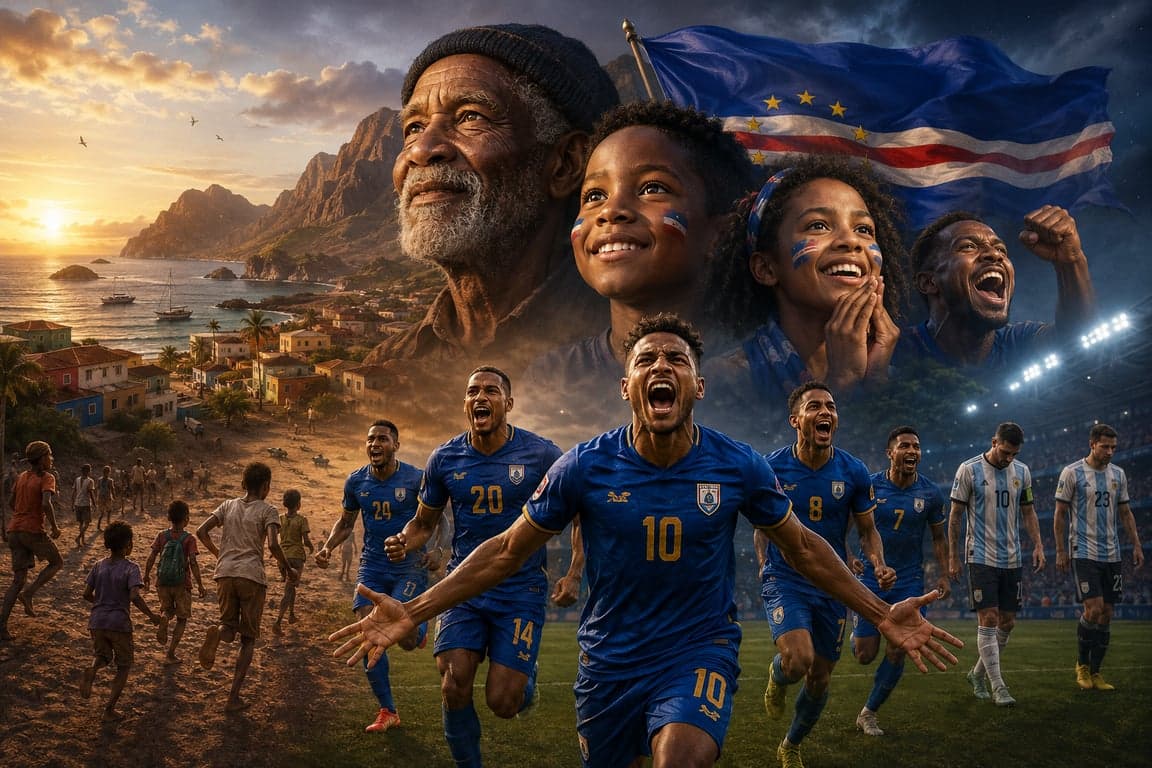

Fairy tales often speak of a kingdom that is difficult to find on any map—surrounded by vast waters, composed of a few fragmented islands, and inhabited by a handful of people whose stories had never been heard. The story of Cape Verde is much like that. Situated in the Atlantic Ocean six hundred kilometers off the coast of West Africa, this nation is formed by ten volcanic islands. It stands as the smallest country by area in the World Cup and the second smallest by population. While it is home to 550,000 people, more than double that number of its children are scattered across various corners of the world, having left their homeland to settle abroad long ago. Much like a prince crossing seven seas and thirteen rivers in search of fortune, the people of Cape Verde crossed country after country—not out of choice, but out of a necessity to survive.
Prosperity eluded this island kingdom for a long time. Portuguese explorers arrived and settled on these uninhabited islands in the fifteenth century, and shortly after, the islands became a cruel hub for the Atlantic slave trade. Just as a curse falls upon a kingdom in tales of old, a natural curse descended upon this island nation in the form of drought and famine. In this semi-arid land where rain was scarce, deforestation and reckless overgrazing by colonial rulers added to the disaster. Successive famines in the eighteenth, nineteenth, and twentieth centuries claimed thousands of lives. The most devastating blow came during the famine of 1941 to 1948, when countless people died of starvation due to the indifference of the Portuguese rulers. To survive, the poorest migrated to the plantations of São Tomé and Príncipe, while others boarded whaling ships bound for America—resembling the children of a poor woodcutter leaving home just for a handful of food.
However, every fairytale has a turning point where an accursed kingdom awakens to change its destiny. In 1956, a scholar named Amílcar Cabral lit the torch of independence in Guinea-Bissau, building the PAIGC movement. The peaceful path was shattered by a brutal massacre in 1959, turning the movement into an armed struggle. Cabral himself did not live to see the dawn of independence, losing his life to assassins in 1973—much like the old sage who guides the prince but remains behind the scenes of the story. Yet, his dream did not stop. Cape Verde finally saw the light of independence in 1975, though the treasury was empty and sixty percent of the working population was unemployed. The battle to rebuild began from the ruins. Through a long journey of education, healthcare, democracy, patience, and perseverance, Cape Verde stands today as one of the most developed nations in Africa.
This same grit and perseverance carried over into their football. The journey began with a defeat against Guinea in 1978, followed by many years of silence from an unsung team watching from the sidelines. The narrative began to change through the Cape Verdean diaspora children raised abroad. In 2013, the 'Blue Sharks' qualified for the Africa Cup of Nations for the first time, shocking everyone by reaching the quarter-finals—resembling a poor fisherman's son who surprises the royal court upon his very first visit. They returned to AFCON in 2015, 2021, and 2023, reaching the quarter-finals once again in 2023.
Then came the dream moment, what old stories would call the 'day of conquering the kingdom.' In October 2025, Cape Verde secured their first-ever World Cup ticket from Group G of the qualifiers. A nation carrying a history of drought and famine was stepping onto the biggest stage in world football. In their first match in Atlanta, they faced European champions Spain—meeting the most powerful king of the realm. Yet, this small team secured a goalless draw, thwarting the giant's attack as if by magic. A 2-2 draw against Uruguay followed, where they scored their first-ever World Cup goal. A final goalless draw against Saudi Arabia confirmed the desired moment—advancing to the knockout stages as group runners-up in their debut campaign.
That progression led to the night that formed the climax of this fairytale. In the Round of 32, they faced reigning world champions Argentina—an undefeated side featuring Messi and Lautaro Martínez, driven by dreams of a second consecutive title. Standing before the giant on the Miami pitch, the small team did not falter. After falling behind in the 29th minute, they equalized in the 59th minute, fighting back like a brave youth who refuses to fear the first blow. The match ended 1-1 in regulation time and moved into extra time. Argentina took the lead again in the 92nd minute, but Cape Verde refused to surrender, stunning the world by equalizing once more in the 103rd minute. The battle finally ended with a decisive Argentine goal in the 111th minute, resulting in a 3-2 defeat. As in some tales, the small hero does not always win the kingdom, but wins hearts through sheer courage. The incredible saves by goalkeeper Vozinha and the determined fight of every player showed why this small island nation became the most loved team of this World Cup.
A nation once devastated by drought and famine, whose children left home for centuries just to survive, saw its descendants stand eye-to-eye against the world champions on the World Cup stage. The story of Cape Verde concludes like a tale where the prince misses out on the throne but wins the hearts of the people—an incomplete fairytale containing a loss, but no defeat. This island nation of 550,000 people proved that while the size of a story may be small, its courage can be vaster than the ocean.
Leave A Comment