

Cease unnecessary surgery on pregnant women
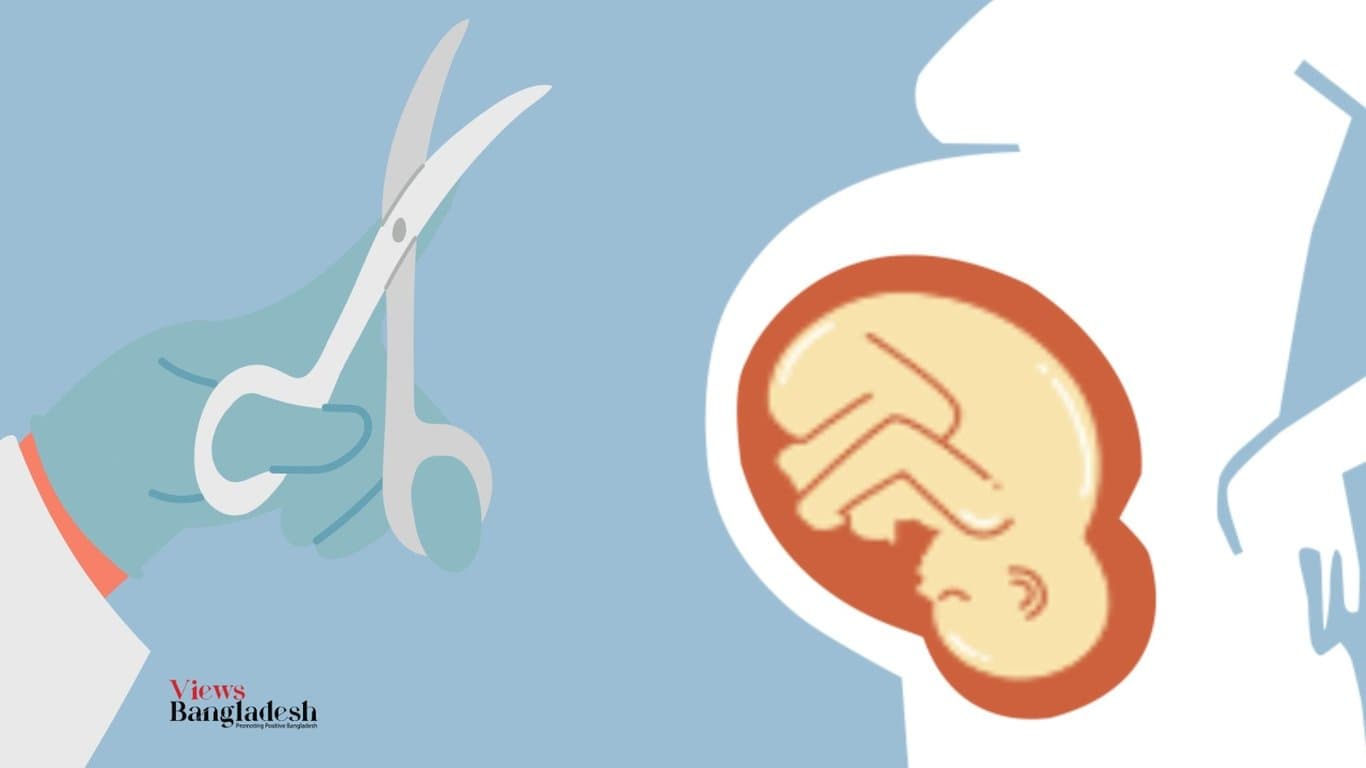

A few years ago, the natural childbirth of pregnant women was a very common occurrence. However, with the changes over time and the prevalence of medical interventions, the trend of natural childbirth has significantly declined. Furthermore, taking advantage of this trend, even if unnecessary, the country's private hospitals are tilting towards unnecessary medical interventions, which is a concerning signal for the nation.
The most common and natural path for childbirth is through the birth canal. There are three stages of childbirth in this process: breaking of the amniotic sac and dilation of the cervix, descent and birth of the baby, and delivery of the placenta. This method is considered healthy for both the mother and the baby.
In the developed world, a significant majority of childbirths take place in hospitals where advanced medical facilities are available. In contrast, in Bangladesh, a higher proportion of childbirths used to occur at home with the assistance of traditional birth attendants in previous times.
However, times have changed, and now, like in the developed world, a significant portion of childbirths in our country also occurs in hospitals. But unlike the developed world, where the majority of women give birth through normal or natural methods, in Bangladesh, childbirth often involves unnecessary medical interventions.
Research indicates that the incidence of unnecessary medical surgery during childbirth has risen alarmingly in the country. Out of 100 childbirths, 45 involve unnecessary medical interventions. As a total count, around 16 lakh children are born in the country every year. Among them, more than 10 lakh births occur through unnecessary medical interventions.
The World Health Organization states that for every 100 pregnancies, 10 to 15 mothers may experience some complications. In such cases, there is a concern for complications during childbirth. In such situations, surgery is necessary to ensure the safety of both the mother and the child during childbirth. It is a life-saving measure. When the rate of medical interventions exceeds 15%, it is considered unnecessary and subject to evaluation.
However, a significant portion of unnecessary medical interventions occurs in private clinics and hospitals. Of the total unnecessary interventions during childbirth, 84% take place in private healthcare facilities. Government hospitals contribute to 14%, and the remaining 2% occur in some health centers managed by non-governmental organizations (NGOs).
Many pregnant women in the country, driven by the desire to avoid the pain of normal delivery, opt for unnecessary medical interventions instead. Some make the decision to undergo medical interventions because they believe they cannot endure the pain of childbirth. The rationality of such decisions is not something they wish to analyze. Everything about normal delivery is good. "This is a natural way. When we deviate from the rules of nature and resort to medical interventions, that becomes irregular. Following the natural course has many advantages, and it is auspicious for both the mother and the baby.
In normal delivery, the risk of mortality for both the mother and the baby is lower. There is less need for blood transfusion, lower chances of infection, reduced expenses, no surgical scars on the uterus, less respiratory distress for the baby after birth, and the mother can breastfeed the baby effectively.
It's important to remember that childbirth is not an illness; it's an entirely natural process in life. Childbirth is not like surgeries for gallbladder, appendix, or other medical interventions. If necessary, interventions can be performed, but childbirth itself is a fundamentally natural phenomenon. Often, medical interventions are performed to reduce the risk of maternal and fetal mortality. Hence, it's not just a matter of preference but a necessity to use surgery when required. Therefore, if not approached with self-awareness, unnecessary surgery would worsen the situation.
Leave A Comment
You need login first to leave a comment