
Death toll hits 57 as massive migrant rush overwhelms Spain's Ceuta border
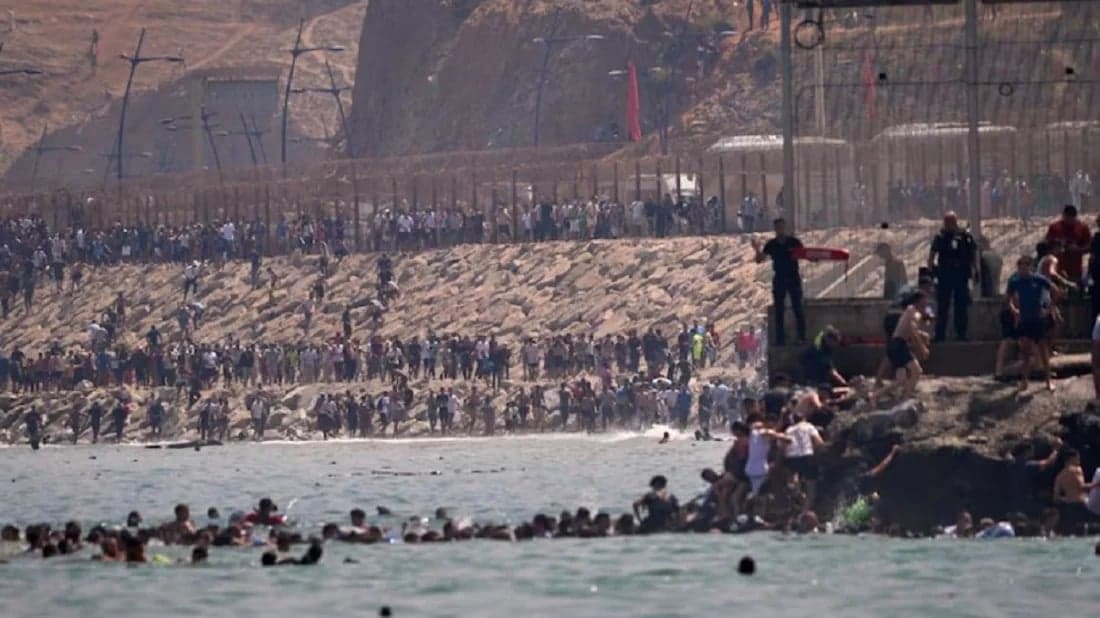

Spain's North African enclave Ceuta suffered a major humanitarian crisis after an unprecedented surge of migrants attempted to cross into the territory, leaving at least 57 people dead over the past two days.
According to Spanish authorities, most of the victims drowned while attempting to swim across the sea or were crushed near the heavily fortified border fence during the chaotic rush to enter the enclave.
Spanish officials confirmed that 57 bodies have been recovered on the Spanish side of the border, while authorities warned the death toll could rise further as search and rescue operations continue. Moroccan coastal areas are also feared to have recorded additional casualties.
Spain's Interior Ministry said around 50,000 people attempted to cross into Ceuta beginning Thursday. However, the regional government of Ceuta estimated the figure to be close to 60,000, describing it as the largest irregular migrant influx in the enclave's history.
To regain control of the border, Spain deployed additional troops, police personnel and armored vehicles, while Moroccan security forces used tear gas and batons to disperse large crowds gathered near the frontier.
Authorities from both countries said the joint operation has helped stabilize the situation.
Spanish officials also reported that more than 48,000 migrants have voluntarily returned to Morocco, many citing shortages of food, shelter and basic humanitarian assistance after crossing into Ceuta.
The crisis has also sparked political tensions across Europe. Italy announced temporary tightening of border controls with Spain under the Schengen framework, prompting criticism from Madrid. The Spanish government argued that unilateral restrictions undermine European solidarity and insisted that migration challenges require a coordinated regional response.
Spanish Prime Minister Pedro Sánchez described the situation as a serious challenge to Spain's sovereignty, pledging stronger border security measures and a tougher crackdown on human trafficking networks.
Many migrants who returned to Morocco said they had endured hours of swimming or dangerous journeys only to find themselves without adequate food, shelter or protection, forcing them to abandon their attempts.
International humanitarian organizations are closely monitoring the evolving situation as concerns grow over the worsening humanitarian conditions along the Spain-Morocco border.
Source: Reuters
Leave A Comment