

Bailey Road Inferno Sparks
Demand for Action: Safeguarding Dhaka's Residents
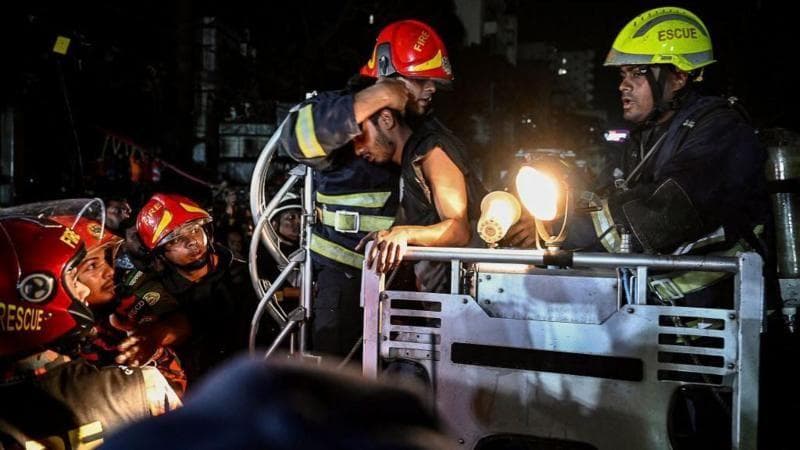

The city resembles an unprotected metropolis besieged by an array of calamities, with devastating fires erupting sporadically. Further evidence of this vulnerability surfaced with the tragic report of at least 46 casualties resulting from a blaze engulfing a multi-storey structure on Bailey Road in the capital just last Thursday night. Concerns linger that the death toll from this incident may escalate. The recent alarming surge in infernos has reignited discussions surrounding the city's perilous state, prompting urgent calls for enhanced safety measures.
According to media reports, the fire broke out in a building named Green Cozy Cottage last Thursday, February 29, around 10 o'clock. The fire quickly engulfed the entire structure, originating at the bottom and swiftly spreading upward. Numerous individuals found themselves trapped on the upper floors as the fire raged below. In desperate attempts to save lives, some resorted to jumping from the upper stories. Tragically, many were unable to descend via the stairs, which had become impassable due to the intense heat and the presence of gas cylinders. The fire service has revealed that the staircase effectively turned into an inferno, preventing anyone from using it to escape. Additionally, it's been reported that the staircase could accommodate no more than three individuals simultaneously. Shockingly, most casualties succumbed not to burns but to suffocation caused by the smoke, rendering them unconscious before perishing. The fire service further disclosed the absence of a functional fire suppression system within the building, with even the minor existing measures proving ineffective. These revelations prompt a critical question: why do security systems in buildings fail during fires? The quest for answers to this pressing inquiry remains ongoing.
Prior to the tragic Bailey Road fire, Dhaka has been plagued by several horrific fire incidents in recent years. On February 20, 2019, a devastating blaze erupted in a chemical warehouse in Churidhatta, Chawkbazar, claiming the lives of 71 individuals. Just over a month later, on March 28, 2019, another fire broke out at FR Tower in Banani, resulting in the loss of 27 lives. The night of June 3, 2010, witnessed a catastrophic fire that originated from a chemical warehouse in Old Dhaka's Nimtoli, claiming the lives of 124 people. These incidents, coupled with frequent smaller fire outbreaks, have underscored the urgent need for robust fire safety measures in the city.
To safeguard Dhaka from the myriad threats it faces, including fires, waterlogging, floods, pollution, and earthquakes, it is imperative to prioritise the preservation of the city's reservoirs, ponds, and canals. Efforts should be directed towards rescuing and connecting all lakes through a network of canals, not only enhancing the environment but also bolstering resilience against major disasters, including fires.
In addition, the emerging technology of fireballs presents a promising solution. These innovative devices, which ignite and extinguish fires upon impact, offer a potentially effective means of fire suppression. While their implementation may entail initial expenses, their unparalleled efficacy in fire protection renders them indispensable.
Furthermore, addressing the reported inefficiencies and shortcomings within the Bangladesh Fire Service and Civil Defense is paramount. If allegations of inefficacy are substantiated, authorities must undertake a thorough reorganisation of these essential services to ensure they are adequately equipped and proficient in their duties.
To effectively safeguard Dhaka from the myriad risks it faces, such as fires, it's crucial to address interconnected issues like fire safety, electricity and gas supply, as well as chemical and industrial safety. The city's development, characterised by a mixed model where residential, industrial, and commercial areas coexist without clear demarcation, presents unique challenges.
Garment factories, markets, businesses, and residential areas often exist adjacent to chemical warehouses, heightening the risk of catastrophic incidents. Addressing this requires a concerted effort driven by political will to enforce stringent fire codes and regulations.
Moreover, ensuring a secure and integrated model for essential services such as electricity, water, and gas supply is paramount. This entails not only reliable infrastructure but also effective coordination and management systems to prevent disruptions and mitigate risks.
Implementing comprehensive safety measures, coupled with robust enforcement mechanisms and infrastructure improvements, will be essential to mitigate the risks faced by Dhaka. By prioritising these interconnected issues and fostering collaboration among stakeholders, the city can work towards a safer and more resilient future.
Leave A Comment
You need login first to leave a comment