
Did Argentina win, or did World Cup fairness lose?

The beauty of football lies not only in breathtaking goals, dazzling dribbles or dramatic comebacks—it rests equally on fair competition. When that sense of fairness comes under scrutiny, even the most remarkable victory can lose some of its shine.
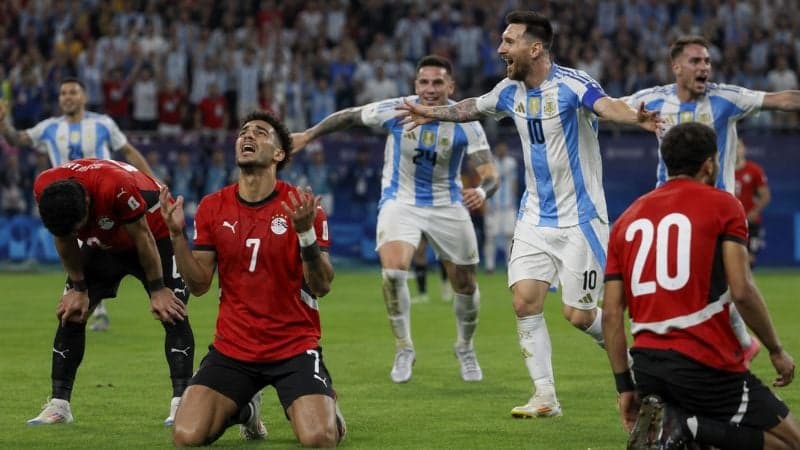
Argentina's stunning 3-2 comeback victory over Egypt in the FIFA World Cup Round of 16 has become one such match. While it will be remembered for an extraordinary turnaround, it has also reignited debate over refereeing standards, VAR consistency and sporting justice.
For nearly 80 minutes in Atlanta, Egypt looked destined for one of the tournament's biggest upsets. Leading 2-0 against the defending champions, they had Argentina on the brink of elimination. But three goals in the closing 13 minutes turned the match on its head and booked Lionel Scaloni's side a place in the quarter-finals.
Yet the final score has been overshadowed by two controversial decisions.
The first came in the 68th minute when Mostafa Ziko's goal was ruled out after a VAR review identified an earlier foul on Lisandro Martinez in the build-up. Egypt accepted the decision reluctantly, but the controversy deepened in stoppage time when they appealed for a foul on Mohamed Salah inside the penalty area moments before Enzo Fernandez scored the winner. Neither the referee nor VAR intervened.
The contrast between those two incidents has become the centre of the debate.
Egypt's frustration boils over
After the match, Egypt midfielder Mostafa Ziko questioned the officiating, claiming the referee's decisions consistently favoured Argentina. While allegations of bias remain unproven, the fact that such accusations emerged after one of the tournament's biggest matches has intensified scrutiny over refereeing standards.
The criticism was not confined to the losing side.
Former Arsenal striker Ian Wright argued that if VAR could go back several phases to cancel Egypt's goal, it should also have reviewed the challenge on Salah with the same level of scrutiny. Former Liverpool defender Jamie Carragher echoed similar concerns, saying such a goal would rarely be disallowed in Europe's top leagues.
Perhaps the strongest criticism came from Jose Mourinho, who described the contest as "daylight robbery"—a reflection of how deeply the refereeing decisions divided opinion.
FIFA faces fresh scrutiny
Egypt's Football Association has since lodged an official complaint with FIFA over French referee Francois Letexier, citing the disallowed goal, the ignored penalty appeal and what it described as inconsistent officiating.
The controversy has also revived wider questions surrounding FIFA's governance and transparency. Recent criticism over the lifting of United States forward Folarin Balogun's suspension—reportedly after intervention from US President Donald Trump—and renewed calls in Europe to examine FIFA President Gianni Infantino's role have further fuelled concerns about consistency and neutrality in football's highest governing body.
Although the two issues are separate, together they have intensified public debate over confidence in football's decision-making structures.
More than just a comeback
Argentina's place in the quarter-finals is official, and history will record it as another famous comeback.
But the match also serves as a reminder that VAR alone cannot eliminate controversy. Technology is only as credible as its application. When similar incidents receive different treatment, confidence in the system inevitably suffers.
At the World Cup—the pinnacle of international football—a single refereeing decision can alter not only a match but the dreams of an entire nation.
That is why the greatest hope for football supporters remains unchanged: let the players decide the game, not the controversy.
Leave A Comment