
Did England down on luck by being overly defensive after the goal?
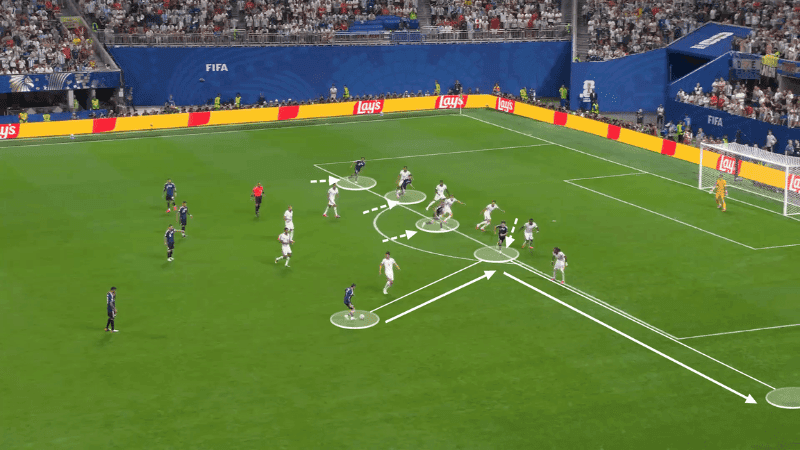

Sometimes in football, a single decision can change the entire history. England's story against Argentina in the 2026 World Cup semi-final is similar. After Anthony Gordon's goal in the 55th minute, it seemed that the English dream of reaching the World Cup final for the second time after 1966 was going to come true. But in the end, that dream was shattered by the strategy they had chosen. The decision to cling to over-defense instead of attack seemed to be England's biggest enemy.
German coach Thomas Tuchel took charge of England in October last year after Gareth Southgate's departure. He had a reputation as a successful tactician in knockout matches in European club football. It was thought that his ability to understand the situation and change the course of the match would help England end their long-standing title drought. But on the most important stage of the World Cup, it was Tuchel who chose a strategy that ultimately proved to be suicidal for his team.
The first hour of the match was a reflection of England's plan. Organized defense, fast counterattacks and disciplined football in midfield - all of which did not give Argentina much opportunity. In that sequence, Gordon's goal came in the 55th minute from a fast counterattack. That's when the match turned around, but not because of the goal; because of England's change of mentality after the goal.
After leading by one goal, instead of maintaining the edge of the attack, the whole team gradually folded themselves in half. By giving up possession of the ball, they seemed to invite one attack after another from Argentina. Yet on the bench were still dynamic footballers like Bukayo Saka, Noni Madueke and Marcus Rashford, who could be used to keep the opponent on their guard by threatening counterattacks. Tuchel did not choose that path.
Instead, after the second-half cooling break, they brought Gordon on and Ezri Konsa off to form a five-man defence with three centre-backs. Later, they brought Dan Byrne off to create a more defensive 5-4-1 formation. As a result, Argentina practically took control of the match.
The numbers are the biggest testament to England's strategy. From Gordon's goal to Lautaro Martinez's winning goal, England had only 12 percent possession in the 37 minutes between them. If a team is busy defending their own box for so long, it's only a matter of time before the opposition scores.
And that wait was ended by Enzo Fernandez. Argentina equalised with a brilliant shot from outside the box in the 85th minute. However, the question arises, how did a midfielder like Enzo get so much space when there were five defenders in the box? A few minutes earlier, Jordan Pickford had turned his shot away for a corner from the same spot. The second time it was not saved.
The momentum of the match changed completely after the equalizer. Argentina was full of confidence, while England were mentally devastated. The English were not alert even after Alexis McAllister's shot hit the post. In added time, Lautaro Martinez's header from Lionel Messi's perfect cross was caught in the net. The reigning world champions were instantly 2-1 ahead and assured of another World Cup final.
Tuchel naturally had to stand in the dock after the match. However, despite the criticism, the German coach did not budge from his decision. He claimed that the plan had almost succeeded. He said that the coach was responsible for making decisions on the field and that he played according to his analysis. He was pleased with the team's effort, because England were very close to winning.
Tuchel's argument was that Argentina started to make a lot of crosses after the goal. So, the five-man defense was designed to close the space inside the box and prevent aerial attacks. But the reality is that Argentina returned to the match not only by using the space outside the box, but also by using the space outside the box. Messi's creativity, Enzo's long-range shot and Lautaro's perfect finishing exposed the weaknesses of that plan.
Another chapter has been added to the list of England's semi-final failures in the history of the World Cup. However, this loss will be discussed for a long time not only because of the opponent's extraordinary football, but also because of their own tactical mistakes. Because sometimes in football, the safest way to stay ahead by one goal is not to retreat to defense; but to keep the opponent afraid of attacking. England forgot that truth. And taking advantage of that mistake, Argentina has written another epic comeback story.
Leave A Comment