

Direct election demand for reserved seats for women
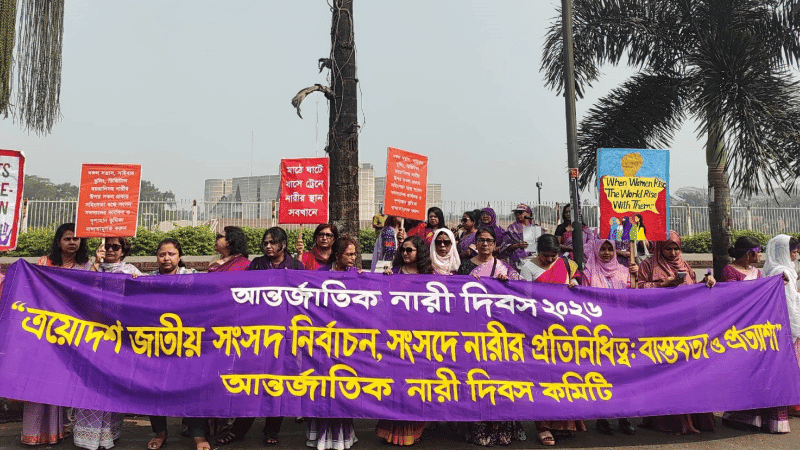

Women rights activists have demanded the introduction of direct elections for reserved seats and ensuring a stronger and more effective role for women in parliament. According to them, political parties nominated very few women in the recent election, resulting in decreased women's participation in the polls.
The demands were raised at a programme held on Saturday, March 7, at Manik Mia Avenue in the capital. The main theme of the event organised by the International Women's Day Celebration Committee was 'The 13th National Parliamentary Election, Women's Representation in Parliament: Reality and Expectations'.
Programme coordinator and member of Naripakkha Tamanna Khan Popi said women's participation in direct seats had been increasing slightly in several past elections. However, the latest election witnessed a significant decline in both nominations and victories.
Imamul Hasan, a member of Shakkhi Foundation, said women are still deprived in various spheres of society. If they had equal opportunities, women would not have to struggle this way to secure their rights.
According to information presented at the event, 13 national parliamentary elections have been held in Bangladesh since independence. Women generally enter parliament in two ways—through direct elections in general seats or by being elected to reserved seats through political party nominations.
According to organisers, women received very few nominations from political parties in the last election, and just over 8 per cent of them emerged victorious.
Laila Arifa Khanam, a member of Breaking the Silence, said many had hoped this election would strengthen democratic practice in the country and increase women's participation in politics. The Women Reform Commission had recommended that political parties nominate women for at least 50 per cent of seats, while the women's movement demanded a minimum of 33 per cent. But in reality, women received an average of only 3.98 per cent of nominations.
Women's rights organisations have long been demanding that women members of parliament from reserved seats be elected through direct voting. According to them, this would strengthen women's accountability and representation in parliament.
Organisers said although women constitute nearly half of the country's total population, their representation in politics remains unsatisfactory. Therefore, more meaningful participation of women in parliamentary proceedings, standing committees and various leadership positions needs to be ensured.
Speakers demanded the formulation of transparent policies for nominating candidates for reserved seats, political training for women, capacity building for women MPs, and strict measures to prevent all forms of violence against women, including cyberbullying and digital harassment.
Leave A Comment
You need login first to leave a comment