

Discussing implementation of visa policy of USA
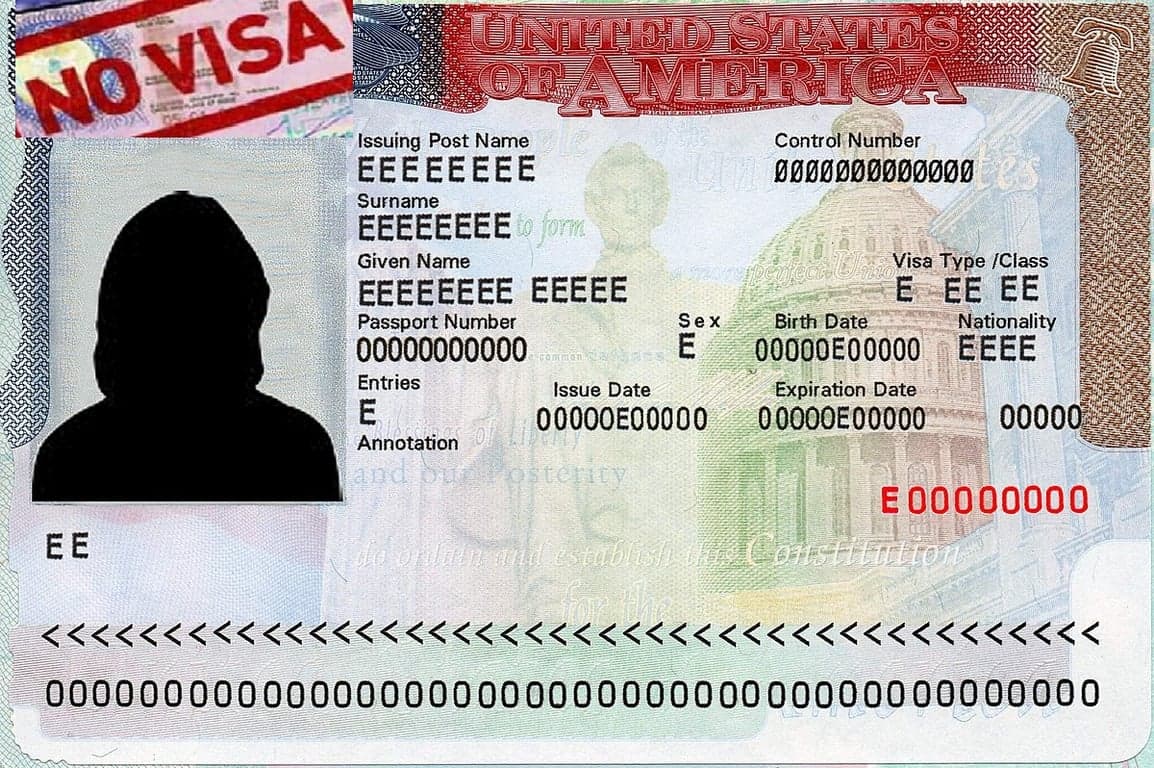
The authorities of the United States have started enforcing its visa policy announced in May against those obstructing the upcoming parliamentary election process in Bangladesh.
Under this policy, the United States will be able to restrict the issuance of visas for any Bangladeshi individual, believed to be responsible for, or complicit in, undermining the democratic election process in Bangladesh. This includes current and former Bangladeshi officials, members of pro-government and opposition political parties, and members of law enforcement, the judiciary, and security services.
This visa policy can also be applied to those who have been responsible in the past and who will be responsible in the future for obstructing the democratic election process in Bangladesh.
Obstructing the democratic electoral process means engaging in vote rigging, intimidating the voters, preventing pearallies and meetings and creating barriers to expressing thoughts. US presidents before Joe Biden did not worry so much about the elections in Bangladesh, if they did so then there would not have been so irregularities in the elections held until 2018, starting from the Yes-No vote introduced by the then president Ziaur Rahman. In the 1973 elections there were allegations of intimidation and withdrawal of opposition candidates in some constituencies; In that election, Awami League candidates were elected unopposed in 11 seats.
Ziaur Rahman was the only candidate in the Yes-No Vote in 1977. Then the presiding and polling officers in charge of the polls filled the yes vote boxes. The turnover was 88.1 percent even though voters did not go to polling booths and the vote count showed 98.9 percent casted Yes while 1.1 percent No-votes. According to the report of international media, The Guardian, the voter turnout was in between 110 and 120 percent in some places.
Later in 1979, in order to make the national elections credible, the BNP deliberately defeated some of its candidates to win over the opposition. If the same policy was adopted in the elections in 2018, the visa policy would not have been implemented today.
Following Ziaur Rahman's path, the next president Hussain Muhammad Ershad also did not feel the need to hold fair and free elections; Even during his tenure, voters did not get a chance to vote, almost all votes were cast within an hour or two.
Following in the footsteps of Ziaur Rahman, Ershad also arranged the referendum in 1985, in which he got 94.5 percent votes. BNP did not participate in the 1986 elections and the ruling Jatiya Party won through vote rigging.
During the national elections in 1988, Jatiya Party won a one-sided election as almost all political parties including Awami League, BNP boycotted the polls.
A free and fair election was held in 1991 under a non-partisan, impartial government led by Chief Justice Sahabuddin Ahmed. The BNP won the election and formed the government with the support of the Jamaat. AwaLeague then accused them of subtle manipulation. After coming to power, the BNP refused to introduce a caretaker government system. Khaleda Zia said, "No one is impartial except madmen and children".
When elections were held under the BNP-led government in February 1996, the other political parties boycotted the elections; BNP got absolute majority in non-voter elections. But as the agitation intensified, the BNP was forced to include the caretaker government system in the constitution. The Awami League won the elections held under the caretaker government in June of the same year and the BNP raised allegations of gross rigging. BNP won the 2001 elections when the Awami League handed over power to the caretaker government at the end of the term.
Allegations of biased behavior towards BNP activists and torturing Awami League leaders and workers have been raised against the caretaker government. After the BNP came to power in 2001, the retirement age of Supreme Court judges was increased by two years with the intention of making Chief Justice KM Hasan the head of the caretaker government. KM Hasan is the brother-in-law of Bangabandhu's assassin Lt. Col. Syed Farooq Rahman. Amidst the acute political crisis, KM Hasan expressed his inability to take the responsibility of chief adviser, but the then president Yazuddin Ahmed himself took the responsibility of chief adviser. Thus the BNP turned the caretaker government into a party government.
BNP was removed from power with the support of the army in the face of the intense movement of the opposition party. A caretaker government was formed under the leadership of Fakhruddin Ahmad. Awami League came to power in the elections conducted under their supervision. The BNP raised allegations against the Fakhruddin Ahmed-led caretaker government; So, all the defeated sides had complaints against the caretaker government. Not only the defeated opposition party but also the ruling political party never liked the caretaker government.
On the other hand, the Supreme Court declared the caretaker government system illegal and banned it in 2011 as it conflicted with the principles of the Constitution. As a result, the next two elections were held under partisan governments. BNP boycotted the elections held under the Awami League-led government in 2018 and most of the Awami League candidates won unopposed.
In the 2018 elections, there are allegations that most of the BNP candidates were prevented from participating in the election campaign and votes were cast at night. No elections held under the partisan government have been free and fair and Awami League, BNP, Jatiya Party are responsible for this.
Listening to the discussion, talks and speeches of the BNP leaders on the US visa policy, it seems that the US has formulated the policy in line with tge BNP's suggestions to teach the Awami League and the current government a lesson. Again, listening to the leaders of Awami League, it seems that this visa policy is against the movement and struggle of BNP in thwarting the free and fair elections to be held under the current government.
BNP will surely not sit at home in the elections to be held under the party government due to the fear of visa policy. BNP's movement policy is - taking a position on the streets, encircling the Election Commission, Prime Minister's office, the Secretariat and laying siege to Dhaka city. If BNP goes ahead with their plans, the political arena will turn violent. Awami League and the current government will surely not refrain from taking action for fear of visa restriction.
However, both sides can behave with some restraint in the initial situation. But in the final moments of the election, no one seems to think about the visa policy. In fact, no political party is afraid of the visa ban, because it is more attractive to them to enjoy power in the country than to go to the USA.
Visa policy may also have ulterior motives; Because it doesn't take a second for America to make an enemy or an ally for its own sake. Gujarat Chief Minister Narendra Modi, who had been banned by the US visa, has been given a red carpet welcome in the USA after Modi became India's prime minister.
US Ambassador James F. Moriarty sent a proposal to the State Department not to issue a visa to BNP Acting Chairman Tariq Rahman describing him a corrupt, dangerous and violent person; If Tariq Rahman becomes the prime minister of Bangladesh, the US will give him a red carpet welcome just like Narendra Modi. There is no election in Saudi Arabia, Jordan, etc., but America has no visa policy for those countries.
Actually the visa policy is introduced to strengthen America's position and ensure security in the Indo-Pacific region. In this secret policy of America, various international organizations and Europe are creating pressure on the Bangladesh government in various ways. This pressure will be released only when Bangladesh goes in favor of America based on these two cases. Unstable political situation is going to be created in the country, so everyone expects the election to be free, fair and participatory under pressure or with compromise.
Author: Former executive director, Bangladesh Bank and also former managing director of the Security Printing Corporation, Bangladesh
Leave A Comment
You need login first to leave a comment