
Does decline in pass rate necessarily mean decline in quality of education?
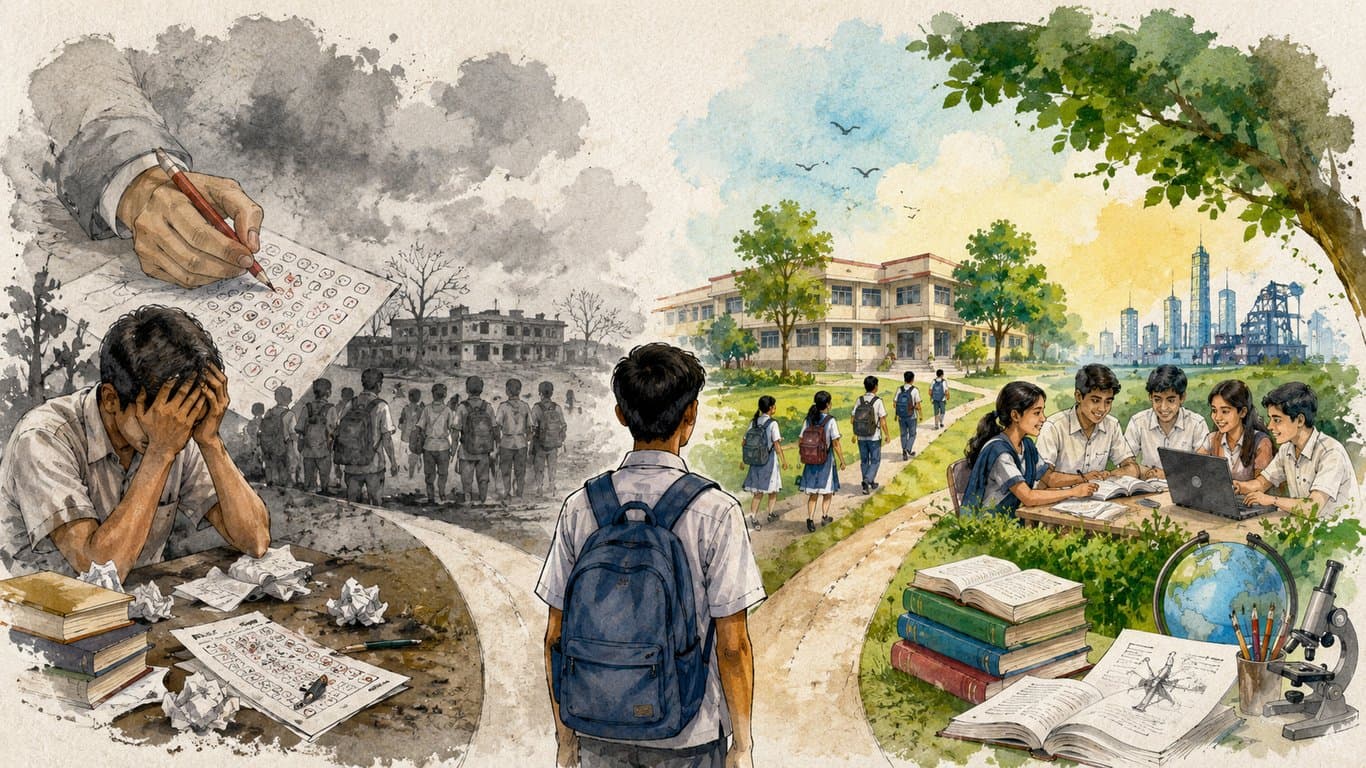

After a record 82-day wait, the results of this year’s SSC and equivalent examinations have finally been published. The combined pass rate across all education boards stands at 62 per cent. Of nearly 1.8 million candidates, just over 1.1 million passed. In terms of the SSC results, this is the lowest pass rate in the past 20 years. Compared with 2021, the rate is 31 percentage points lower.
The number of students who passed has also fallen by at least six percentage points compared with last year.
According to media reports, no student passed from at least 312 institutions across the country. Of these, 226 are madrasas, accounting for 85 per cent of the institutions where no student passed.
The number of students achieving GPA-5 has also declined significantly compared with previous years.
One encouraging aspect, however, is that girls have once again maintained their strong performance. More than 11,000 more girls than boys secured GPA-5.
Congratulations to all the students who have successfully passed what was the first competitive examination of their lives.
This year, the results were published a record 82 days after the examinations ended. The practice followed over the past two decades of announcing results within 60 calendar days could not be maintained this time.
Although the government had set a similar target this year, the education minister sought additional time. The results were eventually published at least 20 days after that extension.
The ministry attributed the delay to floods across the country and complications related to the HSC examinations.
However, some media reports at the time said the main reason for the delay was essentially a “result disaster”.
Initial assessments reportedly showed a much lower overall pass rate than the one eventually published, after which instructions were allegedly given to revise the results.
If that report is true, and if we consider the final results that have been published, there is no doubt that the pass rate is exceptionally low compared with previous years.
Therefore, while the decline in the pass rate deserves discussion, it is equally important to examine whether this should actually be described as a “result disaster”.
Does a lower pass rate necessarily mean a disastrous result?
In previous years, pass rates in the SSC and HSC examinations had risen to remarkably high levels.
In some years, the rate exceeded 90 per cent. If one listens to conversations around the issue, various explanations emerge. It has been alleged that there were instructions from the ministry to ensure students passed, and that the practice of awarding marks simply for writing something in the answer script had become commonplace.
I learned from several people close to the education sector that some teachers had even faced disciplinary action for failing to ensure that students passed.
Bangladesh achieved remarkable success in terms of both enrolment and pass rates in education over the past several years.
That achievement is certainly worth celebrating. However, the country has also faced criticism over maintaining and improving educational quality.
Over the past two years, particularly following the fall of the Awami League government in August 2024, the disorder in educational institutions, the behaviour of students towards teachers and the spread of mob culture have offered some indication of the broader situation in the education sector.
What happened in the country’s educational institutions during this period was enough to concern any conscientious person. At the same time, the dropout rates at subsequent levels of education also offered clues about the quality of education.
As a result, one of the most important challenges for the BNP government after taking office was to restore discipline in the education sector.
Some of the education minister’s initiatives, such as bringing back old practices like measures against cheating or reintroducing admission tests for first grade, have drawn criticism.
Nevertheless, there should be no hesitation in appreciating the government’s firm stance against artificially pushing up pass rates.
Quite naturally, the question arises: does a decline in the pass rate mean that the quality of education has declined? The answer is no.
Rather, poor-quality education is an education system that fails to provide students with genuine knowledge, practical skills and moral values. Such a system may produce certificates or degrees, but it fails to ensure students’ intellectual and professional development. Teachers play one of the most important roles in this regard.
Skilled and trained teachers are the most valuable asset in a classroom. Yet for years, we have neglected these fundamentals and presented pass rates to the public as evidence of educational quality.
For families, obtaining a GPA-5 or a “Golden GPA” has also become a measure of social prestige.
As a result, practices such as indiscriminately awarding marks or turning 78 into 80 through unofficial conventions gradually became commonplace. This may have enabled millions of certificates to be awarded, but it did little to improve the actual quality of education.
This year, more than 38,000 students who had completed the SSC registration process did not even appear at their examination centres on the first day.
Now, more than 700,000 unsuccessful candidates have been added to that picture.
But that does not mean these students have been rejected by society, that they are of no use, or that their lives are over.
On the contrary, a careful analysis of these results can provide a comprehensive picture of the country’s education system—where students are struggling, which subjects they are weak in and which regions are falling behind.
Based on that analysis, appropriate measures can be taken to improve the quality of education. Monitoring can be strengthened in poorly performing institutions and regions.
At the same time, for those who are not in a position to return to conventional education, arrangements can be made for technical education and various forms of vocational training.
The Ministry of Education can play a coordinating role in this process.
People are now waiting to see more diverse programmes aimed at improving the quality of education in the coming days.
Students have returned to classrooms, are staying away from mob culture, teachers are teaching with dignity, and a healthy, value-based generation is being built—what could be a more beautiful sight than that?
Raju Norul: Writer and development economist. He is studying European policy and public administration in Belgium and works with the planning ministries of several governments in the East African region under the European Union.
Leave A Comment