

Economy facing considerable challenges
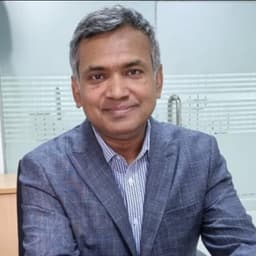
Exclusive interview with Abdur Razzaq
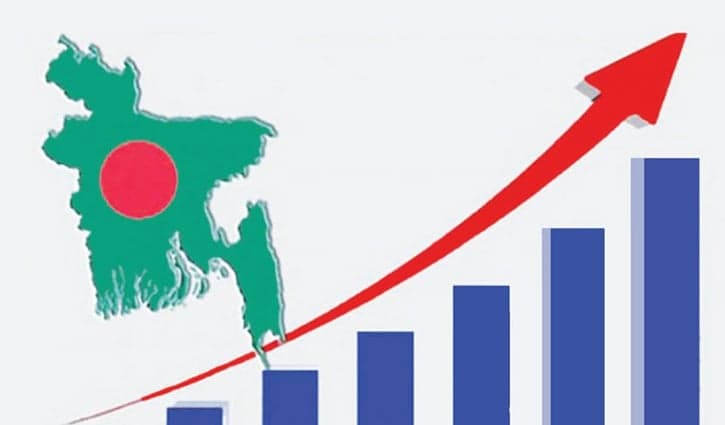
Political unrest is now evident everywhere. Prior to that, the foreign exchange reserve dropped to 19.52 billion dollars, the value was $34.9 billion only a year ago. In addition, the nation's economy faces a number of difficulties, including a decline in remittance flow, low GDP and tax rates, high inflation, and a restricted foreign exchange limit. Director of Policy Research Institute Dr Abdur Razzaq, who believes that the country’s economy is facing several challenges, talked to Md Zahidul Islam, on behalf of Views Bangladesh on issues like all these.
Views Bangladesh: What is the present state of Bangladesh’s economy?
Abdur Razzaq: Economy of our country is facing several challenges right now. Foreign reserve has declined, tax-GDP rate was already low. Expenditure od government increased almost overnight. As a result, low revenue collection is a cause for concern. We could not make proper institutional reform in few arenas. We could not incorporate tax policy reform, limited validation and reform of the foreign exchange rate. Another point is, Bangladesh went through political turmoil earlier, but this is the first time, economy is also getting imbalanced with the instability in politics.
Views Bangladesh: Do you think that upcoming election is making politics, geopolitics and diplomacy more essential over economy?
Abdur Razzaq: Actually, people are still paying attention to the economy. The government is also aware of the pressures the economy is facing. It is also anticipated what needs to be done. But, before the upcoming election, reforming anything is difficult. It is almost impossible to implement any significant reform in such a time in case of any states. There must be difficulties. Some people might suffer because of the reformation. This is why restructuring is a hard task to do. Reformation is to be done when the economy is in a good shape, it is harder in bad time. When we had right time, we did not do it: as a result, we are encountering pressure now. Government might have been thinking of running the economy roughly and go for rearrangement later.
Views Bangladesh: Businessmen claimed that the lack of dollars was preventing them from opening LC. What impact does this have on the supply chain and production?
Abdur Razzaq: We don't have much in reserve right now. Bangladesh Bank has thus restricted imports. There was not another option. We have to import capital equipment of domestic production. If we reduce import, production must be harmed and that is what is happening now. Besides this, controlling import reduces supply in domestic market. Price of goods rises in the domestic market while import is restricted. It is possible to control inflation by importing more.
Views Bangladesh: How much rational it was to restrict exchange rate? What would be the impact if it is made market based?
Abdur Razzaq: In economics, when growth occurs, it is not right to limit exchange rate. If we do that, it makes imbalance in another zone. We have long advocated for a gradual deregulation of the exchange rate to be determined by the market. The exchange rate was in an unreal place for a very long time. Our main currencies have lost value as a result.
Now if we want to make exchange rate based on market, that too will not bring any benefit. It is difficult to say where the price of the dollar will reach if it is done hurriedly. The surrounding conditions need to be tackled first. Fixing monetary policy is essential.
If the exchange rate is to be market-based, interest rates must also be market-based. Otherwise, inflation will increase at a much higher rate. Say for instance, left to the market and the price of dollar rises from 120 tk to 140 tk. Then it will make inflation. On the other hand, if the interest rate is 10 percent now, it should be increased to 13 to 14 percent. At that point, controlling inflation will be doable. There should be a methodical approach to this. We won't perform well if the exchange rate is raised alone.
Views Bangladesh: Reserve is lowering every day. What is the reason behind it and what will be the situation during next budget?
Abdur Razzaq: The level of reserves prior to the next budget will depend on how stable the macroeconomic fundamentals are. Every year, the government receives foreign aid; however, compared to last year, this trend has significantly decreased. It will assist in maintaining reserves and exchange rates if we can bring that in. In addition, the government can help by launching certain bilateral initiatives to mobilize loans or reserves. Even before this, Pakistan used a loan from the United Arab Emirates to mobilize the reserve. We require to consider this.
Views Bangladesh: The current top of capital market transactions is between Tk 300 and 350 crore. How can we get things back to normal?
Abdur Razzaq: There has long been a lack of trust in the capital market. It was impossible for us to get rid of. We were unable to create any trust in credible companies entering the capital market. We could not create a model of raising capital through the capital market and then investing it. Assuming a company raises capital from the capital market, makes good business profits, and is able to distribute dividends to its shareholders, other companies would have been motivated to follow the example. While some businesses have found success with credit lines, the system would only function well if more and better companies consistently got into the capital market and gave their shareholders high dividends.
Views Bangladesh: The state of revenue collection is likewise not very good. The shortfall in the first three months of the current fiscal year exceeds 8,000 crore Taka. Is there a mistake in the way this policy was made?
Abdur Razzaq: Policy making is not very good. There are flaws in the policy, it cannot be denied. But the main problem is implementation. We have repeatedly talked about tax net expansion. In light of the economy's growth, the tax net could have been substantially higher. We are unable to collect taxes appropriately from other areas experiencing economic growth, with the exception of Dhaka and Chittagong. VAT management is charging VAT but not being paid. EFD is providing machines but VAT collection is not increasing. Because there is no proper management. Many are given tax releases in many cases. It should also be rationalized.
Views Bangladesh: Ready-made garments sector is unstable after workers’ movement. There is threat of restriction as well. How would you evaluate this matter?
Abdur Razzaq: There is great potential in the apparel industry. But some recent occurrences have presented a problem for the garment sector. Thousands of workers are engaged into garments sector. Therefore, condition of workers, working environment of factories and security of the factories are prime issues of all time. Factory environment has improved now. If we can become 100 billion dollars industry, rest of the world must aware of the remuneration of the workers of this country. If workers of a 100 billion dollars industry get paid less then 100 dollars, it will not be acceptable in the world market.
The attitude of the USA is not distinct, it's unclear what the US will actually take action on. After LDC graduation, we need a strong competitive advantage in the EU market because we do not have a GSP advantage in the US. Then we would have to ratify roughly thirty-two international conventions, including those pertaining to human rights and labor issues. They will then decide whether or not to grant us duty-free access. Aside from this, following LDC graduation, our tariff in the Canadian market will rise. They should think about the issues as well.
As of right now, we are in second lead position in global apparel market. China holds the top spot, but its global market share is decreasing. China accounted for 40% of the EU market in 2010. It is presently down to 29%. The share of the US market has decreased from 40% to 22%. China's portion will continue to decline. Then, China has Bangladesh, India, and Vietnam as alternatives to occupy this space. We must seize this market.
Views Bangladesh: The pace of remittance collection is lowering. Along with the lack of accurate policy-making, does any mistrust of expatriates effected it?
Abdur Razzaq: Here is no issue of mistrust. Transection of informal channels increased. What is the amount of money coming from outside and why? The subject needs to be comprehended. Bangladesh Bank considers in advance whom to punish, why to punish, and who is at fault. Understanding the market is necessary before executing these. The amount of foreign currency that enters the nation is unknown. Such research does not exist. In the event that that subject is studied, we might inquire about the amount of money expatriates send home. Bangladeshi banks have never conducted this kind of study. How many workers serve outside, and what is their average salary? We are unsure of the size of our Hundi market. if you are unsure of how to proceed. Our institutional capacity has grown enough.
Views Bangladesh: All kinds of imported and locally produced goods are becoming more expensive on the market. Why is it so difficult to regulate the cost of essentials?
Abdur Razzaq: There is a growing trend of government borrowing from the central bank. Inflation is rising as a result of it. As imports decline, this affects inflation. Inflation will come down if the government is a little liberal in imports of essential goods. The price of eggs dropped as soon as the import was announced; however, because there is a limited supply, you cannot import as many eggs as you would like. For this I am talking about certain products which customers with a low income will purchase. Interest rates can be raised to reduce inflation. Reductions in imports can be rationalized in accordance with import tariffs. It might make the cost less. Apart from this, it has to be ensured that there is no damage to the supply chain in the domestic market. Consider a product from Kushtia that is easily transportable to Dhaka and free from extortion or other issues- in order to prevent the syndicate from rising. If our institutions are strong, we can accomplish all of this. The relevant organizations should be functioning properly.
Views Bangladesh: What is to be done to control the wheel of economy properly?
Abdur Razzaq: At the moment there is no option for reform. In addition to massive reforms in exchange rate fixing and revenue gathering, government expenditure must be meticulous. Expenditure should be controlled in such a way that poor people are not affected. The entire part of the annual development budget has to be paid by the government through debt. The interest rate on the government borrowing from internal and external sources is very high. Therefore, the government has to rationalize the expenditure now. Aside of this, banking sector should be brought back. Non-performing loans have gone up a lot. So, the weaknesses of the banking sector should be identified and fixed. We need to make good improvements in these four-five places. Crisis should be seen as opportunity.
Views Bangladesh: I appreciate you allowing us to have this lengthy conversation.
Abdur Razzaq: You are welcome.
Leave A Comment
You need login first to leave a comment