
Eid and spirituality
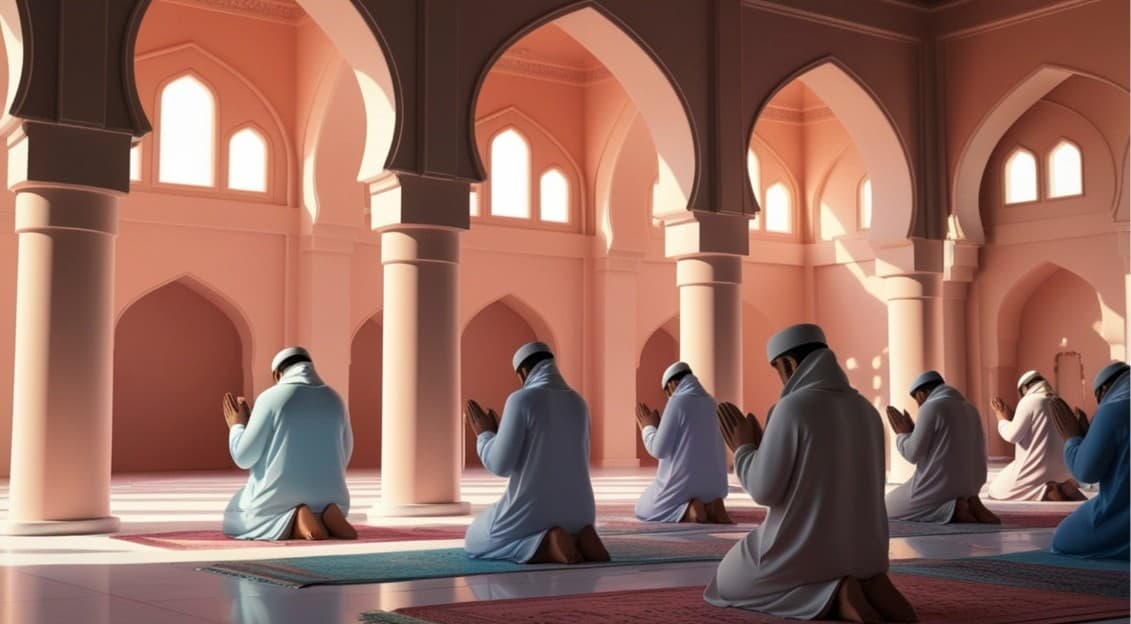

From external festivals to inner awakening, while Eid is a significant religious celebration in Islam, it transcends mere external joy, feasting, or social gatherings. The true essence of Eid resides in its spiritual teachings, which cleanse the human heart, awaken moral values, and strengthen the bond with Allah; thus establishing an enduring joy of introspection within the mind of the saint or individual.
The two Eids in Islam, Eid-ul-Fitr and Eid-ul-Azha—though differing in context—share a common objective: self-restraint, surrender, and self-realization. Eid-ul-Fitr represents a spiritual reward attained following the external and spiritual endeavors of the month of Ramadan. Ramadan instructs individuals to exercise control over hunger, thirst, and desires. By refraining from permissible things even during daylight hours, individuals come to understand that they can align their will with the will of Allah. This self-discipline fosters qualities such as patience, compassion, and gratitude within the human heart.
Eid-ul-Fitr celebrates this spiritual growth, where the term iftar is derived from the word fatara. Fatara signifies the breaking of the body and mind, ensuring that one's thoughts do not revert to a mere amalgamation of body and mind. To entirely overcome the allure of the body from the mind means to conquer, to dismantle barriers, or to abstain. Hence, the act of fasting or refraining from food, drink, and worldly distractions is termed fasting. Achieving success, or gaining the ability to liberate oneself from the constraints of creation, embodies the true essence of iftar. Upon attaining iftar, one can liberate the body and mind from the shackles of pleasure. The enjoyment of food and drink then becomes inherent to human nature. Such is the condition of the inhabitants of Paradise. If one can achieve iftar, one can also detach from worldly life. Ultimately, one cannot achieve iftar independently.
Only someone who has experienced iftar can assist another in achieving it. Indeed, guiding someone else to break their fast is a challenging endeavor. The person who hosts the Iftar is superior to the one who is hosted. It is not possible to host another iftar unless one has achieved the Iftar himself, that is, completely breaking the attraction of the mind and body, that is, without complete success. This is the significance of Iftar. Such restrained people, freed from the bondage of creation, that is, those who have achieved ‘fatara’, are able to strengthen their spiritual bond with the helpless in society by providing Fitra, and through Eid, a person feels himself to be part of a larger benevolent Ummah.
Conversely, Eid-ul-Adha elevates one’s spiritual experience to a profound level. The primary lesson of this Eid revolves around the unwavering obedience of Hazrat Ibrahim (AS) and the submission of Hazrat Ismail (AS). Through the act of sacrifice, an individual symbolically expresses readiness to relinquish their most cherished possession for the sake of Allah. The act of animal sacrifice serves merely as a ritual of Eid. In essence, this sacrifice transcends the mere blood or flesh of the animal; it embodies a sacrifice of human arrogance, avarice, and self-absorption. According to the Quran, what ascends to Allah is human piety, which reflects a person's obligation to the Almighty Creator and the purity of their heart. 'Taqwa', or duty, is intricately linked with Eid. Consequently, the individual who attains piety is referred to as Muttaqī, meaning duty-bound.
A Muttaqī is liberated from worldly impurities. Taqwa encompasses more than mere fear; it embodies a continuous, conscious awareness of Allah’s beauty, attributes, and presence, which inspires individuals to uphold justice and moderation in all their actions. Eid serves as a reminder that a religious life extends beyond mere formal worship; it is equally vital to manifest this in everyday conduct, social obligations, and interpersonal relationships. The transition to a state devoid of mental flaws, which signifies the completion of Hajj, involves achieving full self-awareness through wisdom in the knowledge of the Supreme and dedicating oneself to the service of humanity, a process known as Qurbani. Thus, it is impossible to engage in sacrifice without the practice of prayer.
Hence, it becomes evident that prayer is fundamental to the act of sacrifice. The term used in the Quran to denote sacrifice is ‘Jabeh’. ‘Jabeh’ signifies purification. Sacrifice aims to cleanse the minds of both jinn and humans from impurities and filth, rendering them pure and sacred. For societal purification, it is essential that two or three individuals from each community undertake this sacrificial act. Otherwise, the genuine welfare of society remains unattainable. While the joy of Eid may appear superficial to some, in the perspective of Islam, it is far more profound.
Although the joy of Eid seems superficial to many, in the eyes of Islam this joy is also an integral part of spirituality. Spending time with family and relatives, putting a smile on the faces of the poor and deprived, forgetting old disputes and moving forward on the path of forgiveness and harmony - all these things calm and purify the soul. When this joy is free from pride, it becomes worship.
However, the real test of Eid begins after the festival. If the restraint of Ramadan or the surrender of sacrifice is limited to the day of Eid, then the spiritual goal is not fulfilled. Eid calls people towards a better moral and spiritual life; where worship, justice and humanity are maintained throughout the year. As our national poet Kazi Nazrul Islam has highlighted in his famous Islamic song—
Omu ramjaner oi rojar sheshe elo khushir eid...
(O mind, at the end of that fast of Ramadan, a happy Eid has come
You give yourself up today, listen to the heavenly urge.)
The ‘heavenly urge’, that is, the urgent divine command to give yourself up; is the command to make the mind pure, Buddha or holy. If your ‘mind’ completes the practice of restraint at the end of a symbolic month of fasting, that is, in Ramadan, only then pure joy is realized in the pure heart. This joy is the unending infinite joy of complete self-absorption or a happy Eid.
"Tor sonadada balakhana sob rahe lillah, De zakat murda Muslimer az bhaggaite nind...
Rahe means path, road or way. Lillah means for Allah. Every person comes empty-handed in the world and returns empty-handed.
In that case, the 'sonadada balakhana' is to give everything in the path of Allah, otherwise it does not become a complete surrender of self. The name of the sacrifice of human self is Zakat. Zakat is not a material gift, but Zakat is the awakening of a great emptiness in the mind. With such Zakat, the deceased Muslim is called to be awakened from the great sleep of materialism and brought back to life.
Az porbi eid er namaz re mon, sei se eidgahe. Je maidane sob gazi Muslim hoyechhe shohid... (Today, when you pray Eid prayers, your mind will be in that Eidgah, the field where all the Ghazi Muslims became martyrs)
Eid prayers are a connection of happiness. It is said to unite or connect with your mind by connecting it to 'that Eidgah', that specific place of joy. In the field of sacrifice, where the status of Ghazi, Muslim and martyr is attained through the sacrifice of human-human self, your mind has been given such instructions.
Az bhule ja tor disto-dusman, haat milao haate, tor prem diye kor biswa nikhil Islame murud (Today, forget your friends and enemies, join hands and make the world a follower of Islam with your love.)
When a person is transformed into a person of love, that loving person then stands above the 'friends and enemies', caste differences and religious rules and regulations and with his love, the 'followers of Islam', that is, the totality of the entire world, obeys his love for peace, which is the true follower.
Dhal hridoyer tor toshtirite shirni touhider, tor douat kobul korbe hazrat hoi mone unmid... (In your shield of the heart, the light of Tawheed, the Hazrat will accept your invitation, I hope.)
Tawheed is a special vessel. The invitation of the person whose heart is wide and who descends in a state of universal hospitality, the expectation is expressed here that the invitation of that person will be accepted.
Tore marlo chhure, jibonjure it pathor jara, sei pathor diye tolre gore premeri mosjid...
(Those who beat you and threw bricks and stones throughout their lives,
and with those stones, build a mosque of love.)
The underlying meaning of the word mosque is a matter of special understanding. If one cannot understand it, one cannot fully understand the purpose and goal of going to the mosque. The mosque can be divided into two parts. Formless and tangible. Inner and outer. Every thing has these two aspects. If the internal theory is not understood, the external aspect is useless and worthless. Again, if the external or its tangible does not exist, its internal value is not awakened through the ceremony. That is why the need for the external is excessive from a social point of view. On the other hand, religious ceremonies become only external formalities - which become lifeless and a matter of neglect.
The mosque serves as the cornerstone of Islamic ideology. Any action taken outside the mosque pertains to the worldly realm. For Muslims, the world acts as a temporary abode. Currently, this essential foundation of Islamic belief has been thoroughly undermined by the overwhelming influence of Wahhabi teachings. Consequently, Muslims worldwide hold onto the physical mosque constructed from bricks and stones, while neglecting the spiritual mosque represented by the Quran and Hadith. Even if one resides outside the physical mosque, there should be no objection to their efforts to enter it, provided they maintain the essence of the mosque. In fact, this is akin to merely clinging to the physical structure while disregarding the true treasures of faith, akin to holding onto coal while discarding diamonds. The term mosque is derived from the word sijdah, which signifies a place of prostration. Thus, it is essential to comprehend the genuine meaning of sijdah.
We interpret sijdah as the act of bowing one's head before the Creator, symbolizing a sense of submission. However, this act merely represents an attempt at sijdah or submission. True prostration occurs when the ego is annihilated, and the soul transcends its emotions and awareness. The Quran states that trees and stars are in prostration, indicating that they do not act of their own volition, nor do they possess the capacity for independent movement. Despite human strength, if one submits to Allah's will by relinquishing their own desires, their authentic prostration takes place within the mosque of divine love.
Ultimately, Eid is not just a religious festival; it is a symbol of humanity's religious awakening, self-purification, and God-oriented life. Eid reminds us that true success lies in the purification of the soul, hidden behind outward joy.
Leave A Comment