
Elevator mirrors: Not just for grooming
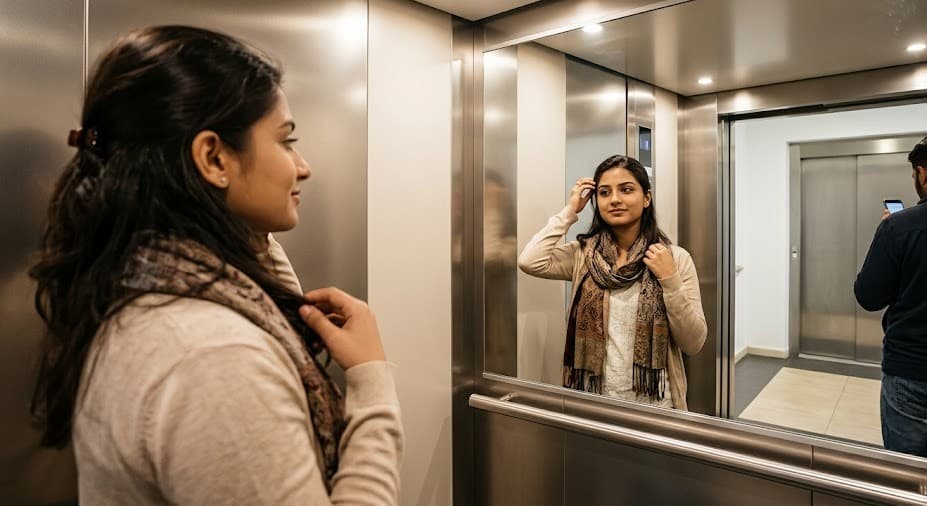

Glancing at yourself in the mirror the moment you step into an elevator — fixing your hair, straightening your clothes, or simply catching your own reflection — is a habit nearly everyone shares. But according to architects and behavioral experts, giving passengers a chance to check their appearance isn't actually the main reason mirrors are installed in elevators. Behind it lies a deliberate blend of psychology, safety, and user-friendly design.
A touch of comfort in tight spaces
Spending extended time in small, enclosed spaces creates discomfort for many people — a phenomenon experts identify as claustrophobia, or fear of confined spaces. In such situations, symptoms like a racing heartbeat or quickened breathing can appear. According to a study in the United States, anxiety levels drop significantly in small rooms that use mirrors, because the reflection makes the space feel larger and more open than it actually is. This gives the passenger's brain a degree of relief, even if only temporary.
Making sure time doesn't feel like it's standing still
In the early twentieth century, when elevators began appearing in multi-story buildings, they moved much slower than they do today. Riding up or down even a few floors could feel endlessly long to passengers. Engineering a faster elevator was costly, so mirrors were adopted as an alternative solution. Behavioral experts observe that when people are absorbed in something, waiting time feels comparatively shorter. Being occupied with looking at themselves or their surroundings in the mirror makes the time spent inside the elevator more bearable for passengers.
A sense of safety among strangers
When sharing an elevator with an unfamiliar person, avoiding direct eye contact is a natural tendency. In such situations, the mirror acts as a kind of silent guardian — it allows a passenger to keep an eye on what's happening behind them without looking directly. Experts say this increased visibility discourages unpleasant or suspicious behavior to a considerable extent, and is believed to play a role in preventing incidents such as petty theft or harassment.
Starting in Japan, a boon for wheelchair users
One of the most practical reasons for installing mirrors in elevators originated in Japan. In tall buildings, it was difficult for wheelchair users to exit an elevator backward. With the help of a rear mirror, they can view the corridor or the outside situation — much like a car's rearview mirror — allowing them to exit the elevator safely and easily. This single reason later made mirrors in elevators an almost mandatory design element worldwide.
In the end, the next time you catch your reflection in an elevator mirror, it's worth remembering: it isn't just a habit, but a carefully considered design decision — one that makes the ride less tedious, more comfortable, and safer.
Leave A Comment