
Inflation continues to rise
Control the market economy rigorously
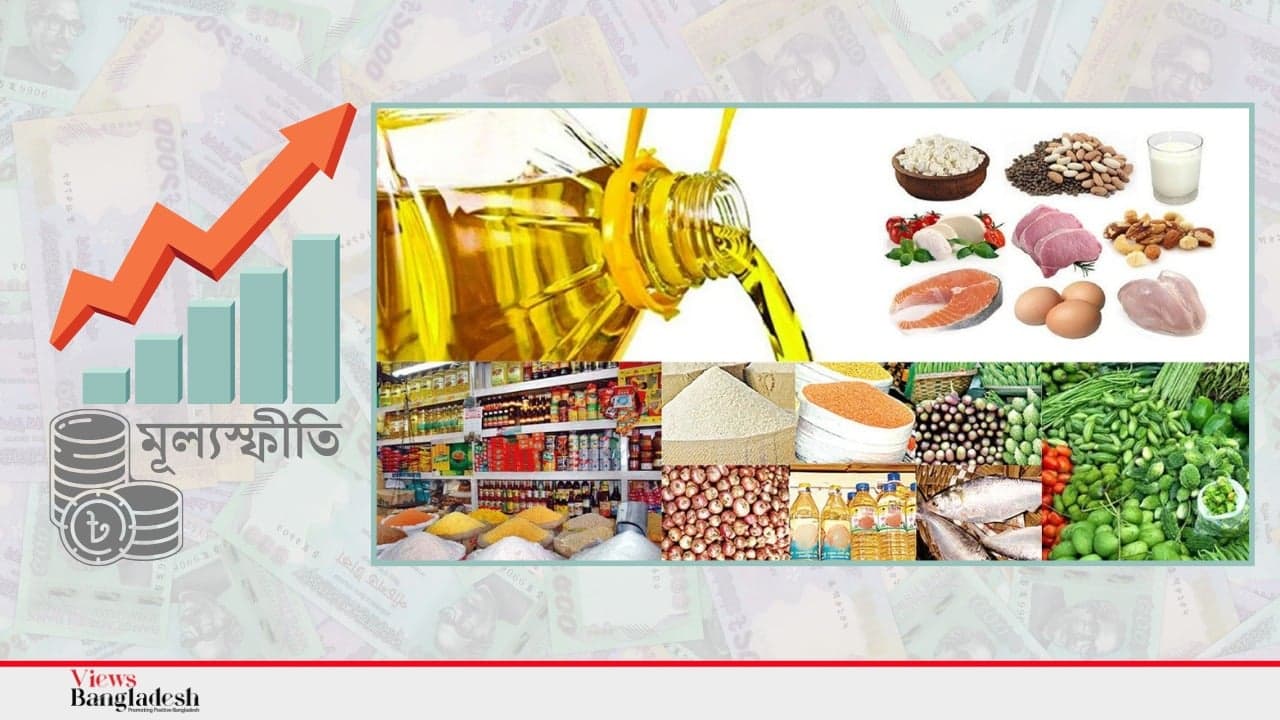

For the past four years, prices of commodities have been rising uncontrollably in almost every country. Under the pressure of inflation, people in various nations, especially those in economically disadvantaged countries, are now facing hardships. Moreover, in various countries, the officially reported inflation figures are often considered to be higher than the actual situation. The question arises, what will be the trajectory of commodity prices? Will prices continue to rise? Historically, when inflation rises above 9 percent, it may take several years for it to recede. Bangladesh is currently experiencing this unfortunate trend.
Inflation in the country continues to rise. For the past consecutive 10 months, inflation has been above 9 percent. According to the latest information from the Bangladesh Bureau of Statistics (BBS), the overall inflation rate in the country was 9.93 percent and 9.49 percent in October and November of the previous year, respectively.
In this regard, overall inflation has slightly decreased in December. However, it still remains close to 9 percent. Although the government aimed to bring the inflation rate down to 8 percent in December, it has not been achieved, however. So, despite various pressures in macroeconomics, inflation remains the primary concern for the new government, according to experts in the field.
Although the government is often held responsible for contributing to inflation by increasing prices of goods in the international market, over the past few days, prices of various essential commodities have been decreasing in the global market. However, its impact is not very noticeable in the Bangladeshi market because the prices of most products in Bangladesh are not synchronized with the international market. Although importers mainly blame the dollar crisis and strictness on opening LCs for imports.
At present, intense cold prevails across the country, while on the other hand, the market is unstable. This has led people with limited income to struggle to manage their livelihood expenses. In this scenario, if the prices of essential commodities cannot be reduced, how will the common people, already struggling due to the economic crisis, bear the burden of increased expenses in their day-to-day lives?
So, addressing the issues of increasing inflation, creating a crisis in the labor market, and the limitations of social assistance programs will require the government to find solutions.
We must remember that the Ministry of Finance alone cannot control the prices of commodities. Therefore, coordination with the Ministry of Commerce is essential for effective collaboration in addressing these issues.
Only effective market management can control inflation. Therefore, the government must strongly enforce regulations to prevent dishonest business practices and ensure that unscrupulous traders and importers cannot engage in any malpractices. Immediate measures should be taken against anyone engaging in malpractices.
Leave A Comment
You need login first to leave a comment