

Encroachment, pollution kill 20 rivers in Habiganj
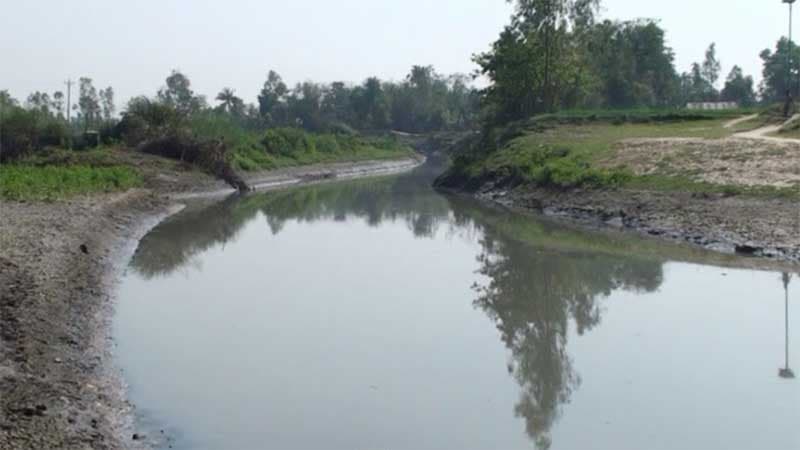

Out of more than 50 rivers and streams in Habiganj, 20 have completely lost their existence due to encroachment, pollution, and loss of navigability. Most of the remaining 30 are in a dying state. Major rivers like Kushiyara, Kalni, Khwai, Sutang, Ratna, and Korangi are in critical condition due to the lack of river management. Hundreds of canals connected to these rivers have also disappeared.
In the 1970s, Habiganj had over 50 rivers. However, the Water Development Board now lists only 30. The rest have turned into flatlands due to decades of neglect and lack of dredging. In the last five decades, nearly half of the rivers in Habiganj have vanished. Those that remain are being encroached upon by illegal settlements, businesses, educational institutions, and large religious structures along both banks. This has obstructed water flow and decreased navigability, turning these rivers into little more than canals or drains.
Meanwhile, waste from nearby factories, homes, and industrial areas has polluted the rivers, canals, and wetlands. The water has turned black from contamination, and the stench is unbearable. Livestock drinking this toxic water are dying, fish and aquatic life are disappearing, and biodiversity is under threat. People who use the water for bathing and other daily needs are suffering from skin diseases and other ailments, facing serious health risks. The water is also unsuitable for agricultural use.
Once a mighty river, the Shakha Barak flowed around the Nabiganj town of Habiganj. The river was the primary route for trade and commerce in the area, with large launches and trawlers navigating its turbulent waters year-round. Hundreds of boats used to line its banks, bringing goods from various regions to Nabiganj. Many riverside residents made their living from fishing. Now, due to encroachment and pollution, the Shakha Barak has turned into a dying canal, with its very existence in peril.
The condition of the Sutang River is even worse, now nearly dead due to industrial waste pollution. The Korangi River in Bahubal and the Sonai and Shuntki Rivers in Madhabpur are also being lost to encroachment. The Ratna River and the Khwai River that runs through Habiganj town are also in dire straits. Other rivers in the region have similarly lost their former vibrancy.
Romiz Ali, a resident of Aoura village near the Shakha Barak River, said that the banks of the Barak once thrived as a bustling hub of commerce. Now the river has shrunk, with parts of it reduced to narrow canals.
Advocate Hasbi Saeed Chowdhury, a resident of New Muslim Quarter near the Khwai River, said that the once-mighty Khwai has now lost its existence, reduced to a narrow canal. Accumulated waste and encroachment have obstructed its flow, and the remaining portion of the river is on the verge of drying up.
Mamun Mia, a local resident, and Lilu Mia, who lives by the Sutang River, stated that due to the rivers becoming silted up, even light rainfall now causes waterlogging in the city, leading to flash floods.
Tahmina Begum Gini, vice president of Bangladesh Environment Movement (BAPA) in Habiganj, said, "A river is a living entity. We must protect the rivers and raise awareness. People should stop dumping waste in the rivers, allowing their natural flow to be restored."
She has called on the authorities to evict illegal encroachers, dredge the rivers, and take effective steps to save the canals, wetlands, and rivers from further degradation.
Shamim Hasnain Mahmud, executive engineer of Water Development Board in Habiganj, said that approximately 30 rivers have been identified in the district. Many of these have shrunk into small canals due to illegal structures along their banks, with some losing their existence altogether.
He added that the administration has been tasked with identifying rivers in each upazila. Plans will be made to dredge the rivers and carry out eviction drives to restore their beauty and natural flow.
Leave A Comment
You need login first to leave a comment