
FIFA in turmoil as World Cup rights sale plan withdrawn; Infantino's future uncertain
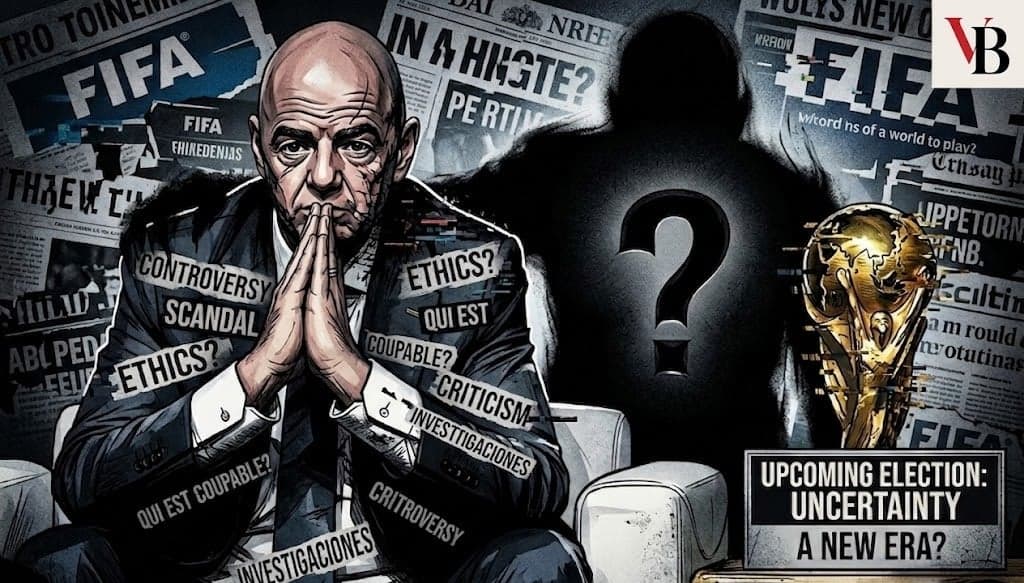

In the history of FIFA, the world's highest governing body for football, there have been few instances of such political pressure, institutional resistance and questions over leadership credibility. The crisis that erupted over the controversial plan to sell a portion of the World Cup's commercial rights or shares to the private sector ultimately did not end with just the withdrawal of a proposal; rather, it has pushed FIFA President Gianni Infantino's political authority, international acceptance and chances of victory in the upcoming election into serious jeopardy.
Faced with fierce criticism, public threats of a World Cup boycott from European football and internal discontent within FIFA, Infantino was ultimately forced to back down from the plan. Since then, one question has dominated discussions in international football circles: Can he truly secure a fourth term at the FIFA Congress in March 2027, or will the organisation, after a long time, move towards new leadership?
The depth of the crisis facing the 56-year-old Swiss administrator can be gauged from the unprecedented stance of member associations. It is learnt that to garner support for the controversial proposal, a commitment of nearly $40 million, approximately Tk 472 crore in Bangladeshi currency, was made in grants to member associations. The aim was to secure the necessary votes. But even that strategy ultimately failed.
The biggest blow came from Europe. UEFA's 55 member football associations made it clear that if the decision to sell a stake in the World Cup's commercial rights was approved, they would boycott the next World Cup. It was an unprecedented warning in football history.
The situation became even more complex after that. CONCACAF, the football body for North, Central America and the Caribbean, and the Asian Football Confederation (AFC) also stood in the same camp, expressing support for UEFA's position. This unified stance from three continents effectively called into question the FIFA President's political base.
According to FIFA's constitution, 106 votes were needed to pass such a proposal. But with UEFA, CONCACAF and the AFC all opposing it together, a total of 136 votes were effectively lined up against Infantino. In other words, even before going to a vote, he realised there was no realistic chance of winning this battle. Ultimately, withdrawing the proposal became his only option.
According to observers, this was not just a policy defeat; it was a major signal of diminished confidence in his leadership. For a long time, Infantino had been able to retain the support of member associations through various development projects, financial assistance and global expansion. But the recent events showed that when it mattered, the world's three major football blocs stood united in rejecting his decision.
Following the crisis, Infantino has struck a conciliatory tone. He has said that solutions will be sought through dialogue by bringing all parties to the table, and that maintaining the unity of world football is now the main goal. However, analysts believe this stance is largely defensive and a decision made under pressure.
In this reality, football analysts believe the upcoming 2027 FIFA presidential election could take on a new dimension. In the past few elections, Infantino has not faced strong opposition. But this time the situation is different. The unified stance of Europe, North and Central America and Asia has proven that they are capable of making collective political decisions when needed.
In this context, the possibility of a new candidate emerging with the support of various confederations is now being seriously discussed. Although no name has been officially announced yet, diplomatic sources claim that behind-the-scenes discussions have begun about putting forward an experienced official from European football administration or an acceptable figure from another confederation. The goal would be to present someone who would prioritise the trust of member associations and FIFA's institutional transparency over commercial interests.
As a result, the 2027 election is now no longer just a question of a president's re-election; it has become a major test of the philosophy of world football's future governance, the balance of power and confidence in FIFA's governance system. By backing down from the World Cup rights sale plan, Infantino may have averted an immediate crisis. But the political erosion caused by this incident will not be easy for him to repair before the next election. Rather, for the first time, the possibility of a strong alternative leadership to his own has become clearly apparent.
Leave A Comment