

Compensation suits bring no results
Formulating new legislation will be considered: Law Minister
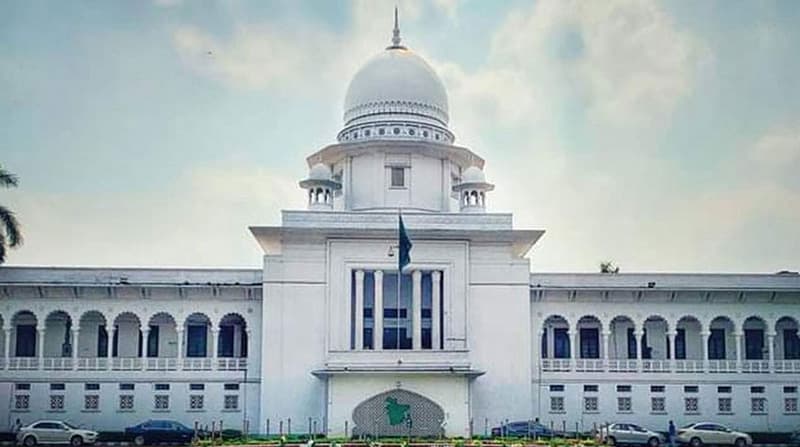

Bank officer Dipu Sana was fatally struck on the head near Fakhruddin Restaurant in Mouchak area on January 10. Similarly, baby Ayaan passed away on January 7 due to incorrect treatment after being admitted to United Medical College Hospital on December 31 for circumcision. These unfortunate deaths continue to occur frequently in our country. The memories of Rana Plaza, Tazreen fire, and the building collapse in Tejgaon still haunt the nation. Surprisingly, the families affected by these incidents have not received any form of compensation. What could be the underlying reason for this? What does the law state regarding such matters?
Legal experts have emphasized that in Bangladesh, it is possible to initiate a compensation case under the civil law framework. These cases typically rely on the principles of British tort law to seek compensation. However, due to the exorbitant court fees and lengthy procedures associated with this law, both victims and lawyers are reluctant to pursue cases under it. It is worth noting that, thus far, only the deaths of Tarek Masood and Mishuk Munir have been compensated under the civil law concept of tort law in Bangladesh's history. Regrettably, in independent Bangladesh, no other cases have resulted in compensation being given.
One specific incident that exemplifies this situation occurred on December 3, 1989, when Mozammel Hossain Montu was tragically crushed by a Pepsi Cola truck in front of Anando Bhavan in Kakrail. Despite receiving medical treatment at Dhaka Medical College Hospital, Montu succumbed to his injuries on December 16. Subsequently, on January 1, 1991, Montu's wife, Roshan Akhtar, filed a compensation case with the Joint District Judge Court Dhaka. However, despite the Supreme Court's rule on April 15, 2016, ordering Montu's family to receive a compensation of Tk 1 crore 69 lakh, the execution of this decree is still pending.
In our nation, the practice of initiating compensation cases is not prevalent. This is primarily due to the fact that compensation cases are primarily based on the principles of British tort law. While it is possible to seek accident compensation through this legal framework, it is often unproductive due to the reluctance of lawyers to pursue such cases. In a broader sense, tort law refers to the provision of compensation to an injured party. Therefore, utilizing tort law is considered the most effective approach for seeking accident compensation.
Under the rules governing compensation cases in tort law, ‘if an individual loses their life in a road accident, their family or relatives are not permitted to file two separate cases—one on behalf of the victim and the other seeking compensation.’ When filing a compensation case, factors such as the deceased's occupation, income, and life expectancy are taken into account. However, it is important to note that higher compensation amounts result in higher court fees. These fees are determined based on a categorization system using the amount of money. As a result, the exorbitant fees make it virtually impossible for individuals with limited financial means to pursue compensation through legal channels. Consequently, many people opt not to pursue compensation cases due to these financial constraints. Additionally, the process of seeking compensation is time-consuming, with no guarantee of when the compensation will be received after the case is filed. This lack of certainty further diminishes people's interest in pursuing such cases. Furthermore, there is a lack of precedent for holding the responsible party accountable in cases where an individual has lost their life in an accident.
The protection of the life and property of the citizens is a crucial responsibility of the nation. While it is natural for every individual to anticipate a peaceful death, there are instances of untimely and unexpected deaths that occur due to negligence. Among these unfortunate incidents, it is important to highlight the significant number of deaths caused by negligence. In general, the concept of tort law provides an opportunity to seek compensation in civil cases related to such deaths. However, it is disheartening to note that many individuals in our country are unaware of this law, resulting in its limited application.
Nevertheless, there are avenues for seeking redress in both the criminal and civil courts. Under Section 304 of the Penal Code, ‘the criminal court can impose punishment for such cases, while the civil court can address the recovery of damages’. Additionally, Article 32 of the Constitution recognizes the ‘right to life' as a fundamental right. Therefore, in cases where fundamental rights have been violated, individuals can seek compensation by filing a writ in the High Court department under the tort law. However, a challenge arises in determining the appropriate compensation amount due to the absence of specific legislation for this purpose in our country.
Furthermore, it is worth noting that not only the affected individuals but also any citizen of the country can file a case on behalf of the people to safeguard their fundamental rights. This demonstrates the importance of protecting the rights of the citizens and seeking justice for all with good intentions.
On another note, Article 102 of the Constitution empowers ‘the High Court to issue instructions on any matter, even if it falls outside the purview of existing laws.’ This provision aims to simplify the process of seeking compensation in civil law cases, prompting many victims to file writ cases in the High Court for compensation. This approach offers a more cost-effective and expedited means of obtaining compensation. Several individuals, including Ayan, Siam, bank officer Dipu Sana, Rana Plaza victims, Tazreen victims, and Rajib, who lost his leg in a Greenline car accident, have already filed compensation cases in the High Court.
The family of filmmaker Tarek Masud has been awarded a compensation of Tk 46,175,452 by the High Court following his tragic death in a road accident. The court has directed the bus owners, drivers, and relevant insurance companies to fulfill this payment within a period of three months. Specifically, the bus driver is liable to pay Tk 3,000,000, the bus owner Tk 43,095,452, and Reliance Insurance is responsible for Tk 80,000. This ruling has sparked a debate regarding the process of obtaining compensation in road accident cases.
On the evening of January 10, Dipu Sana, an official from Bangladesh Bank, was on her way home after work. Tragically, a 37-year-old woman lost her life instantly when a brick unexpectedly fell on her head while she was walking on the footpath in Moghbazar, the capital city. Lawyer Miti Sanjana stated that “Although it may not be classified as murder, the incident was so reckless that it bordered on being considered as such”. However, the responsible individual can still face legal consequences for causing the woman's wrongful death. Unfortunately, the penalties for such cases are relatively lenient. According to Section 304 (a) of the Penal Code, ‘negligent death occurs when a person causes someone's demise through a reckless or wanton act that does not amount to homicide.’ The punishment for this offense is imprisonment for up to five years, a fine, or both. Nevertheless, this incident bears striking similarities to murder. “If someone drops an object in a public place where people walk, and it ends up hitting someone's head and causing their death, it can be deemed as negligence. The responsible party must take full responsibility for their actions.” Consequently, this case falls under Section 304 of culpable homicide, which stipulates that a person who commits culpable homicide, excluding murder, shall be sentenced to life imprisonment or rigorous imprisonment for a period of up to ten years, in addition to possible fines.
In the meantime, the High Court has issued a rule demanding an explanation as to why the family of Ayaan Ahmed, who tragically passed away during a circumcision procedure at Satikkul's United Medical College Hospital in the capital, will not receive a compensation of Tk 5 crore. Additionally, the court has ordered an investigation into the circumstances surrounding the child's death, with a report expected to be submitted within seven days. According to reports, Ayan was admitted to the United Medical College Hospital on December 31 for circumcision and received anesthesia in the morning. However, it is alleged that the doctor proceeded with a 'full anesthesia' (general) circumcision without obtaining proper consent. Subsequently, Ayaan was transferred to United Hospital in Gulshan when he failed to regain consciousness. He was placed on life support at the pediatric intensive care center, but unfortunately, the doctor declared his passing on January 7 at midnight. Ayaan's father, Shamim Ahmed, lodged a complaint on January 9 at Badda police station in the capital, naming two doctors, an unidentified staff member, and a director from United Hospital and United Medical College Hospital in relation to this incident.
In this regard the senior lawyer of the Supreme Court, Barrister Shafiq Ahmed, informed Views Bangladesh, “Individuals can file compensation cases under civil law if they have been injured or killed in an accident. However, many people are reluctant to pursue legal action under this law due to the lengthy process and insufficient compensation. Instead. it is better for seeking compensation through Article 102 of the Constitution, as it proves to be a more effective option for the victims.”
Advocate Yusuf Hossain Humayun, a senior lawyer of the Supreme Court, expressed to Views Bangladesh, “The victims of the accident have yet to receive adequate compensation in accordance with the existing laws of the country. The necessity for a more citizen-centric legislation that enables swift and cost-effective settlement of cases. While incorporating the principles of British tort law into our legal system is a viable option, it is crucial to consider reducing the court fees in such instances.”
Law Minister Advocate Anisul Huq says, “apart from Tariq Masud's case, no one has been granted compensation in any other case. These cases have a lengthy background and the court fees involved are substantial. It is imperative for us to contemplate on how we can revise the current civil compensation law to align it with modern standards. Additionally, it may be necessary to explore the possibility of enacting a new law to address this matter.”
Leave A Comment
You need login first to leave a comment