
From hand-cut semai to Arabian kunafa, the evolution of Bengali Eid food
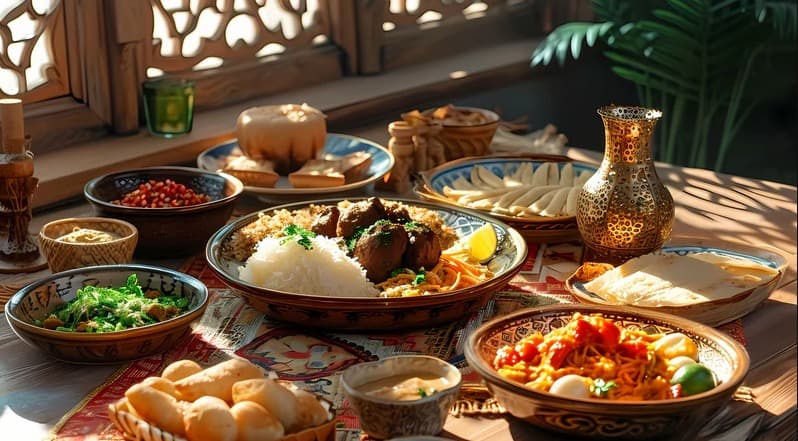

The morning of Eid brings with it a delightful fragrance that fills the air. New garments, the scent of perfume, and families gathering to share meals and drinks, along with visits to neighbors and relatives, characterize the Bengali Eid.
A significant aspect of the Bengali celebration is the food, with special preparations for Eid day taking center stage. However, the dishes we find on the Eid table in 2026 have not evolved into their current forms overnight.
As socio-economic conditions have changed, influenced by globalization and improvements in living standards, our Eid menu has experienced a remarkable transformation. The traditional hand-cut semai made in the yard has now been replaced by restaurant-style dishes or Middle Eastern kunafa. Let us explore this nostalgic and captivating journey of Bengali Eid cuisine over the decades.
The essence and simplicity of origins: 1960s-70s
In the early sixties and seventies, the lives of the Bangladeshi people were characterized by simplicity, authenticity, and a close connection to nature. During this period, the highlight of Eid meals was the homemade local dishes prepared by families through collective effort.
The celebration of hand-cut semai: At that time, hand-cut semai was the most cherished dish on Eid morning. Women would lay out mats in the yard and create thread-like semai using rice flour. The semai, dried under the sun, was then cooked in an earthen oven with fresh cow's milk, date molasses, or brown sugar, along with grated coconut. This was not merely a cooking activity; it was a gathering of family and community.
The prominence of pitha-puli: During this era, Eid was synonymous with the festival of pitha. Eid morning felt incomplete without patisapta, chitai, oil pitha, pakan pitha, or coconut naru. The 'Bibikhana pitha' from Bikrampur and Sylhet's 'Kada Bhajir pitha' (Birun pitha) were the main highlights of the celebration.
Main meal: Enjoying pola on Eid afternoon was a truly lavish experience. In typical households, white or red rice was prepared with local chicken broth, beef, and thick lentils. The scent of fresh spices permeated the air, accompanied by the batter on the shil-pata.
Urbanization and the emergence of new flavors: 1980s-90s Beginning in the eighties, societal perceptions began to shift. The effects of urbanization were increasingly evident in the kitchens of the middle class. With rising purchasing power, new products began to enter the market.
The rise of packaged semai: During this period, packaged laccha and chikan semai became widely available. The once-prevalent hand-cut semai was gradually supplanted by these factory-made alternatives. The incorporation of raisins and almonds, along with ghee-fried laccha semai, became a hallmark of sophistication.
The age of polao-korma and roast: Aromatic white polao, chicken roast, and beef rejala became firmly entrenched in the culinary practices of middle-class Bengalis during the eighties. Roasted liver and fried baton emerged as the primary accompaniments for breakfast on Eid-ul-Adha.
Desserts and beverages: Zarda and caramel pudding were regarded as special desserts for Eid. Additionally, serving Coca-Cola or Seven-Up in glass bottles while hosting guests became a status symbol during this decade.
Globalization, Television, and the Era of Biryani: The Decade of 2000-2010
With the onset of the new millennium, the emergence of cable television and satellite channels significantly transformed the Bengali culinary landscape. There was a growing interest in both international and local cuisines.
The Ascendancy of Kachchi Biryani: Biryani began to replace traditional pulao-roast dishes. Kachchi Biryani, along with Tehari and Morog Polao from Old Dhaka, became exceedingly popular as the primary festive dish during Eid.
The Impact of Television Recipes: Renowned culinary shows inspired housewives to experiment with new recipes. Consequently, dishes such as fried rice, Thai soup, and chicken fry began to feature in the Eid menu.
Utilization of ready-mix spices: The introduction of packaged ready-mix spices has significantly alleviated the complexities of cooking. With the long-standing reduction in the effort required for masala preparation, there has been an increase in the inclination to prepare a greater variety of dishes in a shorter time.
Fusion, Aesthetics, and the Global Village: Contemporary Era (2020-2026)
The remarkable advancements in information technology, coupled with the influence of the Internet and social media, reflect the fast-paced lifestyle of today's citizens, which is evident in the food served during Eid. The modern Eid table resembles a miniature global village.
Middle Eastern and Global Desserts: In addition to Semai, Arabian and Turkish sweets have emerged as the trending desserts for today's Eid celebrations. Delicacies such as Kunafa, baklava, basbousa, and Italian panna cotta have become essential components of Eid for the younger generation. The trend of creating fusion desserts by following YouTube tutorials has become commonplace in many households.
Aesthetic presentation and Instagram culture: Food must not only be flavorful but also visually attractive. Capturing images of food and sharing them on social media, as well as the art of food plating, have become increasingly significant.
Home delivery and cloud kitchen: To escape the chaos, numerous individuals now order special Eid biryani pots from Foodpanda, Pathao, or various catering services. The trend of purchasing customized Eid cakes or dessert boxes from local ‘home bakers’ has gained popularity.
Health awareness: A significant portion of the population is now mindful of their diet. Consequently, the Eid menu has expanded to include keto-friendly options, sugar-free desserts, and healthy dishes prepared in an air fryer with minimal oil.
Regional traditions that endure in contemporary society: Regardless of the extent to which modernity and foreign influences are integrated into Eid cuisine, certain traditional dishes from various regions of Bangladesh continue to maintain their esteemed status.
Chattogram’s mezbani meat and kalavhuna: For the residents of Chattogram, Eid is synonymous with mezbani meat and kalavhuna. The distinctive flavor of this meat, which is roasted to a deep black with spices, is unparalleled. It is typically served alongside the beloved Chattogram dish, 'Akhni'.
Satkara and Akni of Sylhet: In Sylhet, Satkara is a favored accompaniment for meat dishes. Eid celebrations in this region would be incomplete without the preparation of beef with this tangy fruit. Additionally, Akni Polao is one of their key culinary highlights.
Malida and coconut shrimp of Barisal: The traditional beverage of the Barisal area, 'Malida' (a syrup made from chira, rice powder, coconut, ginger, and jaggery) is an essential component of Eid festivities. The practice of cooking shrimp with coconut wrapped in banana leaves during midday is also quite popular in this region.
Chui jhal of Khulna: The age-old tradition of preparing meat with the branches of the Chui tree remains a cherished aspect of Eid hospitality in Khulna.
Kalai roti of Rajshahi and Bakarkhani of Old Dhaka: On Eid in Rajshahi, Kalai roti and bharta are served as savory dishes alongside sweets. Conversely, Eid celebrations in Old Dhaka would be unimaginable without Sutoli Kebab, Chapri Kebab, and the traditional Bakarkhani.
Sweet tradition: Rasmalai from Cumilla or Muktagachha Manda from Mymensingh continue to hold a prominent place in the hospitality of many Bengalis during Eid.
From the simple pleasure of hand-cut semai enjoyed in the courtyard during the sixties to the elaborate presentations of Kunafa and Kachchi biryani that we see today, the transformation of Bengali Eid cuisine serves as a remarkable testament to our socio-economic advancement, cultural interactions, and evolving preferences. As time has progressed, the menu has embraced a degree of modernity, with international desserts and packaged foods increasingly replacing traditional sweets.
However, amidst these transformations, one aspect that has remained constant among Bengalis is the delight in sharing meals with family, relatives, and friends. The authentic essence of Eid cuisine is rooted in love and hospitality, a timeless truth that holds as much significance today as it did sixty years ago.
Leave A Comment