
Fuel prices heat up markets as load shedding darkens nights
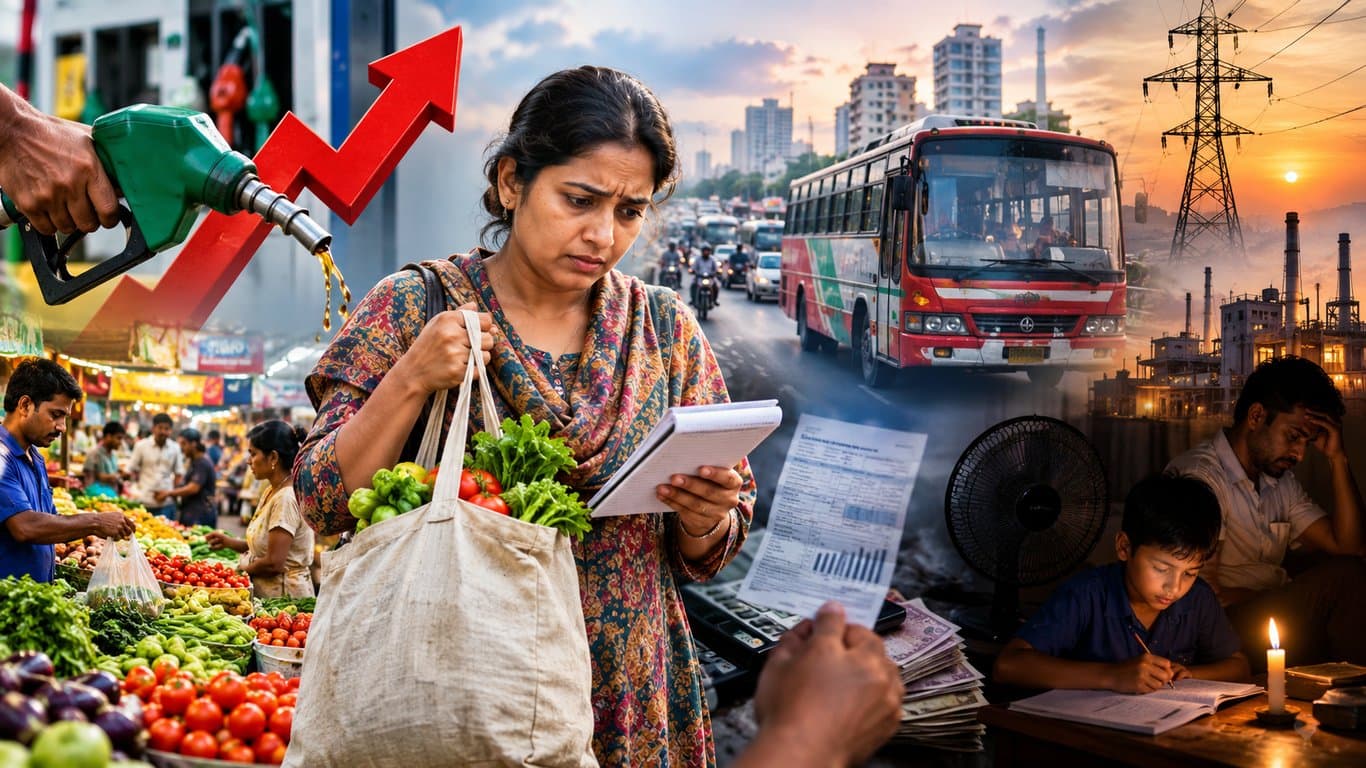

A shopping bag in one hand and a household ledger in the other—but the numbers no longer add up. Every trip to the market brings another shock. Rice, eggs, milk, flour, vegetables—the daily essentials are steadily eating into household budgets. Now, a fresh blow has come from rising fuel prices. And the heat is no longer confined to filling stations; it is spreading through transport, production, markets and the cost of everyday life.
At the same time, load shedding is plunging homes, shops and factories into darkness. Some are spending extra on diesel to run generators, some are being forced to halt production, while others are cutting business hours. Electricity bills have also risen following recent price increases. In other words, people are being squeezed from both sides—by power shortages and higher electricity costs on one hand, and rising fuel prices on the other. Recent reports have also highlighted the impact of power shortages on agriculture, fisheries, poultry farms and small businesses in rural areas.
The latest shock came in September with a sharp increase in fuel prices. From September 21, diesel prices rose from Tk 115 to Tk 135 per litre, kerosene from Tk 135 to Tk 155, petrol from Tk 140 to Tk 160, and octane from Tk 145 to Tk 165. In other words, the prices of all four major fuels jumped by Tk 20 per litre at once.
But the additional Tk 20 does not stop at the fuel pump. That is now the biggest concern.
As fuel prices rise, truck fares increase. Higher truck fares raise the cost of transporting goods, adding new charges at every stage from wholesale markets to retail outlets. The milk, eggs, rice, flour and vegetables arriving at local markets inevitably carry part of that additional fuel cost in their prices.
Proposals to raise bus fares have already emerged following the fuel price hike. For working people, this means expenses rise even before they leave home. Commuting becomes more expensive as bus fares increase; market prices rise as the cost of transporting goods goes up. And when electricity fails, shops, factories and small businesses often have to rely on diesel-powered generators—adding another layer of expense.
The industrial sector is also under pressure. With shortages of gas and electricity, many factories have been forced to turn to alternative fuels. A recent report found that fuel shortages have compelled many garment factories in Bangladesh to reduce production or operate partially.
The government says the international price of oil, shipping costs and import expenses have risen because of conflict in the Middle East. The Bangladesh Petroleum Corporation's losses have also increased. The government has therefore argued that adjusting fuel prices was unavoidable.
There is little doubt that the international shock is real. But when every wave of that shock reaches people's shopping bags, bus seats and monthly salaries, the question becomes: how are ordinary people supposed to absorb the pressure?
Incomes, after all, are not rising at the same pace as fuel prices. Wages for workers are not keeping up, nor are the monthly salaries of lower-middle-income households. Instead, household shopping lists are shrinking. Fish is replaced by eggs, eggs by lentils; milk consumption falls, meat becomes less frequent, and the quantity of groceries purchased declines. Yet at the end of the month, the household ledger still shows a deficit.
That is why the fuel price increase cannot be viewed simply as a matter of “higher fuel prices.” It is connected to bus fares, freight costs, agricultural production, industrial fuel expenses, alternative power generation and, ultimately, consumer prices. A single ripple from the fuel market is spreading across almost every layer of the economy. Economists also warn that higher fuel costs could raise transport and production expenses, creating additional pressure on the prices of goods and services.
Economist Dr Selim Raihan told Views Bangladesh that higher fuel prices would increase the cost of transportation, industrial production and the supply of goods. “This will create fresh pressure on inflation and may further increase the cost of living for ordinary people,” he said. He also believes the government's strategy for dealing with the additional pressure remains unclear.
Dr Nazneen Ahmed, executive director of the Centre for Policy Dialogue (CPD), told Views Bangladesh that the fuel price increase would affect almost every sector of the economy, including agriculture, transport and industry. “The increase in diesel and kerosene prices could put particular pressure on low-income people, public transport and the industrial sector. This could create new pressure on inflation,” she said.
Dr Din Islam, a professor of economics at the University of Dhaka, said the impact of higher fuel prices would not be limited to transportation costs. The cost of borrowing and marketing goods could also rise, he said, potentially creating simultaneous upward pressure on the prices of various goods and services.
Mainul Hossain, a resident of Kazipara in Mirpur and a salaried employee, told this correspondent that both bus fares and grocery bills had increased following the fuel price hike.
“After the fuel price increase, both transport costs and market expenses are going up. My income has not increased. I used to be able to do a week's shopping with the amount I now spend, but that same amount does not even cover a few days' groceries properly,” he said.
Anich Rahman, a resident of Jatrabari and a clothing trader, said higher fuel prices inevitably increase transportation costs, which ultimately have to be absorbed by businesses.
“When fuel prices rise, transport costs rise, and businesses have to bear that burden. The cost of bringing goods in and sending them out has increased. Prices are going up, but customers' purchasing power has not increased. That is putting pressure on business as well,” he said.
Mohammad Iqbal Hossain, a resident of Mohammadpur who works for a private company, said commuting costs had increased alongside the prices of almost every item in the market.
“My monthly income is the same, but the cost of running the household keeps rising. It has become very difficult to manage expenses. There is now no room for spending beyond what is absolutely necessary,” he said.
Nargis Begum, a resident of Khilgaon and a teacher, said the combined pressure of load shedding and rising prices was making life increasingly difficult.
“Load shedding and rising prices together have put people in a difficult situation. We have had to reduce the quantities of many essential items just to keep the household budget under control. If incomes do not increase, it is extremely difficult for ordinary people to cope with expenses rising one after another,” she said.
Explaining the fuel price increase, State Minister for Power, Energy and Mineral Resources Anindya Islam Amit said international oil prices had risen, while maritime transportation and insurance costs had also increased. He said the comparatively lower fuel prices in Bangladesh than in neighbouring countries had created a risk of smuggling across the border.
“These are the reasons the government had to adjust fuel prices. Given the current situation, there was no alternative to adjusting prices,” he said.
On rising commodity prices and market conditions, Commerce Minister Khandaker Abdul Muktadir said market monitoring would be strengthened throughout the year to ensure adequate supplies of essential goods and maintain price stability.
“Coordination among traders, importers, producers and relevant government agencies will be increased. No abnormal situation will be allowed to develop in the market, and necessary action will be taken if anyone attempts to raise prices unreasonably,” he said.
On the electricity situation, State Minister Anindya Islam Amit said on Tuesday that efforts were underway to restore normal gas supplies and remove obstacles to electricity generation.
“About 88 percent of the gas supply system has already been restored. Initiatives have also been taken to address the obstacles to power generation. The electricity and energy situation is expected to improve significantly within the next two weeks as the ongoing problems are brought under control,” he said.
Yet the harsh reality remains that ordinary people are bearing the brunt of the current crisis.
The person who boards a bus in the morning to go to work, returns home in the evening carrying a shopping bag, and then sits sweating through another power cut at night while helping a child study is now dealing with the combined burden of fuel, transport, groceries and electricity.
The price of fuel at the pump has risen by Tk 20 a litre.
But for ordinary people, the question is not really about Tk 20.
The question is: How far will the ripple from that Tk 20 travel? How many more prices will rise? How much smaller will the shopping bag become? And how many more nights will be spent in darkness?
Leave A Comment