

Freedom fighter Linu Haque's account
Guerrilla girl, Pakistani child, boatman's wife and bullet-hit Pakistani woman
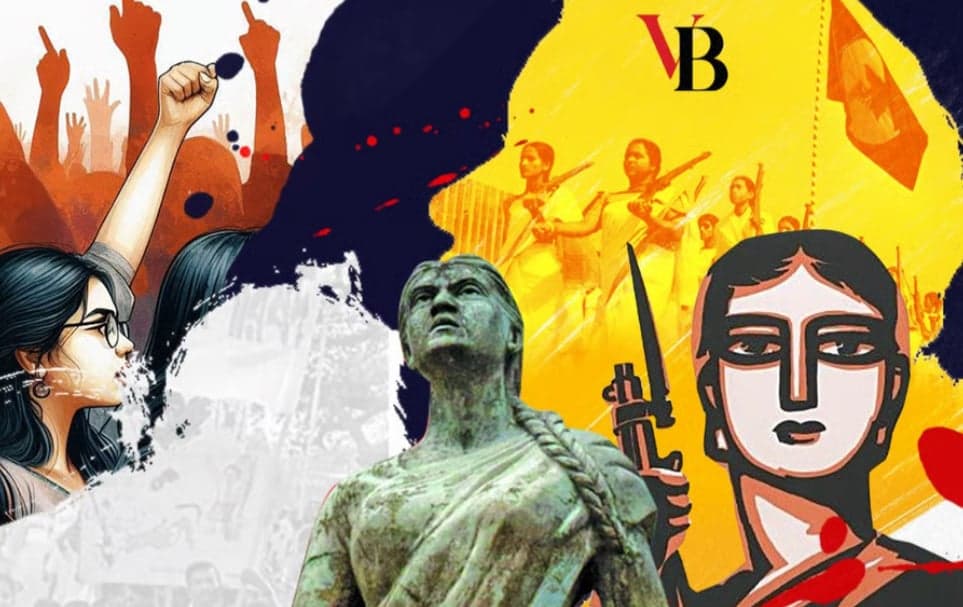

Bangladesh achieved its independence through a nine-month-long armed struggle. As in a people's war like the Liberation War, it was a war beyond the battlefield. Every person in the country, young and old, women and children, service holders and housewives, became a warrior. This is another war within the war, a daily battle for survival. The stories of that war have been lost and continue to be lost. This collection of memoirs by the heroic freedom fighter Kazi Ferdousi Haque Linu is an attempt to piece together these lost stories. The very stories are lost in the crowd of uncounted events.
Rogue guerrilla girl
When the sons, brothers, and fathers crossed the borders to receive war training, the young housewives and teenage girls of various families spent their time with anxiety and also in excitement. They had feelings of insecurity about life coupled with the hope of hearing the news that the country had become independent.
But they did not sit idle in the midst of all this, they cooperated in the war in their own way. One such effort was the guerrilla war of the teenage girls of the Azimpur government quarters. In this story, they are the "Bichchhu(rogue)" guerrillas. Linu Haque is one of the members of that group.
At the beginning of the war, when the young men of Azimpur started going to war, Linu Haque insisted that she would also leave home and join the war. "You are still young, so stay at home now, we will call you if necessary," the elders told her and left for the battleground. But Linu Haque and her teenage friends did not give up. They took on the challenging task of creating public opinion in favour of the Liberation War on their tiny shoulders. As they stayed at a government colony, the "bichchhus" of Azimpur were largely safe during the turbulent times of the war. A few teenage girls used to cross that security line and go out at 3am every day. They carried anti-Pakistan posters and homemade glue in their hands. Those posters were pasted on the walls and electricity poles of the entire area of Azimpur, New Market, and Nilkhet. At that time, making posters was not an easy task. The work was done in several stages. The work would be completed in a few rounds from one end of Dhaka to the other. Someone from Dhanmondi was fixing the language, someone from another area was drawing the picture, and someone else was secretly taking it to the press and printing it. If they were caught, they would face brutal torture or they could even be killed. They carried out their activities with that risk in mind. Nothing could stop them from continuing such risky activities for the motherland.
They were about to get caught doing this work several times. Since it was a government colony, families of pro-Pakistan officials lived in several flats. They kept a close eye on these groups of girls. They suspected that they were the ones doing these anti-Pakistan activities. So, the rogue girls thought that these families should not be given any more leeway. These petty guerrillas would threaten them with 'red letters' at various times. Those letters written in red ink were regularly left at the doors of the houses of pro-Pakistanists. In this way, the girls continued their fight, risking their lives throughout the nine months of the war. Not with weapons in hand, but with pens in hand.
Pakistani kid
Linu Haque's statement reveals a picture of the negative mindsets of Pakistanis about Bengalis at that time. The answer to the question as to why she grew up with negative thoughts towards the Pakistani ruling class since childhood and what incident from her childhood left a deep mark on her mind is another story.
Linu Haque and her friends were playing in the field as usual. Then, as evening was about to approach, they decided to stop playing and run home. At that time, a girl of the same age as a neighbouring Pakistani officer came and wanted to join the game. The Bengali girls explained to her that the game was almost over, and that she would be played with tomorrow. At that moment, the child's mother came out from behind and ordered her daughter: 'Game courtpe mut do (pee on the game court)'. The child immediately obeyed her mother's order. Then, in front of the stunned girls, the Pakistani mother and daughter recited some satirical poems in Urdu about Bangladeshis and started their way home.
Angry and humiliated, Linu Haque returned home and complained to her father, demanding justice. In response, her father said, "We do not have the power to make justice because they control our destiny." This statement left a deep mark on Linu Haque's mind. She immediately realized that only when the country is independent will she be free from this humiliation.
The boatman's wife
While talking about the contribution and role of women in the Liberation War, this freedom fighter said, "A mother carries a child in her womb for ten months and ten days, endures the pain of childbirth, and when she sees the face of the newly born child, she forgets all the pain and suffering in an instant. During the Liberation War, every woman in Bangladesh played the role of a mother. They endured various tortures for nine months and made the biggest sacrifice in their lives because a child named Bangladesh would be born. When Bangladesh was born on the world map, these women forgot all their hardships. They were happy to have Bangladesh, they did not need anything else, they did not demand any reward."
Then Linu Haque shared a story of a common woman. She is the wife of a boatman. Chased by the Pakistan Army, a group of freedom fighters came to the riverbank and stopped. There was no way to go forward, because no boatman was willing to cross the river with them at the risk of his life. When the freedom fighters had given up hope of life, a woman, the wife of a boatman, came running with a fish-knife in her hand. She put it around her husband’s neck and said, “Sail the boat immediately, or I will cut your throat.” Seeing no other way, the boatman sailed his boat, saving the lives of at least twelve freedom fighters.
Linu Haque said, at the end of the war, this boatman or his wife did not come forward with any demands. Every woman in Bangladesh had some role in our liberation struggle.
Wounded Pakistani woman
On the terrible night of March 25, the sounds of gunfire and people's screams were coming from all sides. The Pakistani invaders did not conduct any operation in Azimpur Government Colony that night. However, they took away a couple because they were relatives of a freedom fighter a few days later. Apart from that, there were no issues. The residents of the colony spent all night under the bed. Sometimes some peeped through the window and saw that the surrounding houses and slums had been set on fire. In that fire, the surroundings were as clear as daylight and the pitiful cries of women, children, and men could be heard. In this way, everyone passed the night in anxiety and worry.
The dawn broke but the familiar noise was not heard. All around was still, the morning newspaper did not come, and the familiar milkman did not come with his pot. On the morning of March 26, the man left his house with a bucket of milk, but he could not go far. As soon as he went a few yards from his house, the Pakistan army charged him with bayonets, leaving him dead. However, the customers of the colony came to know about this incident a few days later.
Meanwhile, the Pakistani household help of an official in the colony got angry after not getting milk in the morning. She got bored with waiting for the milkman and came out of the house herself with the mug in hand. The cowherd's house was not far from the colony. She was going that way. When the neighbours saw her leaving, they came and stopped her. She, however, said very proudly, "We are Pakistanis, not Bengalis like you, we have no fear. No one will dare to touch us."
With the mug in hand, she reached the main gate of the colony. As soon as she stepped outside the gates, a bullet pierced her. The Pakistani woman fell in front of the gate and started crying. Seeing her in this condition, a group of Bengali boys could not sit at home anymore. They risked their lives and crawled to the gate. They somehow managed to drag the Pakistani woman inside. After that, the woman was treated by Bengali doctors and recovered.
Linu Haque said, "Look, we Bangladeshis were not inhuman. We could never sit at home seeing any human being crying for help. We fought against them seeing the oppression carried out by these people, but we did not harm them despite being slighted. That was the ideal of the Bengalis at that time."
"Today, after so many years of independence, we hear that it was the Bengalis who oppressed the Pakistanis. These kinds of narratives disappoint me, I sink into despair. Again, seeing the youths like you, I feel hopeful. If the freedom fighters are banyan trees, the humane people of your generation are new seedlings. If there are new seedlings, there will also be weeds. But, you must uproot those weeds with your education, knowledge, and humanity, this responsibility is bestowed upon you."
Leave A Comment
You need login first to leave a comment