
Halloween: A thousand-year-old celebration born from the memory of the dead

It is the final evening of the year. Darkness begins to gather. Fires burn in some places, while masked figures move through the streets. According to an ancient belief, on this night the invisible boundary separating the worlds of the living and the dead becomes unusually thin.
The spirits of the dead are said to return to Earth, wandering through familiar streets and places. Fearing their presence, people once covered their faces, lit bonfires and left food offerings. Over the centuries, that fear gradually evolved into a celebration. Its name is Halloween.
Every year, as night falls on 31 October, an unusual spectacle unfolds across much of the world. People take to the streets dressed as ghosts, witches, vampires, demons and skeletons. Spider webs hang from doorways, artificial ghosts peer through windows, and pumpkins carved into terrifying faces glow in the darkness. Children chant “trick or treat” as they go from house to house. Costume competitions and masquerade parties bring the festivities to life.
Today, Halloween is largely associated with entertainment, amusement and colourful celebrations. Yet its roots lie in thousands of years of ancient beliefs surrounding death, spirits, the afterlife and the changing seasons. What began as an attempt to ward off the unknown and protect the living from supernatural forces has evolved into a cultural celebration recognised across the world.
The history of Halloween dates back around 2,000 years to the ancient Celtic people. In parts of present-day Ireland, the United Kingdom and northern France, one of their most important festivals was known as Samhain. The Celts celebrated their new year on 1 November, marking the end of summer and the arrival of the long, dark winter. The harvest season came to a close, giving way to the cold months ahead.
The Celts believed that on the final night of the year, 31 October, the boundary between the world of the living and that of the dead became blurred. Spirits could return to Earth, while supernatural and malevolent forces were thought to roam more freely. To protect themselves from these unseen threats, people lit enormous bonfires. They wore animal skins and frightening masks to conceal their identities, hoping the spirits would fail to recognise them. Food and drink were also left as offerings for the souls of the dead.
Over time, religious traditions became intertwined with this ancient folk festival. Following the expansion of the Roman Empire, Roman celebrations blended with local customs in Celtic territories. Later, as Christianity spread, 1 November came to be observed as All Saints’ Day, a day dedicated to honouring Christian saints. The preceding evening became known as All Hallows’ Eve, a name that gradually evolved into Halloween. All Souls’ Day followed on 2 November, when prayers were offered for the souls of ordinary people who had died.
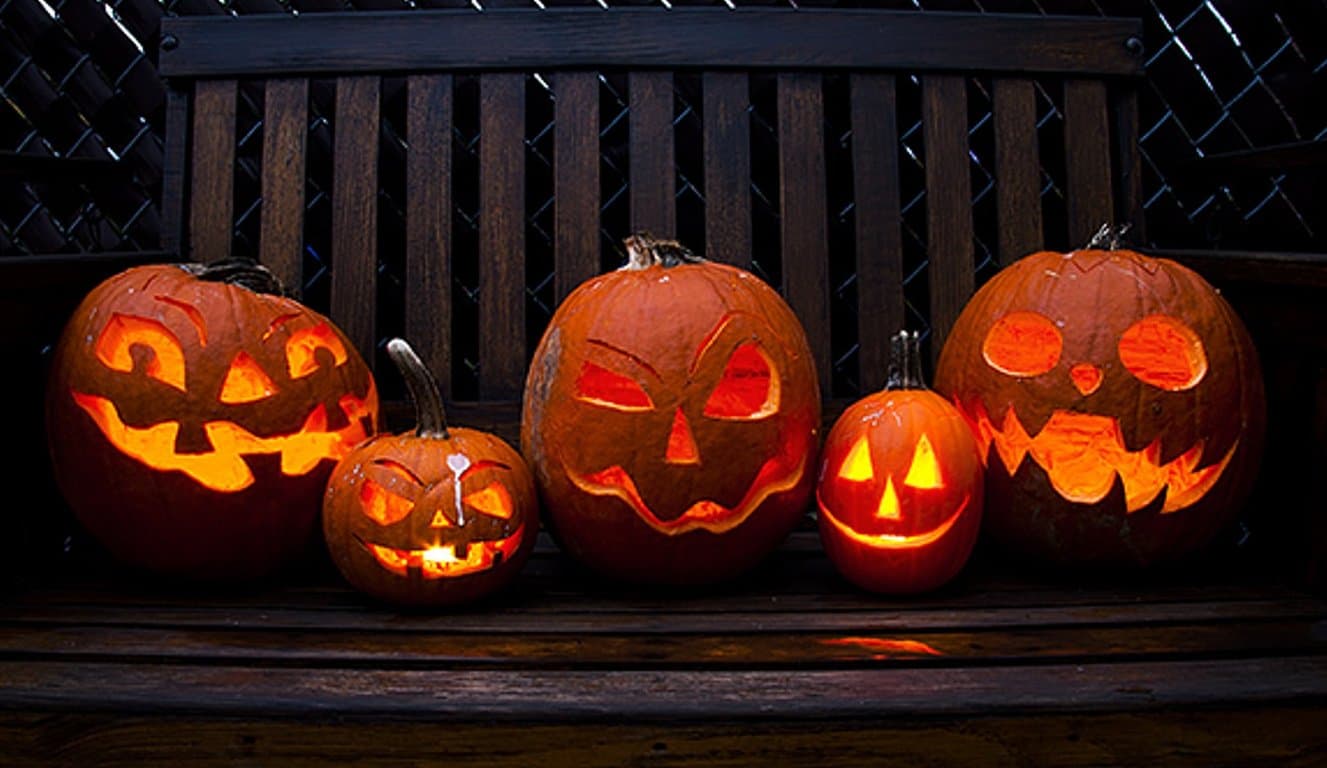
Another indispensable symbol of Halloween is the pumpkin. An ordinary-looking vegetable on the outside, it is hollowed out and carved with a frightening face. Light shines through its eyes and mouth, creating what is known as a jack-o’-lantern. But this tradition did not originally involve pumpkins. In Ireland, people carved faces into turnips, potatoes and other vegetables.
The custom is linked to an Irish folktale about a man named Stingy Jack. According to legend, Jack repeatedly tricked the Devil. When he died, he was denied entry to both heaven and hell. Condemned to wander the Earth, he carried a glowing ember to light his way. The story eventually became associated with carved vegetables containing lights, which came to be known as jack-o’-lanterns. When Irish immigrants carried the tradition to the United States, large pumpkins replaced turnips. Their size and ease of carving made them one of Halloween’s most recognisable symbols.
For children, the most exciting part of Halloween is undoubtedly trick-or-treating. Dressed in elaborate costumes, they knock on their neighbours’ doors and ask for sweets, chocolates and candy. If their requests are refused, they jokingly threaten to play a trick. The tradition has its roots in medieval Europe. On All Souls’ Day, poor people would visit homes asking for small cakes known as soul cakes. In return, they prayed for the souls of the households’ deceased relatives. Over time, this practice of collecting food evolved into the modern trick-or-treat tradition. Introduced to the United States by Irish and Scottish immigrants, it became particularly popular after the Second World War.
Today, Halloween is celebrated on a particularly grand scale in the United States and Canada. Ireland and Scotland continue to preserve many elements of its historical traditions, while the festival has also gained popularity among children and teenagers in the United Kingdom.
In Mexico, meanwhile, 1 and 2 November are observed as the Day of the Dead, or Día de los Muertos. Families honour deceased relatives by decorating graves, placing their loved ones’ favourite foods at memorials and taking part in festivities featuring colourful skeleton costumes.
The Day of the Dead, however, is not the same as Halloween. The two celebrations have distinct historical and cultural origins.
A night that once inspired fear of the unknown has become an occasion for light, colour and laughter. People have transformed their fear of spirits into a game of imagination, while memories of death have found a place in festive traditions. Costumes, masks, pumpkins, sweets and entertainment have also given rise to a vast commercial industry.
Yet beneath Halloween’s elaborate masks and colourful celebrations, an ancient belief continues to linger: somewhere between life and death, there may be mysteries that human beings have yet to understand.
Leave A Comment