

Hartal: A Curse for the People of Subcontinent
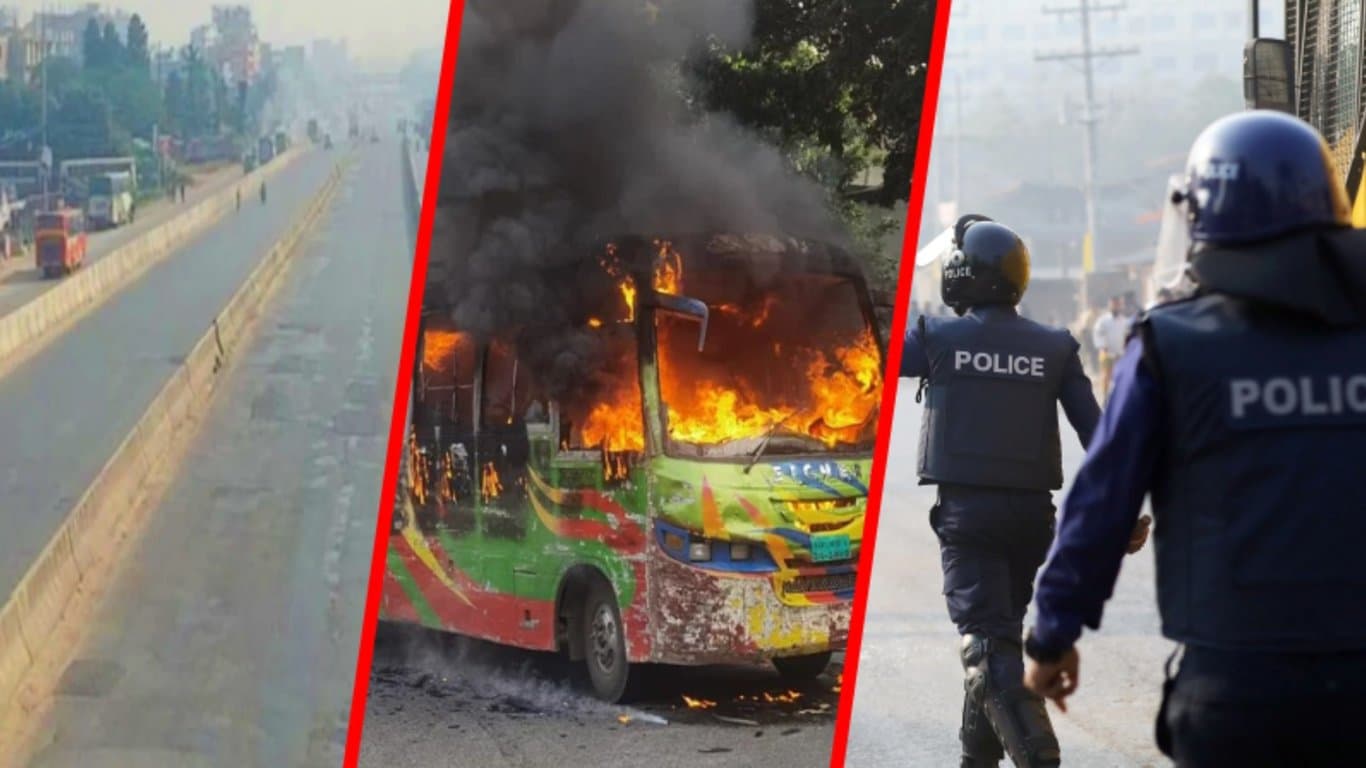
The Bangladesh Nationalist Party and like-minded parties, including Jamaat-e-Islam, held a grand rally on 28 October at Dhaka's commercial area, Naya Paltan. All the participating parties urged their supporters to join the event and provided transportation to those living in the outskirts of Dhaka, district towns, and rural areas across the country. All parties, except Jamaat-e-Islami, had obtained prior police permission to gather more than 100,000 people, as they expected the rally to be non-violent and peaceful. On the other hand, Jamaat-e-Islami was determined to hold a simultaneous rally at Shapla Chattar, a location where all anti-government forces had gathered in 2013, to the postponement of the national election."
However, the body language of the opposition parties indicated that they would not return home without achieving a result. They clearly foresaw that this grand rally, conducted through peaceful means, would not be sufficient to topple the Hasina government. Consequently, they initiated confrontations with the police and, in some cases, with Awami League supporters who were attending a counter rally nearby. During these incidents, one police constable was brutally killed, and more than 100 people, including police officers and journalists, were severely injured. Additionally, the house of the Chief Justice was attacked. This unscrupulous fallout was not unexpected, as the pretext of the blockade had been planned strategically. Ultimately, the opposition declared a countrywide blockade that continues to occur from time to time.
Hartals and blockades are not new phenomena in the Indian subcontinent. Hartal is a form of protest or strike where a group of people, often organized by a social or political entity, comes together to disrupt businesses, transportation, and public services to exert pressure on the government or draw the government's attention. The term 'Hartal' has its origins in Gujarati, where it means 'locking doors.' Before the partition of the subcontinent, leaders such as Mahatma Gandhi used 'bandh,' which is another term for a hartal or strike, as a non-violent form of resistance. The first recorded bandh in modern India occurred in 1920 during the non-violence movement. As a result, the British eventually left India, leading to the division of the subcontinent into two nations, India and Pakistan. The dream of creating a separate Muslim state was realized, comprising two parts: East Pakistan and West Pakistan. However, discontent in East Pakistan against the authority of West Pakistan emerged right from the first year of independence. West Pakistan held all the power and deprived the East. Subsequently, the first hartal was called on March 11, 1948, by Tamuddun Majlish, an Islamic cultural organization, in collaboration with the East Pakistan Muslim Student League. Since then, this political tool has been used periodically by politicians when they deemed it necessary.
In the past, hartals were not a regular feature of political activities, although they proved to be very effective against the Pakistani rulers during the broader movement for the independence of Bangladesh. Hartals were typically called during extreme crisis periods when politicians believed it was an emergency, and people would spontaneously observe them. At that time, leaders did not resort to using money to transport people from outside the cities by loading buses or trucks.
However, the nature and characteristics of hartals have changed significantly since the liberation of Bangladesh. The first post-independence hartal was called by the National Awami Party (NAP) on March 2, 1972. Since then, people's participation in hartals has declined notably. It has become a cultural practice to hire large numbers of participants, depending on how much money a party can provide. The modus operandi is quite interesting: high-ranking members of a party instruct district-level leaders to gather as many people as possible. The more people they can gather, the more they are rewarded with money or importance within the party, especially when seeking party nominations to become a representative.
What has been the outcome of hartals in Bangladesh over the last two or three decades? Unfortunately, there has been no significant gain. On the contrary, these frequent strikes have seriously hampered the country's rapidly growing economy.
In the past, Bangladesh was primarily an agriculture-based nation, and the rural population, including peasants, had little involvement in or disruption from hartals. Supporters of hartals also ensured the undisrupted supply of food. However, the economic landscape has evolved significantly over time. Presently, our economy relies heavily on the industrial sector, with the garment industry accounting for approximately 83 percent of the country's total export earnings. Over the past decade, the export of garments from Bangladesh has more than doubled, growing at an annual rate of 9 percent. Approximately 4 million ordinary Bangladeshis, predominantly women, are employed in this sector.
In the last 50 years, Bangladesh's GDP has surged from $6 billion to approximately $450 billion. The Federation of Bangladesh Chambers of Commerce and Industry has emphasized that political unrest, including hartals, can depress the overall economy and have an adverse impact on economic growth.
In addition to the garment industry, Bangladesh has seen the development of factories for various export products, including jute, fish, leather, agro, and pharmaceuticals, spread across the country. On the flip side, Bangladesh also imports a wide range of products to meet its domestic consumption and acquire raw materials for its industrial needs, which have been significantly affected by the blockades and disruptions caused by events like hartals and strikes. The key turbulence is often observed during hartals, blockades, and strikes. We can vividly recall the impact of the 2013 hartals and blockades on the food security situation, particularly for vulnerable people. These disruptions had a profound effect on the means of support for daily income recipients.
What is the current ground reality? Opposition politicians and their supporters have been feeling deprived of state power for the past 15 years. This time, they are in a 'do or die' mindset, determined to gain state power, which they see as the only means to force the government to step down. Their focus is primarily on achieving political power, with less consideration for the welfare of the people and the country's economy.
It is also a ground reality that the majority of the country's population is reluctant to view hartals as a political program. They have rejected all alternatives. The government of Sheikh Hasina is equally resolute in adhering to its constitutional obligations and not going beyond them
In our opinion, if the opposition parties desire a truly free and fair election, they could request a substantial number of international election observers to oversee the process. If they genuinely believe that their politics is in the best interest of the people, it is imperative that they discontinue programs like blockades that cause suffering for the masses.
Author: Journalist and Litterateur
Leave A Comment
You need login first to leave a comment