
How Bangladesh's next pesident will be elected

The resignation of President Mohammad Shahabuddin on July 24 due to health reasons has triggered a significant constitutional process in Bangladesh. Under Article 50(3) of the Constitution, the President submitted his resignation to the Speaker of the Jatiya Sangsad (Parliament). With the resignation taking immediate effect, the office of the President became vacant, and in accordance with Article 54, Speaker Hafiz Uddin Ahmed assumed office as Acting President. He will discharge the responsibilities of the presidency until a new President is elected and sworn in.
The Constitution clearly outlines the procedure following a vacancy in the office of the President. Whether the office becomes vacant due to death, resignation, removal, or any other reason, a new President must be elected within 90 days. During this interim period, the Acting President ensures constitutional continuity and performs all presidential functions.
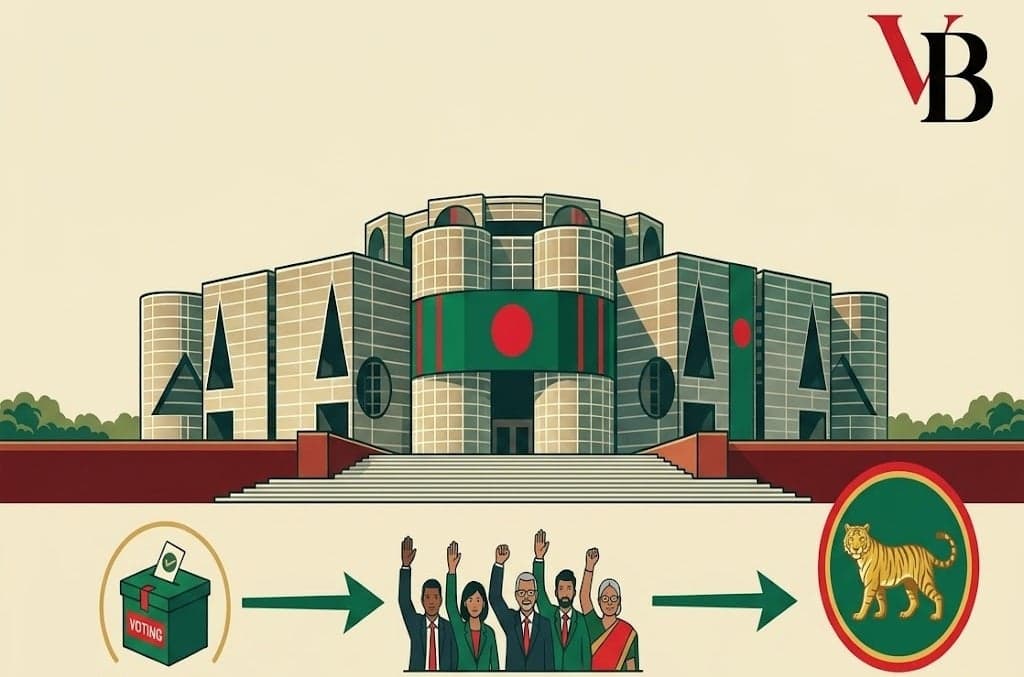
Unlike in many countries, Bangladesh's President is not elected through a direct public vote. Under Article 48 of the Constitution, the President is elected by the members of Parliament. In other words, MPs constitute the electoral college for the presidential election.
The Election Commission (EC) is responsible for conducting the election under the Presidential Election Act and relevant rules. It announces the election schedule, receives nomination papers, scrutinises candidates and, if necessary, arranges voting.
In practice, however, most presidential elections in Bangladesh have been uncontested. Since the party or alliance holding a parliamentary majority usually has enough votes to secure victory, its nominee is typically elected without opposition. If more than one valid candidate contests the election, MPs elect the President through a secret ballot. If only one valid nomination is submitted, that candidate is declared elected unopposed.
Constitutional expert and senior Supreme Court lawyer Dr Shahdeen Malik told Views Bangladesh that the Constitution also sets out eligibility criteria for presidential candidates.
"A candidate must be a citizen of Bangladesh, at least 35 years of age, and qualified to be elected as a member of Parliament. No individual may serve more than two terms as President. After being elected, the President takes the oath of office before the Chief Justice.
Once the oath is administered, the Acting President's tenure ends and the newly elected President formally assumes office as the country's constitutional head of state," he said.
Another constitutional expert and senior Supreme Court lawyer, Ahsanul Karim, said the President serves primarily as the country's constitutional head of state.
"Although executive authority rests with the Cabinet headed by the Prime Minister, the President performs several important constitutional functions. These include appointing the Prime Minister and the Chief Justice, summoning and proroguing Parliament, giving assent to bills passed by Parliament, exercising the power of pardon under the Constitution, and serving as the Supreme Commander of the Armed Forces. Under Bangladesh's parliamentary system, however, most of these powers are exercised on the advice of the Prime Minister," he said.
Law Minister Md Asaduzzaman told Views Bangladesh that Shahabuddin's resignation has placed a constitutional responsibility on the Election Commission to elect a new President.
"Once the election schedule is announced, the country's 23rd President will be elected either through a vote by members of Parliament or, if there is only one valid candidate, unopposed. The Constitution requires the entire process to be completed within 90 days. Until then, Speaker Hafiz Uddin Ahmed will continue serving as Acting President, ensuring there is no constitutional vacuum in the functioning of the state," he said.
President Mohammad Shahabuddin resigned on July 24, citing health reasons. Following the acceptance of his resignation, Speaker Hafiz Uddin Ahmed (Bir Bikram) assumed the responsibilities of Acting President in accordance with the Constitution.
Speaking at a press briefing held in the oath room of the Jatiya Sangsad Secretariat on the afternoon of July 24, the Speaker said: "Under Article 50(3) of the Constitution of the People's Republic of Bangladesh, President Mohammad Shahabuddin submitted his signed letter of resignation to me at 5:01 pm on Friday. Upon accepting the resignation, I assumed the responsibilities of the President under Article 54 of the Constitution. The resignation letter has also been preserved in the official records of the Jatiya Sangsad Secretariat, and necessary administrative steps have been initiated."
Leave A Comment