

Illustrious female rulers in Muslim world
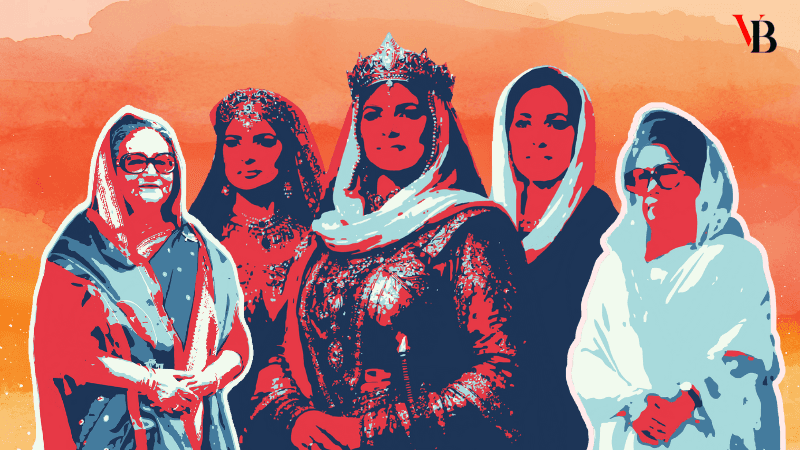

Throughout Islamic history, numerous women have held supreme power, ruled as queens and regents, and commanded armies, challenging modern misconceptions about gender and leadership in the Muslim world. More than fifty women ruled in various capacities, including sovereign queens in Delhi, Egypt, Yemen, and North Africa, as well as influential "Sultanates of Women" during the Ottoman Empire. Their glorious contributions and competence in governance remain memorable. Today's report is about these illustrious women.
In the Muslim world, women have not only participated in politics but have also directly governed states in many instances. Some were sultans, some were queens, and some were heads of state.
This list includes everything from medieval caliphate politics to modern democratic states. In the medieval era, where the concept of party politics did not exist, they were absolute rulers; in modern states, they were heads of political parties, heads of state, or heads of government. Let us learn about the history of Muslim women leaders...
Razia Sultana
Razia Sultana occupied the throne of Delhi from 1236 to 1240. She was the first Muslim woman in history to rule directly with the title of "Sultan." Razia never called herself "Sultana" but used the masculine title "Sultan" like male rulers. She would sit in court wearing men's clothing and personally commanded the army. She was independent in royal decisions. A section of the ulama and nobility opposed her rule, the main reason being her gender. Nevertheless, she demonstrated administrative competence.
Shajar al-Durr
Shajar al-Durr was the ruler of Egypt. In 1250, she effectively assumed state power in Egypt. She was a central figure in the Ayyubid and early Mamluk administrative systems. She governed the state during the Crusade attack by King Louis IX of France. Coins were issued in her name and her name was proclaimed in the khutbah, which is a clear Islamic symbol of being head of state.
Arwa al-Sulayhi
Queen Arwa al-Sulayhi ruled Yemen for approximately 70 years from 1067 to 1138. She was a recognised ruler of the Fatimid Caliphate, and the Friday khutbah was read in her name, which is the highest recognition of Islamic state power. She administered both governance and religious leadership together and was extremely skilled diplomatically. She issued edicts in her own name and made state decisions directly.
Taj al-Alam Safiatuddin Shah
Taj al-Alam Safiatuddin Shah was the ruler of the Aceh Sultanate. She was in power from 1641 to 1675 and was known as a female sultana. Multiple women sultans ruled in Aceh, which is an exceptional example in the Muslim world. During her reign, Islamic Shariah courts were active and diplomatic relations were maintained with European powers. She maintained religious and political balance and ruled through religious legitimacy.
Nur Jahan
Nur Jahan was the de facto ruler of the Mughal Empire. She was the wife of Emperor Jahangir and exercised real power from 1611 to 1627. She was not formally empress, yet edicts were issued in her name and her name was engraved on coins. She commanded the army and administration, made diplomatic decisions, and even controlled the court.
Benazir Bhutto
Benazir Bhutto was the Prime Minister of Pakistan. She was in power from 1988–1990 and 1993–1996. She was the chairperson of the Pakistan Peoples Party and also the party head. She was the first woman Prime Minister in the modern Muslim world. She was a symbol of democratic politics and fought against military rule. In 1990, she created exceptional history by giving birth to a child whilst serving as Prime Minister.
Khaleda Zia
She was the Prime Minister of Bangladesh from 1991–1996 and 2001–2006. She was the chairperson of the BNP and party head. She played an important role in the democratic movement and is known as a leader of post-military rule politics. She was recognised as an uncompromising leader in the democratic struggle against autocracy. Her firmness in state governance has been praised.
Sheikh Hasina
Sheikh Hasina was in power as Prime Minister of Bangladesh from 1996–2001 and 2009–2024. She played an important role in development and women empowerment. She is the president of the Awami League and party head. She is the longest-serving woman head of government in the Muslim world.
Tansu Çiller
Tansu Çiller was Turkey's first and only woman Prime Minister. She served from 1993 to 1996. She was the chairperson of the True Path Party and party head. Although Turkey is a Muslim-majority country, it is constitutionally secular. She entered politics as an economist and served as a Muslim woman head of government. She emphasised economic reforms and maintained the country's balance through political instability.
Megawati Sukarnoputri
Megawati Sukarnoputri was the President of Indonesia. She served from 2001 to 2004. Indonesia is the country with the world's largest Muslim population. She was the chairperson of the Indonesian Democratic Party of Struggle (PDI-P) and party head. She was Indonesia's first woman President and the daughter of the country's first President, Sukarno. Her political rise came through popular movements.
Atifete Jahjaga
Atifete Jahjaga was the President of Kosovo. She served from 2011 to 2016. Kosovo is a Muslim-majority country. She was Kosovo's first woman President. She was not a member of any traditional political family. As President, she played a neutral role and was not directly the head of any political party. She was the most powerful person as head of state.
Halimah Yacob
Halimah Yacob was the President of Singapore. She served from 2017 to 2023. Singapore is not a Muslim-majority country, yet she successfully served as a Muslim woman head of state there. She was Singapore's first woman President and previously served as Speaker of Parliament. She was a symbol of social unity and represented minority communities.
This long history brings forth one truth—women's leadership in Muslim society is not a new, abnormal, or Western-imposed concept. From Razia Sultana to Shajar al-Durr, Arwa al-Sulayhi, or the women sultans of Aceh, they have proved that women could occupy the highest positions in Islamic state systems. During their reigns, coins were issued, armies were commanded, and full legitimacy of governance was in effect. They were not merely symbolic leaders; they were the actual centres of power.
History therefore clearly shows that the issue of women's leadership in the Muslim world is not confined to any single explanation; it is multidimensional, dynamic, and connected to reality. The question about women's leadership is therefore not one of religion; the question is actually just a ploy of power politics to deprive women of their rightful rights through patriarchal narrow-mindedness.
Leave A Comment
You need login first to leave a comment