

A humble appeal to education advisor
Implement revolutionary decisions to free Bangladesh’s education system from crisis

I have seen on Facebook that at the entrance of an airport in South Africa, a quote is written on the wall: "If you want to destroy a nation, destroy its education system." The first African American writer of the United States, Frederick Douglass, mentioned in his autobiography that when he was a young enslaved boy living in the house of a white man named Mr. Auld, Mrs. Auld, out of kindness, started teaching him how to read and write. One day, young Douglass overheard Mr. Auld scolding his wife for educating a slave boy, warning that if he learned to read, his mind would open. Mrs. Auld, obeying her husband's command, stopped teaching him. This conversation deeply impacted young Douglass, making him realize the immense value of education. He understood that to walk the path of enlightenment, one must acquire knowledge. Recognizing this importance, he secretly continued his studies and became self-educated.
Similarly, in Shakespeare’s play The Tempest, the character of Caliban presents an ironic perspective on the significance of education. Prospero’s daughter, Miranda, takes the responsibility of teaching Caliban. However, the rebellious Caliban later furiously tells Prospero, "You taught me language, and my profit on’t is I know how to curse." The relationship between Prospero and Caliban is not only that of a master and a servant but also symbolic of a colonial ruler and the colonized.
In light of this fundamental understanding of education, if we examine the current state of Bangladesh’s education system, we must first make an optimistic remark regarding the present interim government’s advisory structure. It is led by the internationally acclaimed and Nobel laureate Dr. Muhammad Yunus, a highly energetic and immensely educated individual, under whose leadership education is expected to be prioritized. Dr. Yunus was a long-time professor in the Economics Department of Chittagong University. Moreover, the country is fortunate to have Dr. Wahiduddin Mahmud as the Education Advisor, one of Bangladesh’s most academically accomplished professors, whose legendary academic achievements set him apart. A former advisor to another caretaker government and a former professor in the Economics Department at Dhaka University, his appointment is truly a blessing for the nation.
Furthermore, most members of the advisory council are highly educated, both institutionally and in terms of experience. With such an accomplished team at the helm, I would like to share a few thoughts on improving the country’s formal education system.
The Core Problem of Our Education System
The fundamental issue in our institutional education is that students do not achieve the expected level of knowledge and competency. The gap between acquired certification and actual education is widening alarmingly. A student completing eighth grade often does not exhibit the expected proficiency, and even those with Ph.D. degrees frequently lack the intellectual depth their credentials suggest. This discrepancy is a national setback.
From my long teaching experience, I have also concluded that public universities in Bangladesh are nothing more than "white elephants." Billions of takas are spent, yet they fail to produce truly educated graduates. On the other hand, private universities, though financially sustainable, compromise on academic quality as they must accommodate students to maintain revenue flow.
To improve formal education at all levels, we must first ensure the quality of students, which requires improving the quality of teachers. The quality of teachers, in turn, depends on the overall standard of educational institutions. In short, the Education Advisor must focus on implementing a comprehensive education policy that enhances the entire educational environment. This is a highly challenging and long-term task.
Ensuring Quality in Education
1. Students: The fundamental principle should be that no student is inherently incapable. Schools and colleges exist to awaken their intellectual potential. If the curriculum is engaging and inspiring, students will respond positively. However, we must also acknowledge that every student has an intrinsic character, some aspects of which remain unchanged regardless of the educational environment. Some individuals remain unchanged despite all efforts.
2. Educational Infrastructure: Institutions should have open and nature-friendly campuses. For example, Chittagong Collegiate School serves as an ideal example of a well-designed school environment. Unfortunately, many private schools, especially those for early childhood education, operate in unhealthy environments, which is detrimental to national educational health.
3. Library and Digital Access: Education is fundamentally about knowledge acquisition, and therefore, extensive libraries are essential. In today’s digital era, every school, from primary to university level, must ensure that students have full access to online learning resources.
4. Financial Accessibility: Education is inherently tied to economic factors. The state must take responsibility for ensuring that children from economically disadvantaged families can receive quality education. Government primary schools play a crucial role in this regard, and they must have well-equipped classrooms, competent teachers, and adequate educational materials. The condition of madrasas in Bangladesh, in many cases, is not suitable for modern education, and the government must intervene to improve their standards.
5. Secondary and Higher Education: Both public and private institutions must establish scientifically advanced, technology-driven infrastructures and employ highly qualified teachers to foster an environment where students are eager to learn.
Enhancing Teacher Quality
Perhaps the most crucial factor in education is the quality of teachers. For both public and private universities, maximum efforts must be made to provide the best resources for teaching and research. The outdated practice of making ten professors share a single office should be abandoned. Instead, each faculty member must be provided with personal offices, desktops, and online research facilities to ensure their intellectual growth.
It is true that university teachers receive competitive salaries and benefits, but their social status has diminished. Other professions offer better perks and opportunities, leading to a sense of inferiority among educators, which ultimately affects the quality of education. Syed Mujtaba Ali’s short story Panditmoshai illustrates how teachers sometimes see themselves as less valuable than even a British officer’s pet dog.
The Threat of Political Influence in Education
One of the biggest cancers afflicting Bangladesh’s educational institutions is political interference. This has led to tragic incidents, such as the brutal killing of Abrar in BUET, one of the country’s top engineering institutions. While teachers and students should be politically and socially aware, their engagement must not descend into blind partisanship. The root cause of this problem lies in the unhealthy political culture at the national level.
The interference, politicization, and patronization of educational institutions by political parties must be completely eradicated. If teacher and student politics are not legally banned, educational institutions will continue to be contaminated by partisan politics, and the cycle will persist. Once political rule returns, the same corrupt practices will resume, leading to the same disastrous outcomes.
A Final Appeal
Therefore, I humbly appeal to the Education Advisor to implement revolutionary decisions to free Bangladesh’s education system from this crisis. With his intelligence, wisdom, and foresight, I hope he will succeed in bringing about transformative changes.
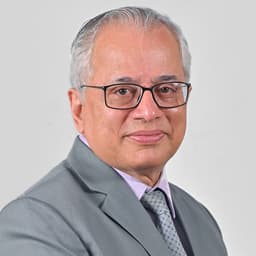
Dr. Mohit Ul Alam, Educationist & Literary Scholar
Leave A Comment
You need login first to leave a comment