

Cyclone Remal
Increase future security alongside humanitarian aid
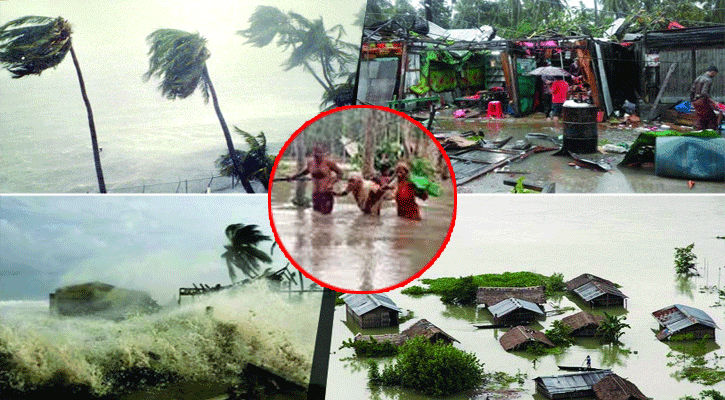

Remal has caused devastation far worse than anticipated. According to the latest reports, this deadly cyclone has claimed 16 lives in various districts. Most fatalities were due to falling trees and collapsing walls. Two people were reported to have been swept away by the storm surge. There has been unprecedented damage to homes, roads, cropland, and fish farms. According to information received by the media on Tuesday, April 28, residents of 107 upazilas across 19 districts have been affected by the cyclone. More than 37 lakh 58 thousand people have been impacted in these areas. A total of 35,483 houses have been completely destroyed, and an additional 1 lakh 14 thousand 992 houses have been partially damaged.
Unfortunately, most of the damage resulted from mismanagement. Much of the damage could have been easily mitigated with better preparedness. In nearly all coastal districts, five to ten kilometers of the hundreds of kilometers of embankments were already known to be at risk. The question is, why were these ten kilometers of embankments left unprotected? Why weren't they repaired in advance? If they had been, the embankments wouldn't have broken in 21 places.
Before the cyclone even began, there were reports of a trawler capsizing in the Mongla River due to strong winds. In reality, the trawler capsized because it was overloaded with passengers. At that time, a danger signal number 7 was in effect. Despite this, workers from the Khulna EPZ were forced to come to the factory. However, according to the Disaster Management Act, all kinds of factories in coastal areas should remain closed when a danger signal number 7 is in effect. This means that many are not complying with the Disaster Management Act. Fortunately, there were no casualties in the trawler incident, but what if all 80 passengers had died that day?
Meanwhile, the cyclone hit the coastal areas, but the capital city, Dhaka, experienced severe waterlogging. Many surrounding areas of Dhaka were almost submerged, and numerous roads were flooded. The morning after the cyclone, residents of the capital faced immense difficulties getting to their workplaces. Many students were also unable to attend their schools and colleges. It's true that there was heavy rainfall, but if the capital gets flooded after just one day and night of rain, then what distinguishes Dhaka from the coastal areas?
On the other hand, due to the impact of Cyclone Rimal, 2 crore 69 lakh 47 thousand 7 hundred customers across the country were without electricity. It wasn't just the coastal regions; many districts were without power. Additionally, many districts lacked mobile network coverage. As a result, people were not only in darkness without electricity but also largely cut off from all forms of communication.
Bangladesh is a disaster-prone country. Floods, cyclones, and tidal surges are inevitable in this region. The increasing global temperatures have made natural disasters a significant threat to Bangladesh. Therefore, without proactive measures and extensive preparedness, there is no way to ensure the survival and well-being of the people of Bangladesh. Despite countless casualties and extensive damage from cyclones over the past 50 years, it can't be said that we have become very cautious. It seems like our lives are somewhat surrendered to fate, passively accepting our mismanagement. We don't seem to learn from disasters either.
Even though we've managed to reduce fatalities from floods and cyclones, we still lack preparedness for post-disaster resettlement. Therefore, we urge the government to expedite the provision of all necessary security measures to enable displaced people from shelters to return home as quickly as possible. Ensuring their access to food, shelter, education, and healthcare should be prioritized. Efforts should be made to swiftly deliver aid supplies to affected areas. Alongside this, measures to mitigate future disasters of this kind should be taken immediately. Cyclones are inevitable in Bangladesh, but their impact can be minimized through vigilance, adaptable policies, awareness, and robust management.
Leave A Comment
You need login first to leave a comment