

India bans 25 books on Kashmir over 'security threat' concerns
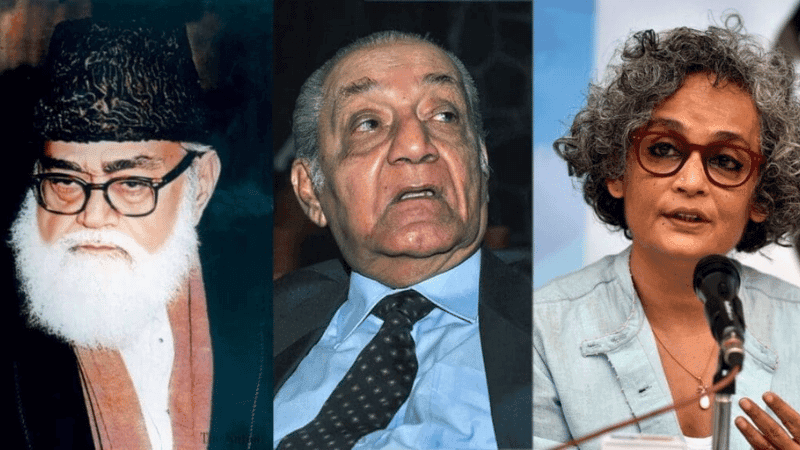

In a controversial move drawing criticism from academics and free speech advocates, the Indian government has banned 25 books related to the Kashmir conflict, accusing the authors of promoting “false narratives,” glorifying terrorism, and inciting separatism in the region.
The order was issued by the Jammu and Kashmir Home Department on Wednesday under Section 98 of the Bhartiya Nagarik Suraksha Sanhita, 2023, India’s new criminal code. The books, it said, were being “forfeited to the government” due to content that allegedly threatens the “sovereignty and integrity of India.”
Among the banned titles are works by prominent Indian, Kashmiri, and international authors, including Azadi by Arundhati Roy, The Kashmir Dispute 1947–2012 by A.G. Noorani, Kashmir in Conflict by Victoria Schofield, and Independent Kashmir by Australian academic Christopher Snedden. Also included are books by Sumantra Bose, Hafsa Kanjwal, Anuradha Bhasin, Radhika Gupta, Essar Batool, Ather Zia, Pankaj Mishra, Haley Duschinski, Mona Bhan, Piotr Balcerowicz, and Agnieszka Kuszewska.
Authorities allege the books contribute to “a culture of grievance, victimhood, and terrorist heroism,” and distort historical facts while vilifying Indian armed forces.
Several of the affected authors have spoken out against the ban, calling it an attack on academic freedom and an attempt to suppress the truth about the decades-long conflict in Kashmir.
Dr. Hafsa Kanjwal, associate professor of South Asian History at Lafayette College in the United States, described the ban as unsurprising.
“India’s nearly eight-decade-long occupation has consistently sought to control the flow of information about Kashmir,” she told TRT World. “This list joins years of internet shutdowns, denial of access to international observers, and media censorship. It reflects the insecurity of the Indian state.”
Kanjwal’s book, Colonizing Kashmir: State-building Under Indian Occupation, is among those banned.
Veteran journalist and author Anuradha Bhasin, whose book A Dismantled State: The Untold Story of Kashmir After Article 370 was also targeted, strongly rejected the government’s allegations.
“These are well-researched works — not one glorifies terrorism,” Bhasin wrote on Facebook. “Scared of words that challenge your lies? I challenge the book banners to find a single word that glorifies terrorism. For those who value truth, read the books and judge for yourselves.”
The ban follows a broader pattern of government efforts to control the narrative on Kashmir since the revocation of Article 370 in August 2019, which stripped the region of its limited autonomy.
Observers note a rise in censorship, arrests of journalists and activists, and heavy restrictions on freedom of expression in the region. The banning of books, critics say, is a new front in an ongoing campaign to suppress alternate viewpoints.
Human rights organizations and academic institutions have expressed concern over the implications for intellectual freedom and democratic discourse in India.
As of now, authorities have not responded to calls for transparency in the review process behind the bans, nor have they provided public evidence supporting their claims of terrorism glorification.
Leave A Comment
You need login first to leave a comment